
Planning your next trip to Provence? Discover the best itinerary to explore the region, what to see along the way, and when the lavender fields are in bloom.

When most people think of Provence, they picture endless lavender fields under a summer sun. That image is real, but Provence is much more than a single postcard moment. In this guide, I want to take you away from the Mediterranean coast and deep into the interior of the region, following a road trip itinerary that slowly climbs from the Riviera into the Alps, then crosses plateaus, gorges, and farming landscapes where lavender still defines the rhythm of local life.
This itinerary starts in Nice and ends in Avignon, covering roughly 400 kilometres. It can technically be done in one long day, but I suggest splitting it into at least two or three days. Provence rewards slow travel, especially during lavender season.
Destination Overview: Provence Beyond the Coast

Most people stick to the coast between Nice and Marseille. Once you leave the sea behind, Provence changes quickly. The palm trees disappear, the air becomes cooler, and the landscape shifts toward forests, mountain pastures, and wide agricultural plateaus.
This interior Provence is quieter, less polished, and in my opinion, far more interesting. It is here that you find traditional villages and incredibly beautiful landscapes dotted with flowers. Lavender is not just a visual attraction. It is an agricultural product, harvested every summer, and many of the fields you will see are part of working farms.
Provence is a paradise for photographers, but it’s also a great place for all those who love nature and want to relax far from the cities. I’m sure you’ll remember the colors and the scents of Provence for a very long time.
When is the best time to visit Provence?

If your main goal is to see lavender in bloom, it’s extremely important that you pick the right time of the year.
The best time of the year to visit Provence is the beginning of summer, between the end of June and mid-July, when the lavender flowers are in full bloom. The big question is when exactly the lavender will blossom this year. That is a difficult question because the weather is different every year. Higher plateaus, such as Valensole and Claparèdes, bloom a bit later than lower areas.
This map gives a rough idea of the blooming periods, but take it with a grain of salt, because, as mentioned, every year is different.
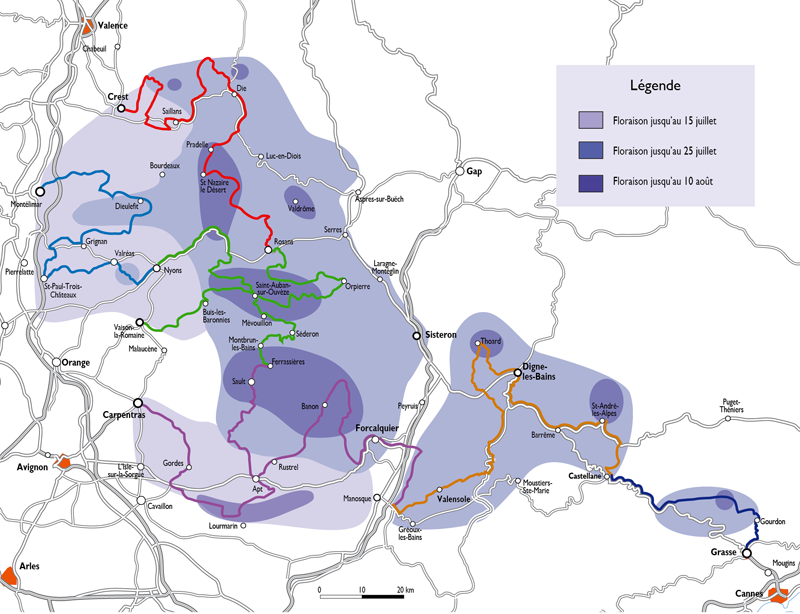
Summer is ideal for lavender, but it also means higher temperatures and more tourists, especially around famous spots like Valensole and Gordes. Spring and early autumn are great alternatives if you are more interested in landscapes, villages, and hiking, but you won’t see the lavender fields.
Getting Around and Accommodation
This road trip starts in Nice, which is easy to reach by plane, and I recommend renting a car. Just a tip: some of the roads in the interior are narrow, and parking in villages is easier with a smaller vehicle. I don’t recommend public transport because but it will not allow you to follow this itinerary properly.
Regarding accommodation, I think the best option is to book one of the many Chambre d’Hôtes (the French version of a Bed & Breakfast). They are usually affordable and a great way to meet local people who can recommend things to see and do, often better than any guidebook. You can find many options on Booking.com or Trip.com.
If you visit Provence in summer, you can attend lavender festivals and celebrations. Many villages hold their own events around the lavender season, so dates can vary a bit each year. Here you can check the dates for this year
Provence: Road Trip Itinerary

This is an idea for your road trip across Provence, starting from Nice, with a focus on the lavender fields:
Nice → Saint-Paul-de-Vence → Tourrettes-sur-Loup → Loup River Gorge → Gréolières → Castellane → Gorges du Verdon → Valensole → Luberon Natural Park → Gordes → Avignon
Saint Paul de Vence, The First Provençal Village

Saint Paul de Vence is small, historic, and beautiful. It’s obviously touristy, but it still deserves a stop, especially if this is your first time in Provence. You will need to park outside the historic centre and walk in. The village is small, and wandering its narrow streets takes less than an hour.
Walk along the ramparts for views toward the sea, and if you are interested in art history, stop by the cemetery where Marc Chagall is buried.
Saint-Paul-de-Vence gained historical importance in the 16th century, when King Francis I ordered the construction of its fortified walls to defend the area from invasions coming from the Duchy of Savoy.
If you have time, the restaurant La Colombe d’Or is worth a stop, even if just for its story. Artists once paid for meals with paintings, and some of those works still hang on the walls today.
Tourrettes-sur-Loup and the Loup River Gorge

After leaving Saint Paul de Vence, continue north toward Vence and follow the road toward Tourrettes-sur-Loup. This village is quieter and less touristy than Saint-Paul-de-Vence and is perched on a rocky spur overlooking the coastline. Parking is easy, and a short walk through the historic centre gives you a good dose of Provençal atmosphere without the crowds.
After Tourrettes-sur-Loup, drive west and then north along the Loup River. The road enters a narrow gorge, and within a few kilometres, you reach a small parking area near the Loup waterfalls (Salt du Loup).
A short walk leads to viewpoints over a series of cascades framed by rock walls and dense vegetation. If you want, you can arrange a canyoning excursion on the river. This type of activity involves descending canyons using techniques like hiking, climbing, swimming, and rappelling through waterfalls and rock formations.
Into the Maritime Alps, Gréolières and High Plateaus
Continuing north, the road climbs steadily into the Maritime Alps. Pine forests replace olive trees, and temperatures drop noticeably. After passing Gréolières, the landscape opens onto high plateaus above 1,000 metres. Be careful when you get out of the car because the wind can be extremely strong here, especially around the mountain pass called Pas de Tous Vents.
This part of Provence feels far removed from the typical lavender imagery, but it sets the stage for what comes later.
Castellane and the Verdon Valley

Continuing along the D4085, you’ll soon reach the charming village of Castellane. Crossing the bridge over the Verdon River, you enter the historic center, where you’ll find small squares lined with plane trees and also many good local restaurants.
Castellane lies within the Verdon Natural Park, making it a great spot to pause and explore. You can hike the trails around the village, or if you enjoy water activities, try canoeing or rafting on the river.
Don’t miss the old stone bridge at the town’s entrance. Above it rises a cylindrical rocky outcrop, crowned by the Chapelle Notre-Dame du Roc. You can reach the chapel in about 30 minutes on foot via a path starting near the Sacred Heart church. Dating back to between the 9th and 11th centuries, it has great views over the Verdon Valley.
Castellane also has a touch of history, as Napoleon passed through here in 1815 on his return from Elba. The nearby Route Napoleon commemorates his journey back to Paris.
Gorges du Verdon

Leaving Castellane, the road winds along the Verdon River, and soon you enter the Gorges du Verdon, one of the most beautiful canyons in Europe. Driving along the D952, you encounter viewpoints almost at every turn, each offering a different angle. The river is quite incredible, especially seen from above, with such a unique color of the water. I recommend stopping at Point Sublime: a short walk from the parking lot leads to a panoramic platform that looks straight down the canyon, giving you a real sense of its depth and width.
Following the Route des Crêtes, the road continues along the canyon’s rim, opening up more spectacular views. Belvédère de Trescaire Haut is another great place to stop, with a small trail that lets you step out over the gorge and watch the Verdon winding below. The gorge stretches over 20 kilometers, and along with the Tiger Leaping Gorge in Yunnan, is one of the most spectacular I’ve ever seen. As an added bonus, it’s not uncommon to spot some rare Lammergeier flying right above your head, especially during sunny days.
Valensole

After the cliffs and rivers of the Verdon, the landscape suddenly transforms as you approach Valensole. The plateau stretches wide and open, and in summer, it becomes a sea of purple, with lavender swaying in the breeze as far as the eye can see. This is without a doubt the highlight of the trip.
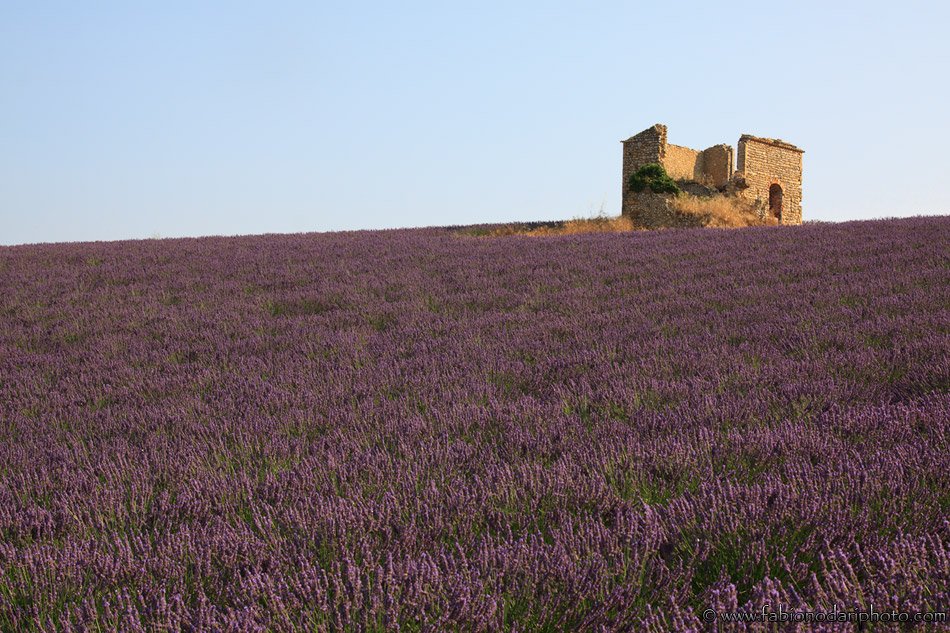
Lavender cultivation here dates back centuries, though the fields expanded dramatically in the 19th century, when distillation techniques improved, and the demand for essential oils grew across Europe. The Valensole Plateau sits at just under 1,000 meters in altitude, with fertile soils and sunny weather, creating ideal conditions for this crop. Walking along the D6 or stopping at one of the small parking areas along the way, you can see neat rows of lavender, often dotted with old stone sheds that farmers once used to store tools and essential oil stills.
Many of the local farmers still harvest by hand, as they have for generations, producing oils used in perfumes, soaps, and even culinary products. The plateau itself is dotted with small villages and farms, giving you the chance to taste lavender honey or simply wander in the countryside, waiting for the golden light of sunset. It’s truly a paradise for photography. There are quite a few places in the world that boast huge lavender fields (for example, Hokkaido), but none can match Valensole.
Luberon Natural Park and Charming Villages

A few kilometers from Valensole, the landscape opens onto the heart of Haute-Provence, with orchards, vineyards, and endless lavender fields. Rising above this countryside is the Rocher de Belle-vue, a rocky promontory that once sheltered the villagers of Saignon during barbarian invasions.
From its 35-meter-high summit, the view stretches across the Apt valley, the Calavon, Mont Ventoux, and the Montagne de Lure. The natural fortress, carved with stairs, rooms, and wells, supported a nearby medieval castle, and parts of the ruined manor are still visible today. Don’t forget to also visit the village of Goult and the surrounding Luberon countryside.
Gordes and Sénanque Abbey
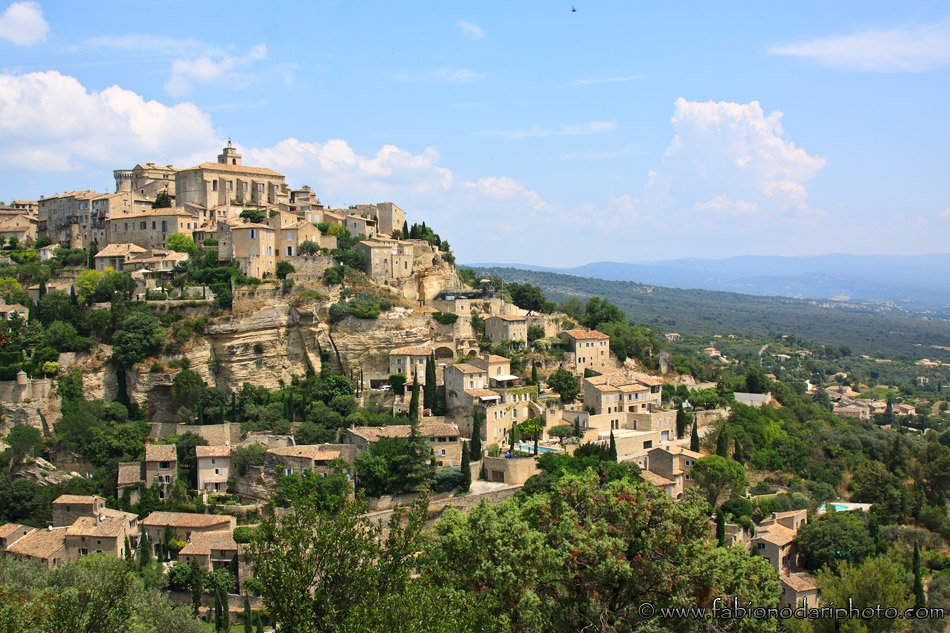
Perched on a rocky outcrop in the Luberon, Gordes is one of France’s most beautiful villages. The village is dominated by the medieval château, whose towers and ramparts offer panoramic views over the surrounding valley. Every corner of Gordes is truly gorgeous and rich in history.
Outside the village, the landscape stretches across the Luberon’s rolling hills, where fields of lavender, orchards, and dry-stone walls create a patchwork of colors and textures.

Sénanque Abbey sits in a quiet valley just below Gordes. This 12th-century Cistercian monastery is famous for its perfectly preserved Romanesque architecture and its fields of lavender, framing the abbey in a perfect way. Walking along the paths that lead to the abbey, you can feel the sense of calm and timelessness that has drawn monks, painters, and photographers for centuries, making it one of Provence’s most iconic places.
This is also where the itinerary ends. If you rented a car, you might want to return it in Avignon, which is nearby and also has an airport for your next destination.
Photo Tips and Final Thoughts
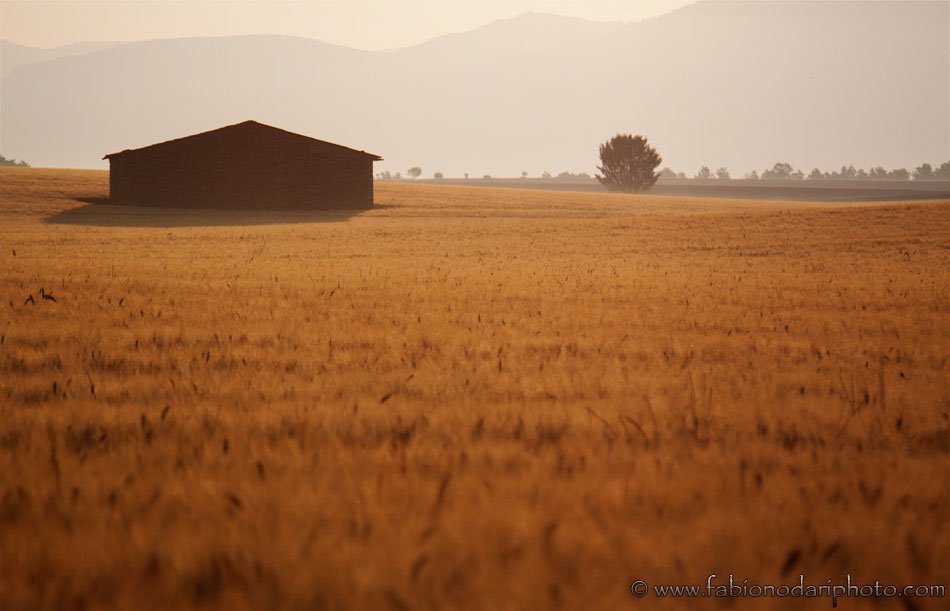
I’m sure you’ll take many good pictures if you visit Provence. This place is simply amazing. It’s a good idea to bring a wide-angle lens with you. If you plan to photograph the griffon vulture (though October is the best season for this kind of photography), bringing a long lens is a good idea.
Don’t forget to bring a good tripod. If you want to create double exposures, you might want to check my review of Luminar Neo.
I think the best time for a landscape photographer is sunrise. Besides the perfect light, it’s not too hot, and there are no tourists, unlike at sunset. This means that you should wake up quite early, around 5:00 am.
If you plan to bring a drone, be aware that drone flying in France is regulated, and Provence is no exception. Hobby drones must generally stay below about 120 meters (400 ft), be kept within visual line of sight, and avoid flying over populated areas or airports without permission. Drones over a certain weight or with cameras usually must be registered on the French DGAC portal (AlphaTango). Privacy laws also restrict filming people without consent
Many villages and natural areas, and especially protected sites like the Calanques, have additional restrictions or outright bans unless you obtain local authorization. Always check the official Géoportail drone restriction map before you fly, and respect no‑fly zones to avoid fines or legal issues.
Here are more pictures of Provence, and here you can find my road trip guide to another amazing place in France: Normandy and Brittany. Here I talk about the beautiful Jacaranda trees in Yunnan, China.


