
From Lanzhou to Dunhuang, in this travel guide, I’ll explain how to explore this ancient route in China and discover some of the country’s most beautiful landscapes.

Gansu may not be the remote area it once was, but it remains one of the most interesting places to explore in China. The stretch between Lanzhou and Dunhuang follows the historic Silk Road through wide valleys and deserts that survived the passing of time.
Interestingly, not many foreigners consider visiting this area even after their second trip to China, which means that, so far, this region is quite popular among Chinese tourists but not among travelers from other countries.
This route crosses the Hexi Corridor (河西走廊), a long, narrow strip of land between the Qilian Mountains to the south and the Gobi Desert to the north, and for centuries, it served as a vital artery of the Silk Road, linking China with Central Asia. Traders, pilgrims, and armies all moved through this region, leaving behind forts and other historical sites.
While some places are gaining popularity, it’s still easy to feel like you’re stepping into a less-traveled part of China, especially if you go a little off the main track.
Best Time to Visit Gansu

Spring (April–June) and Autumn (September–early October) are the best seasons. It rarely rains in this very arid area, which means summer can be brutally hot, especially in the western desert, and winter can be quite cold.
As always, avoid national holidays at all costs, especially the first week of October and May.
How to Travel the Hexi Corridor (河西走廊)

You can either travel East to West (from Lanzhou toward Dunhuang) using a combination of high-speed trains and local transportation, or the other way around. There’s an airport in Dunhuang, so you can easily fly there and then slowly move towards Lanzhou.
I recommend the second option, from Dunhuang to Lanzhou, especially if you want to continue your trip to other areas such as Xi’an and Beijing (here is my travel guide). If you also want to explore Xinjiang, then it’s better to start from Lanzhou (here’s my travel guide to Hemu, a beautiful village in Northern Xinjiang).
- Dunhuang → Mogao / Yangguan / Yumen Pass: Private driver recommended
- Dunhuang → Jiayuguan: High-speed train (~4.5h)
- Jiayuguan → Zhangye: High-speed train (~2h)
- Zhangye → Jinchang: Car or local bus (~2h)
- Jinchang → Lanzhou: Private driver recommended (~4h)
As you can see, some locations are easily accessible via public transportation and Didi, while others are more challenging to reach. This begs the question:
Travel Agency vs DIY?
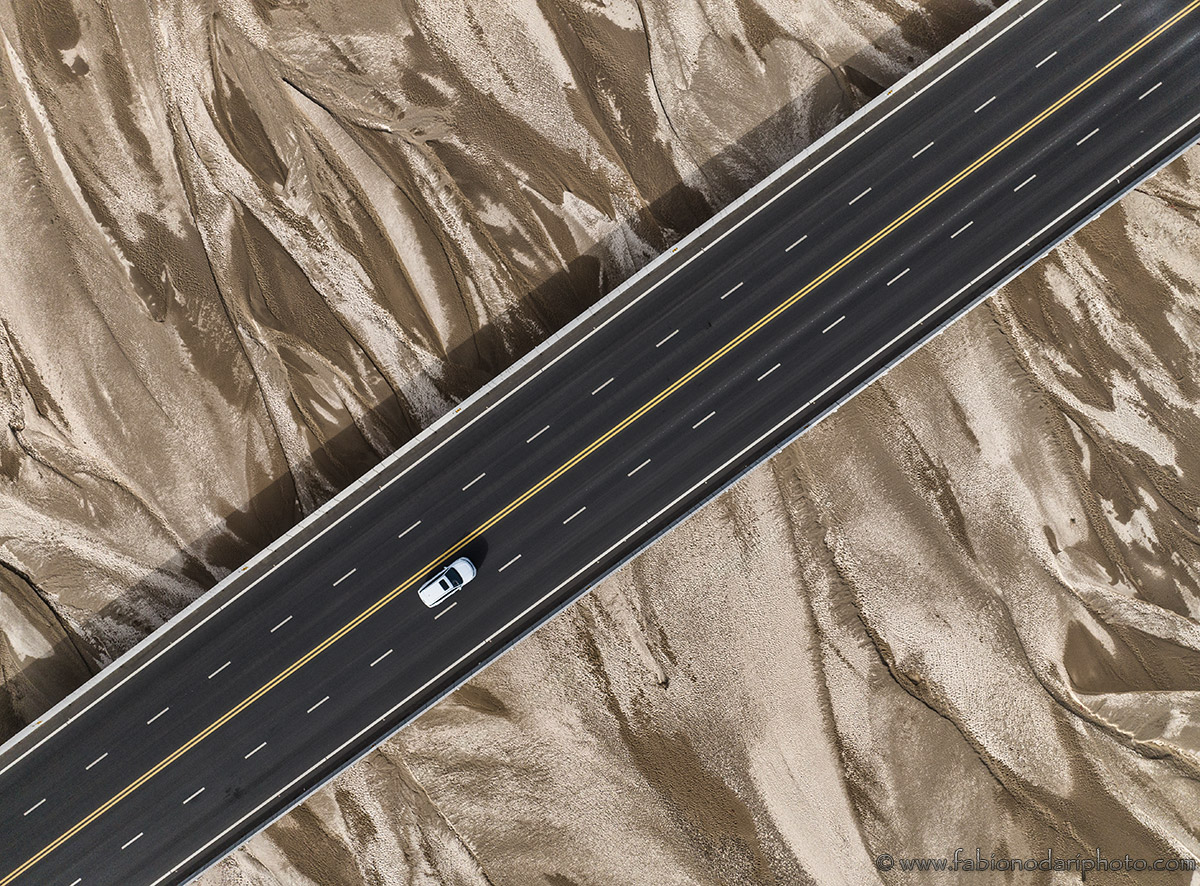
To be honest, it’s possible to do this trip independently, especially between major cities where high-speed trains are efficient and reliable. However, some remote areas, like the desert, are best accessed with a private driver or an organized tour.
If you’re short on time or want to focus on photography and culture without worrying about logistics, I recommend going with a specialized agency. I work closely with one, feel free to DM me on Instagram if you want the contact.
If you prefer, you can also combine the two approaches: travel independently between cities and arrange a private driver for the harder-to-reach spots.
Dunhuang (敦煌)
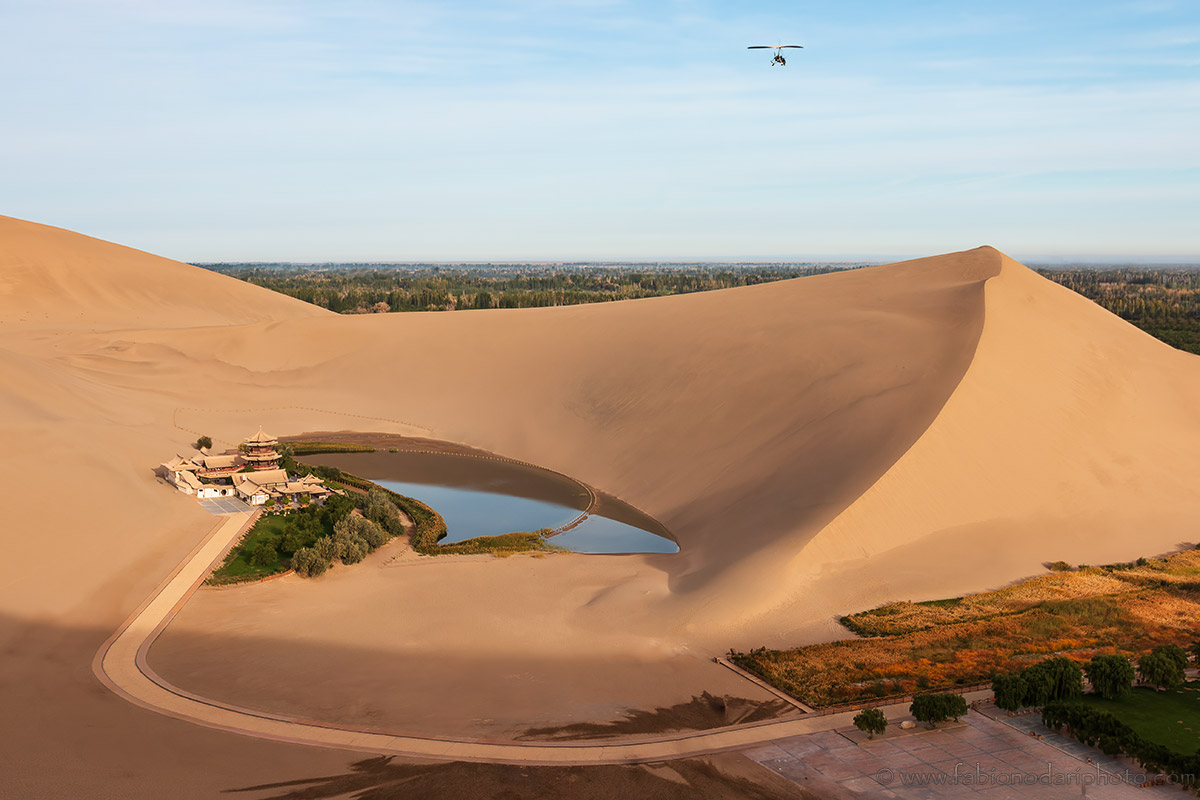
Dunhuang sits at the western edge of the Hexi Corridor, where the arid Gansu plains begin to blend into the Taklamakan Desert. Historically, it was a major Silk Road crossroads linking China, Central Asia, and India. The city’s location made it a vital hub for trade for over two millennia. It flourished particularly during the Han and Tang dynasties, when caravans and pilgrims would rest here before continuing into the desert.
Surrounded by mountains and desert, Dunhuang also served as a natural defensive point, and its rich mix of Chinese, Tibetan, Indian, and Persian influences remains evident in its art, architecture, and traditions.
I wrote a detailed travel guide to this area in this article. You use Dunhuang as a base to explore the areas and nearby landmarks. I recommend this hotel, but you’ll find plenty of other options in the town.
The main highlights of this part of Gansu include:
- Crescent Lake and Mingsha Dunes (月牙泉 & 鸣沙山): A spring-fed lake surrounded by towering dunes. This area is extremely touristic, so don’t expect to be in a forgotten oasis in the desert (drones are not allowed here, unfortunately).
- Dunhuang Night Market (敦煌夜市): Local snacks, crafts, and a laid-back evening vibe.
- White Horse Pagoda (白马寺): was built to commemorate Tianliu, the white horse of the Buddhist monk Kumārajīva, which carried Buddhist scriptures all the way from Kucha to Dunhuang in China c. 384 CE.
Don’t forget to watch the Ancient Sound of Dunhuang theatre show 樂動敦煌. It’s quite nice.
Mogao Caves (莫高窟)
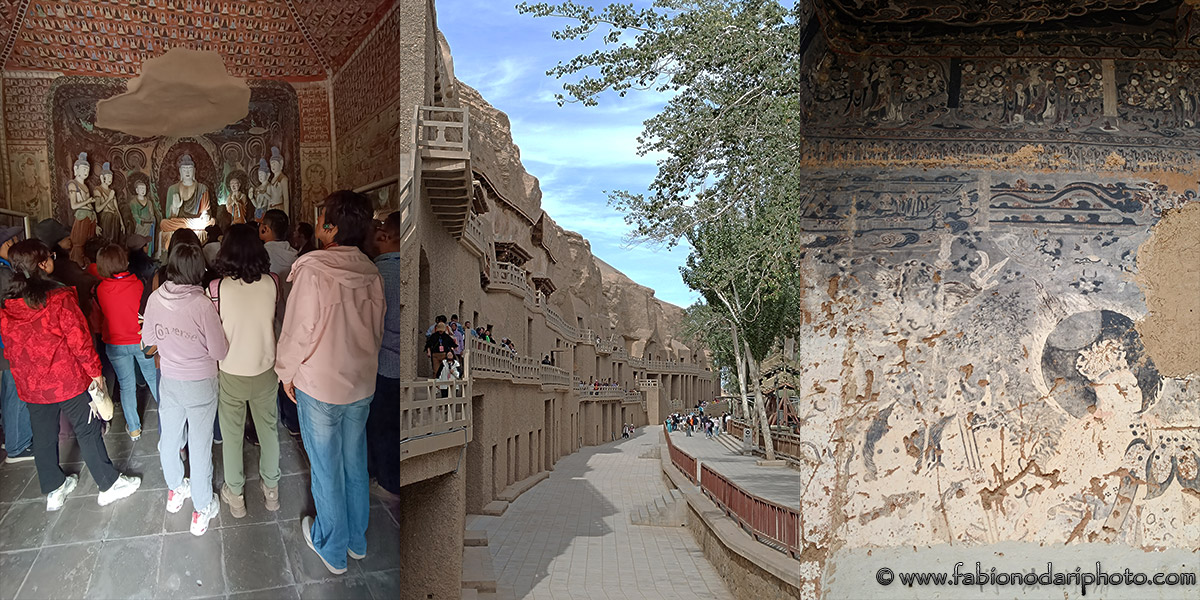
The Mogao Caves are located about 25 kilometers southeast of Dunhuang, along a cliff at the edge of the Danghe River. They were first excavated in the 4th century by Buddhist monks and gradually expanded over a thousand years, eventually becoming one of the most important centers of Buddhist art in the world.
Today, the site contains nearly 500 caves, over 2,000 painted sculptures, and more than 45,000 square meters of murals, all reflecting a rich blend of Chinese, Indian, Persian, and Tibetan influences that passed through the Silk Road dating from the 4th to the 14th century. In 1987, the caves were listed as a UNESCO World Heritage Site.
Visits are regulated to protect the artwork, and you cannot enter the caves independently; you’ll have to book a guide at the park entrance. This area is quite touristy as well, but luckily, if you book an English-speaking guide, there’ll be fewer people in your group.
Yumen Pass (玉门关) and Dunhuang Yadan Global Geopark (敦煌雅丹世界地质公园)
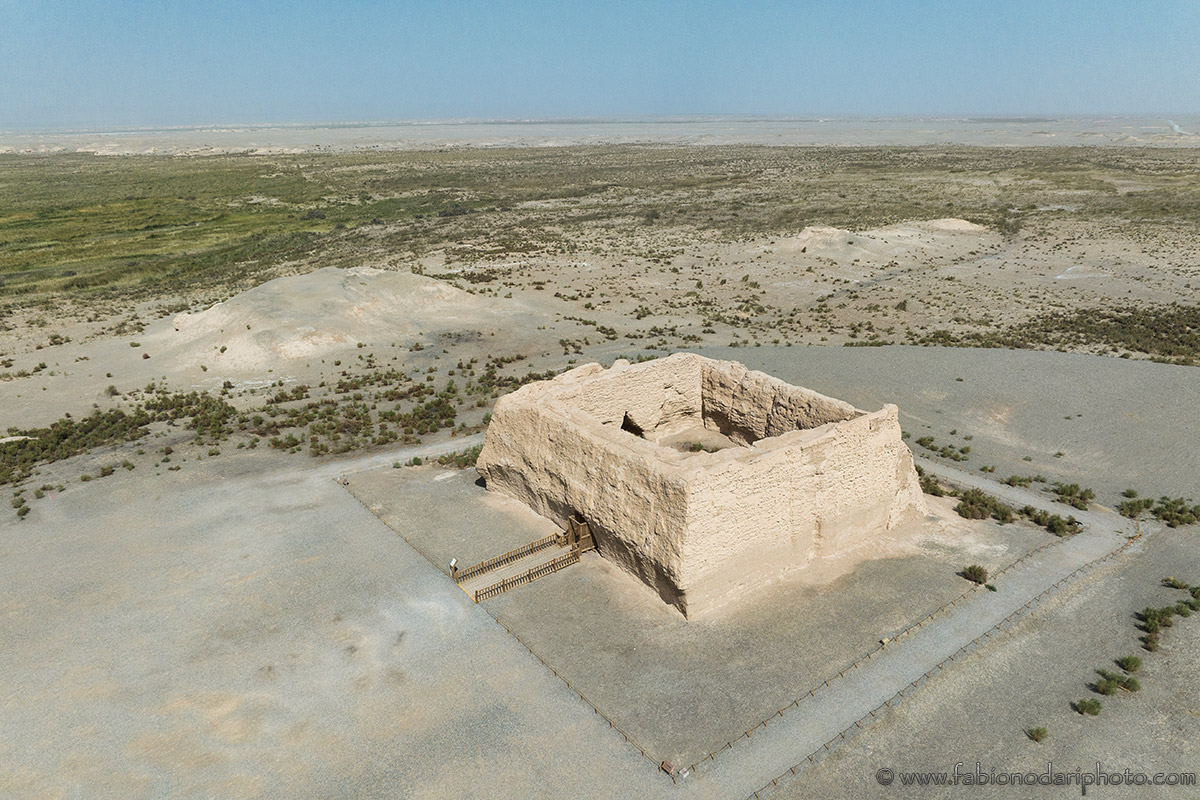

Yumen Pass (玉门关), or the Jade Gate, was one of two major western checkpoints of the Han Dynasty. Named after the jade caravans that once passed through on their way into China, it controlled access to the northern route of the Silk Road. Located about 90 km northwest of Dunhuang, it was both a military outpost and a trading checkpoint. To get to this place, you’ll need a private driver.
Not far from the pass lies the Dunhuang Yadan Global Geopark (敦煌雅丹世界地质公园), an isolated patch of wind-eroded sandstone ridges and outcrops. The area is largely undeveloped and rarely visited, and it’s a paradise for aerial photography (don’t forget to register your drone before coming to China).
Even here, you’d need a private driver.
Yangguan (阳关镇)
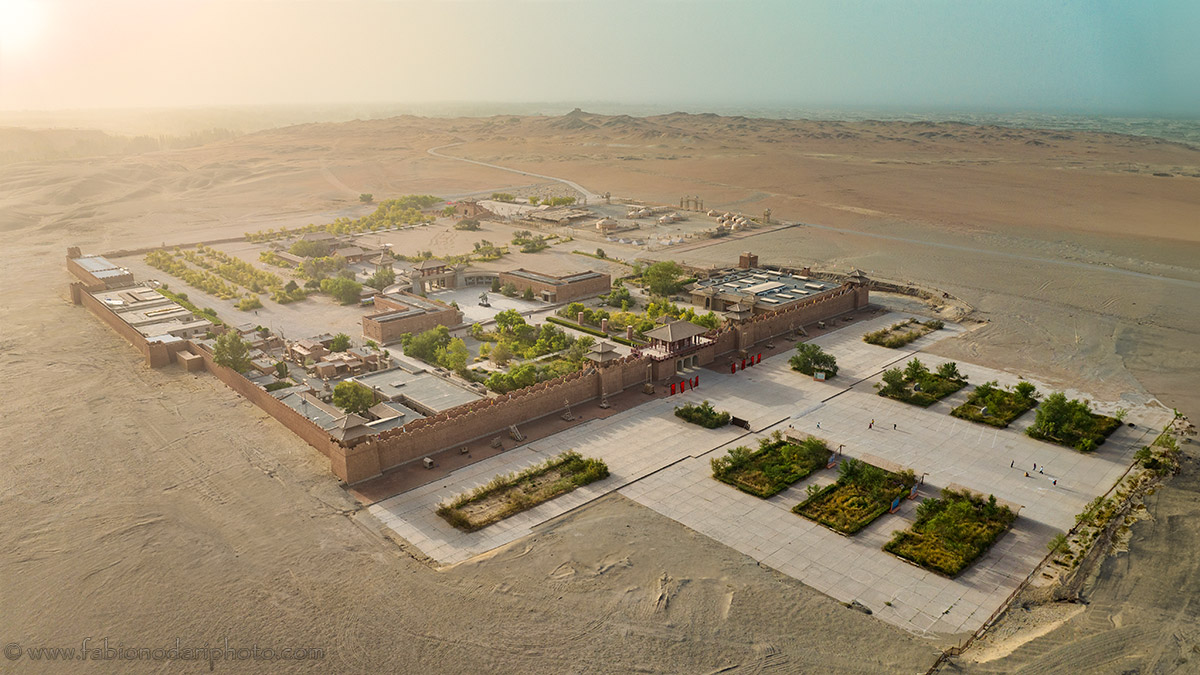
Yangguan (阳关), meaning “Southern Pass,” was established during the Western Han Dynasty under Emperor Wu as one of the two main gateways for travelers leaving imperial China toward the Western Regions. It was used primarily by caravans and envoys taking the southern route of the Silk Road. Yangguan complemented Yumen Pass to the north, and together they secured trade and protected the border.
Today, the site includes a reconstructed gate, a small museum, and the remnants of ancient beacon towers. It’s quieter than many other historical stops in Gansu, and probably the most interesting part of this area is the nearby vineyard (in this village: 龙勒村), something you most likely won’t expect to see in the middle of the desert.

This and similar projects scattered across the desert in other provinces are part of the famous poverty alleviation programs pushed by Xi. Basically, local people receive government subsidies to help them develop these barren lands. Grapes are one of the few plants that can grow in the area, and in no time, tens of wineries have popped up all over the desert.
If your next question is: how about the wine, is it good?, the answer is, honestly, mostly not. There are a few excellent exceptions, of course, but they tend to be much more expensive than European wine, making it not worth it.
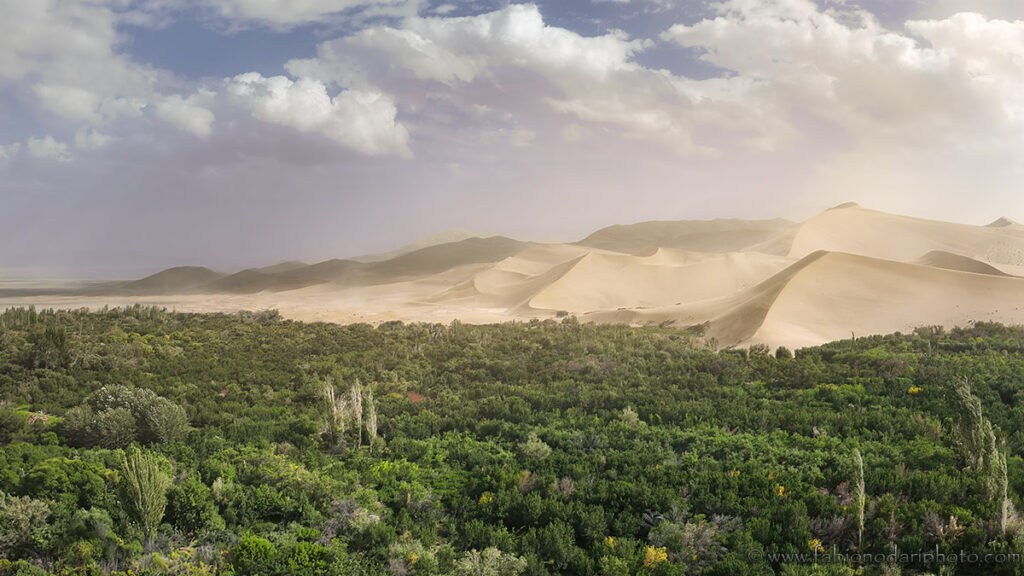
Another thing you will notice driving around Dunhuang is straw patterns on the sand, part of China’s massive anti-desertification efforts. These help fix dunes in place and support plant growth, with incredible results.
In some areas, you’ll also find test fields with salt-tolerant shrubs, fast-growing grasses, and small reforested plots.
Jiayuguan (嘉峪关): Where the Great Wall Ends

Your next stop will be Jiayuguan (嘉峪关), located at the narrowest point of the Hexi Corridor. This place has long marked the symbolic and strategic western end of the Great Wall. It was built in 1372 during the early Ming Dynasty and served as both a military defense and a customs checkpoint. Jiayuguan was also the gateway through which exiled officials and Silk Road traders would pass, stepping into the vast deserts and unknown lands to the west.
The massive Jiayuguan Fort (嘉峪关关城) is still there, standing between snow-capped peaks and dusty plains, but it has unfortunately been completely renovated. You can walk along the fortress walls, climb its towers for views of the surrounding Gobi landscape, and watch the sun set in the desert.
Zhangye (张掖) and the Danxia Rainbow Mountains
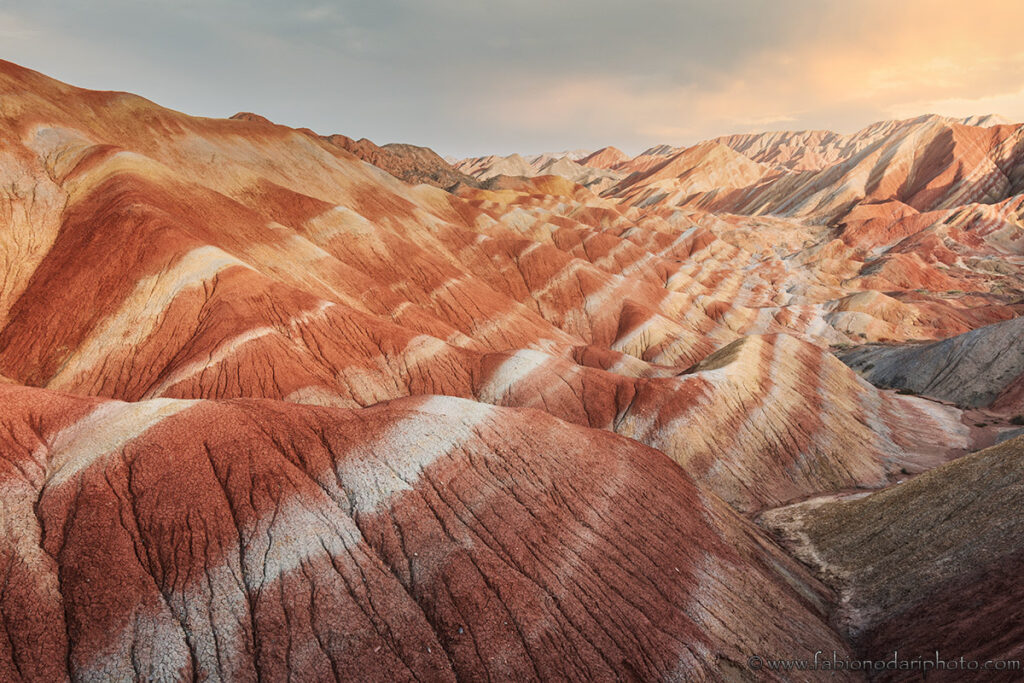
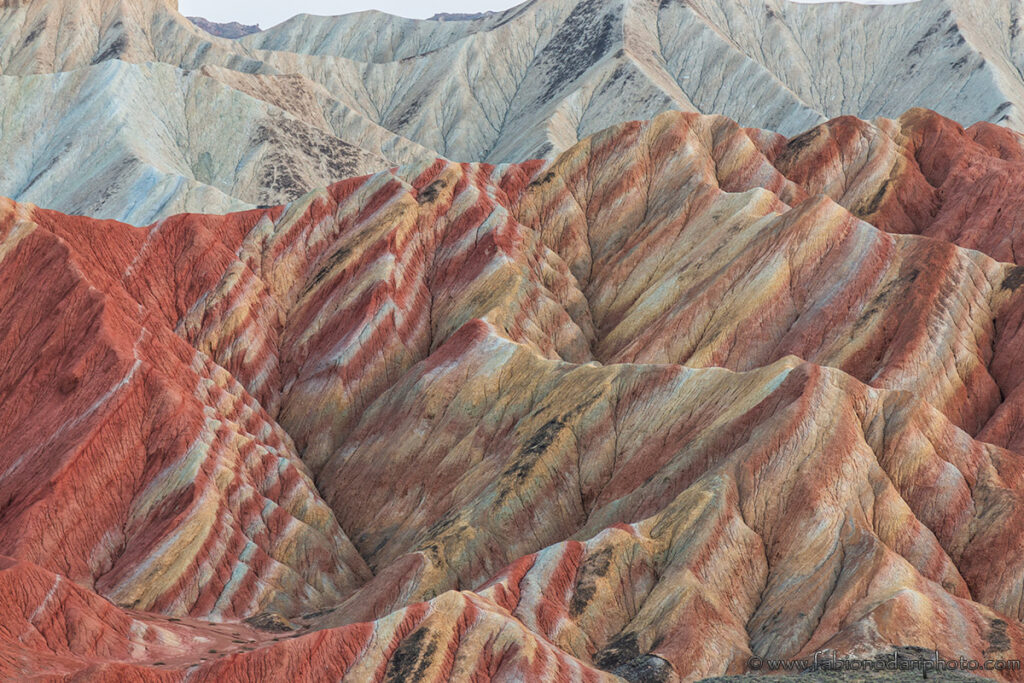
Zhangye was once a garrison town under General Ban Chao during the Han Dynasty, and later an important post on the Silk Road. Its legacy is still visible in temples and ruins. Today, it’s best known for the dramatic landforms of Danxia National Geological Park (张掖丹霞国家地质公园).
I wrote a detailed Travel Guide to this area. You can read it here. Long story short, this is one of the most epic landscapes in China, but it’s also incredibly overcrowded, not unlike other iconic places such as Zhangjiajie (here my guide).
If you want to enjoy a similar landscape without people, check out this guide to Turpan, in Xinjiang.
Glamping at Mars Base Camp in Jinchang (金昌)
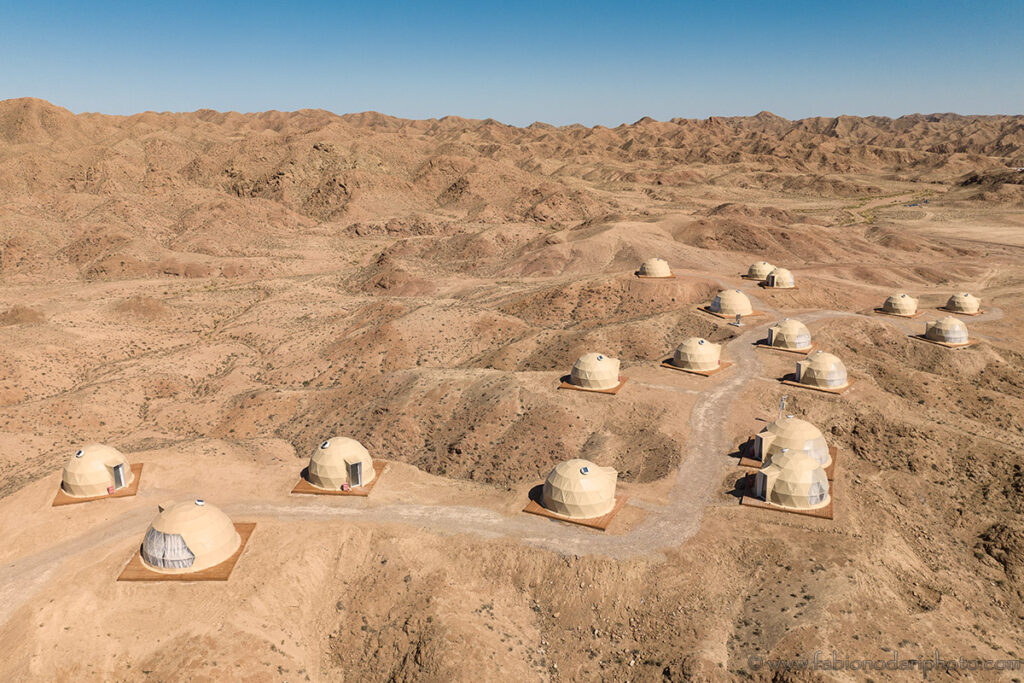
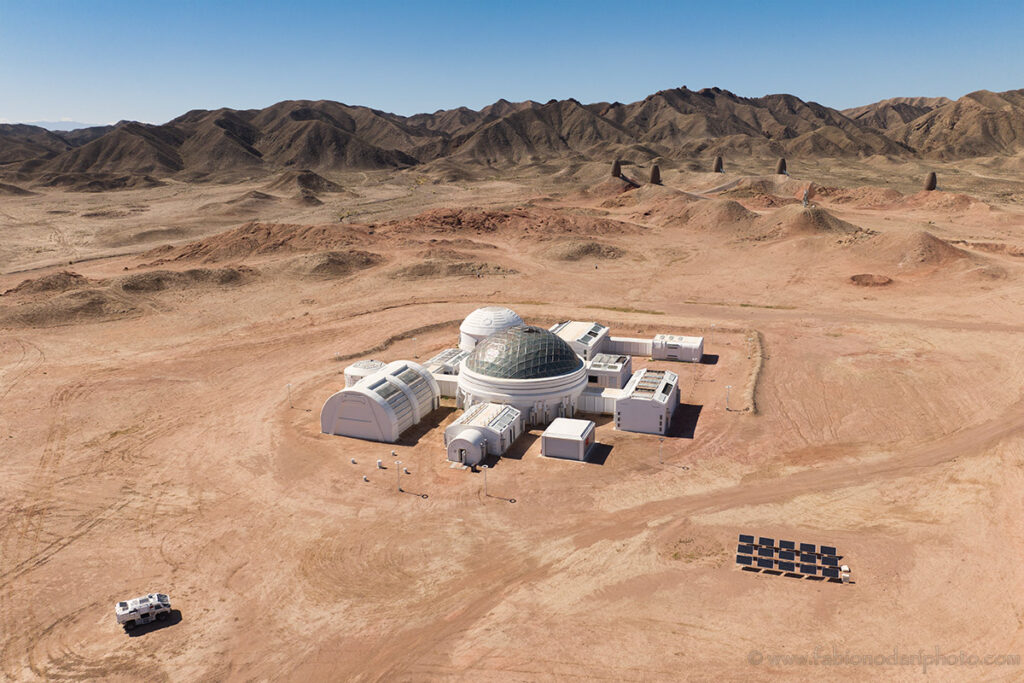
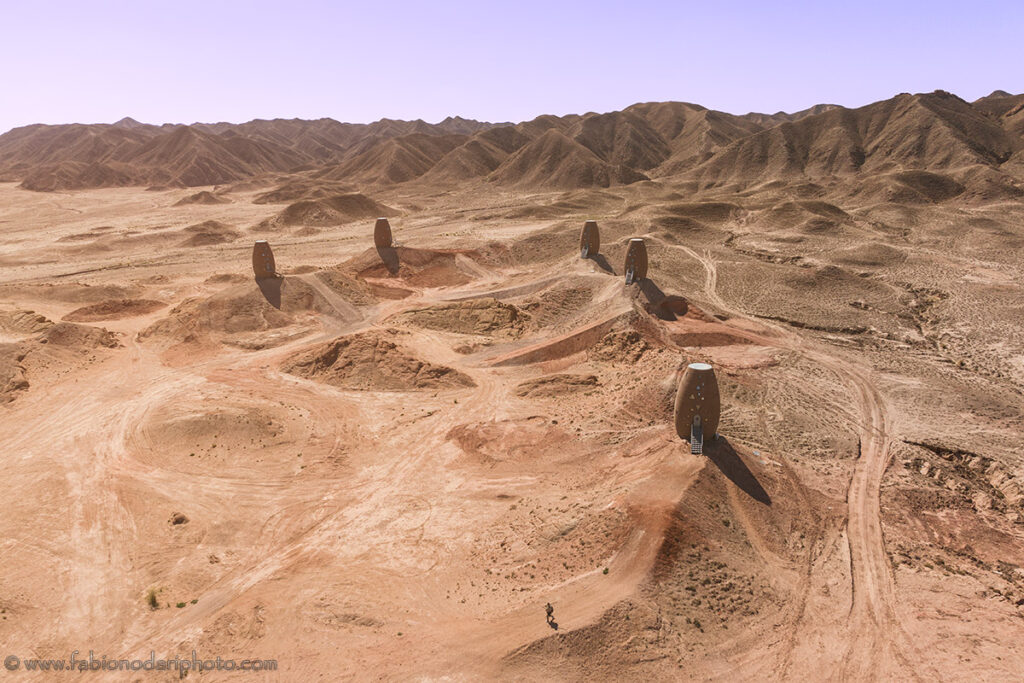
If you want to relax for a while after all the driving in the desert, then you should check out this Glamping site called Kim Chang Mars camp. The name is fitting because it really looks like a Mars camp, and there’s also a small “Mars Base” where you can truly feel as if you were in a sci-fi movie.
Lanzhou (兰州): Gateway to the West

Lanzhou, the capital of Gansu Province, sits at the upper reaches of the Yellow River and has long served as a vital gateway between China’s heartland and its far western territories. Surrounded by mountains and narrow river valleys, the city developed as a Silk Road hub during the Han Dynasty, facilitating trade between China and Central Asia.
To be honest, it’s not a particularly beautiful city, but you can spend one night there and try one of China’s most famous dishes: Lanzhou hand-pulled beef noodles (牛肉面).
The Gansu Provincial Museum (甘肃省博物馆) is also quite interesting, and it houses a strong collection of Silk Road relics and Tibetan artifacts, including the famous Galloping Horse bronze sculpture.
From Lanzhou, you can either end your trip or continue to Xi’an, which is located approximately 3 hours away by train.
For all reservations (whether for Trains, Flights, or Hotels), I always recommend Trip, which, compared to Booking, has better prices in China and more options.
The Southern Part of Gansu: Gannan (甘南)


Gannan Tibetan Autonomous Prefecture, in southern Gansu, is often overlooked. It feels like a completely different world from the rest of Gansu, not just because of the altitude but also because of the strong Tibetan culture and the vast, open grasslands.
If you don’t have much time to explore larger Tibetan areas, such as Western Sichuan, but still want to discover Tibetan Buddhist heritage, I recommend a quick trip to Gannan.


Labrang Monastery (拉卜楞寺) is one of the most important Tibetan Buddhist monasteries outside of Tibet, and it’s the spiritual heart of Gannan. Located in Xiahe, it’s a massive complex that feels more like a small town than a monastery, with golden roofs, white stupas, and narrow alleys where monks in deep red robes go about their day. What makes Labrang special, beyond its size and history, is how alive it still is.
You’ll see hundreds of locals doing the kora around the monastery walls, spinning endless rows of prayer wheels, while the scent of yak butter candles drifts from the temple halls. If you’re into photography, this place is a goldmine.
Final Thoughts

This stretch of Gansu offers both beauty and history. It’s not untouched (plenty of Chinese tourists), and the infrastructure is growing. But if you avoid peak times and venture slightly off route, you’ll still find fewer people.
This is a part of China that everyone has heard about (who doesn’t know about the Silk Road), but actually, not many people consider visiting. So, why not include it in your China itinerary?
As always, don’t forget to get a VPN before traveling to China. I recommend this one. If you prefer an eSim, this is a great option. Finally, don’t forget to get a good travel insurance such as this one.
If you are looking for other less touristy areas to discover in China, I’ve got you covered: Jingmaishan in Yunnan, Western Sichuan, Tibet off the beaten path, and Qinghai.
Here you can find my complete travel guide to China.


