
In this article, I explain whether China is a good destination for senior travelers. I also explain some of the challenges they might face and how to overcome them.

People often ask me whether China is a good destination for older travelers. In short, my opinion is yes. In fact, many people over 60 probably enjoy China more than younger visitors.
Unlike younger travelers who often try to cram as much as possible into two weeks, mature travelers usually have more time and are happy to travel at a slower pace. China rewards this type of travel.
That said, China isn’t perfect, and there are some challenges you should be aware of before planning your trip.
Is China a Good Destination for Older Travelers?

After travelling extensively and living and working in China for many years, I can honestly say it is one of the safest countries in the world. Violent crime is extremely rare, the infrastructure is excellent, and the high-speed rail network makes travelling around the country surprisingly comfortable.
China also offers a high level of comfort for those who can afford it. Hotels, private transfers, domestic flights and high-speed trains are generally very efficient. One example is the excellent business class available on high-speed trains, which in China is considered one level above first class. On longer journeys, this can make a significant difference for older travelers who value comfort and extra space.
Chinese culture also places a strong emphasis on respecting older people, something that many visitors notice during their trip. It is not unusual to see younger people offering their seat on public transport or staff going out of their way to assist elderly guests.
The biggest challenge is not safety, but rather the speed at which modern China operates. Digital payments, language barriers, and crowded attractions can sometimes feel overwhelming, especially for first-time visitors. Fortunately, these difficulties are usually manageable with a bit of preparation.

Another important factor to consider is the weather. China is a huge country, and conditions vary enormously from one region to another. Summers can be extremely hot and humid in some areas, while winters in northern China can be bitterly cold. For this reason, choosing the right season is often just as important as choosing the right destination. Here you can find some more info about arranging your trip to China.
Elevation is another aspect that shouldn’t be overlooked. While most popular destinations are located at relatively low altitudes, places such as Tibet, and parts of western Sichuan, Qinghai and Yunnan sit well above 3,000 meters. High altitude affects everyone differently, but older travelers may find it more challenging. Personally, I think destinations with moderate climates and lower elevations are usually the best choice for a first trip to China.
Medication is another area where some planning is advisable. Major cities have excellent hospitals and pharmacies, but specific foreign medicines may not always be available, and packaging is often only in Chinese. If you take prescription medication regularly, I strongly recommend bringing enough for the entire trip, together with a copy of the prescription and the generic name of the drug.
Food allergies also deserve special attention. Unlike in many Western countries, restaurants in China are generally not required to provide allergen information, and awareness of severe food allergies is still limited. This doesn’t mean travelling is impossible, but every meal may require direct communication with restaurant staff. Travelers with serious allergies should carry written allergy cards in Chinese and consider travelling with someone who speaks the language or joining an organized tour where the guide can communicate directly with the kitchen.
Overall, I believe that China is a great destination for senior travelers. With realistic expectations and a well-planned itinerary, most challenges can be easily managed, and you can focus on what really matters: enjoying one of the world’s most fascinating and diverse countries.
Is China Physically Demanding?

Well, it depends. One mistake I often see is people trying to see too much in a short amount of time. China is enormous, and traveling between regions can be tiring. While high-speed trains and domestic flights make getting around relatively easy, long travel days can quickly become exhausting if you are constantly changing cities.
Some attractions also involve considerable walking or stair climbing. Places like the Great Wall, the Avatar Mountains of Zhangjiajie, or certain sections of old towns built on hills can be more demanding than many visitors expect. On the other hand, other destinations such as Chengdu, Guilin, or much of Yunnan can be enjoyed at a much more relaxed pace. Personally, I would avoid itineraries that try to cover too much in a relatively short time.
Challenges You Should Realistically Expect

As I mentioned earlier, using apps and modern technology will likely be something you’ll need to deal with during your trip, and I understand that for some people this can be a bit difficult. That said, realistically, you’ll only need to learn a couple of functions on WeChat and Alipay, so it should be doable for everyone.
The language barrier can also be intimidating. Outside major tourist areas, English is not widely spoken, even in hotels or restaurants. This doesn’t mean traveling is impossible, but simple things such as ordering food, asking for directions, or using local transportation can sometimes require patience and a translation app.
Crowds are another factor to consider. China is a country of more than a billion people, and some famous attractions can become extremely busy, especially during weekends and national holidays. Fortunately, avoiding peak travel periods and choosing less touristy destinations can make a huge difference.
Public toilets are generally clean nowadays, especially in airports, train stations, and modern attractions, but they may not always meet Western expectations. In more rural areas, squat toilets are still common.
Finally, distances in China are often underestimated. Looking at a map, many places may seem close to each other, but traveling between regions can easily take an entire day. This is one of the main reasons I usually recommend slower itineraries and discourage visiting too many places in a single trip.
How Is the Quality of Hotels in China?

One aspect that I often see overlooked is the quality of the accommodation that people choose. In my opinion, choosing the cheapest hotels available is usually a mistake, especially for mature travelers.
After a full day of sightseeing, a good rest becomes extremely important. A comfortable bed, effective air conditioning or heating, a decent breakfast, and a quiet room can make a huge difference to how you feel the following day.
Fortunately, China offers excellent value for money, and four-star and five-star hotels are often far more affordable than their equivalents in Europe. Spending a little more on accommodation can significantly improve the overall experience without dramatically increasing the cost of the trip. If you plan to travel independently, I recommend booking your accommodations with Trip.com.
Cheaper hotels are not necessarily bad, but standards can vary considerably. Some budget properties may have hard mattresses, poor sound insulation, squat toilets, smoking odors, or staff who speak little or no English. While younger travelers may not care much about these inconveniences, they can quickly become frustrating during a two or three-week trip.
Which Regions Are Easiest to Visit?

China is incredibly diverse, and not all regions offer the same level of comfort or require the same amount of physical effort. Even within the same province, things can change quite a lot. Fortunately, many of the country’s most interesting destinations are also among the easiest to visit.
For first-time visitors, I generally recommend focusing on areas with excellent infrastructure, moderate walking requirements, and easy access by high-speed train or direct flights.
Beijing and Xi’an

These two cities are ideal for anyone interested in Chinese history and culture. Both are well-connected, easy to navigate, and offer a wide range of comfortable hotels. Keep in mind that some attractions, such as the Great Wall or parts of the ancient city walls, involve a fair amount of walking.
Shanghai, Hangzhou, and Suzhou
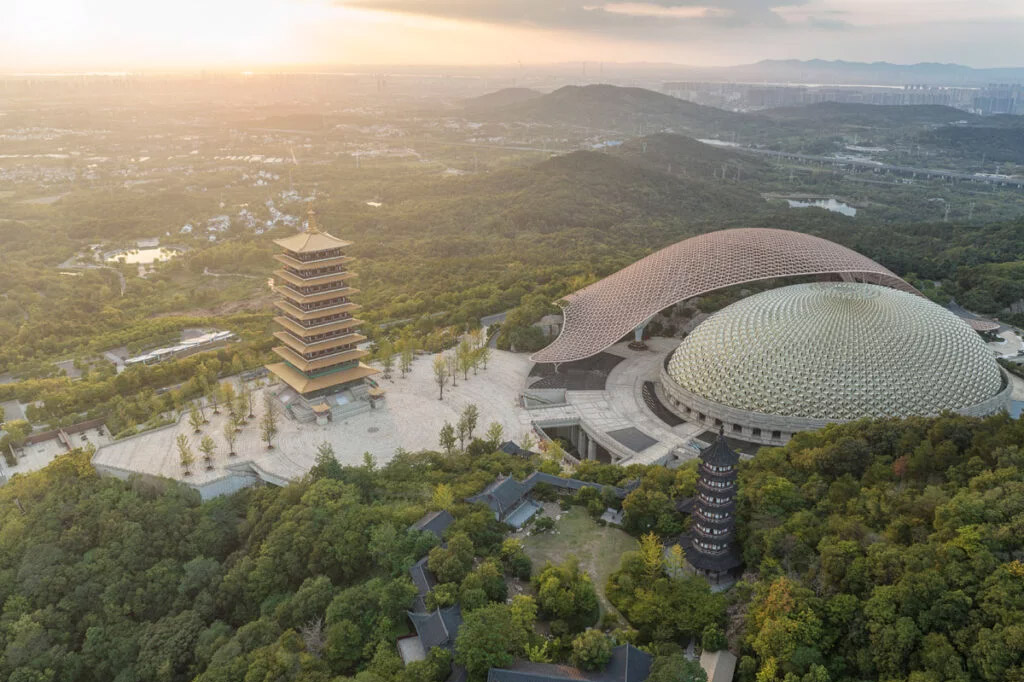
Eastern China is probably the easiest region in the country to explore. Transportation is excellent, distances are relatively short, and the pace of travel is generally relaxed. These destinations are particularly suitable for travelers who enjoy gardens, traditional architecture, and modern comforts. Here more info.
Sichuan + Chongqing

Chengdu is one of my favorite cities in China. Life moves at a slower pace, the food is excellent, and the city serves as a convenient base for visiting the famous giant pandas and nearby cultural attractions. Most places can be visited without excessive physical effort.
Chongqing is slightly more challenging than many other Chinese cities because of its terrain. This doesn’t mean older travelers should avoid it, but it’s worth taking into account when planning your itinerary.
Yunnan

If I had to recommend one region to mature travelers, Yunnan would probably be my first choice. The climate is pleasant for most of the year, the scenery is spectacular, and many destinations can be enjoyed at a relaxed pace.
Places such as Lijiang, Dali, Shaxi, and Kunming are particularly suitable for those who prefer slower travel and cultural experiences over rushing from one attraction to another.
Regions That Require More Preparation

Some destinations are better suited to more experienced travelers. The Tibetan Plateau sits at very high altitudes and may not be suitable for everyone. Xinjiang and some remote areas of western China are perfectly feasible to visit, but longer distances and more time spent on the road should be taken into account.
Ultimately, the easiest regions to visit are not necessarily the most famous ones. In my experience, travelers who focus on fewer destinations and choose comfort over ambition usually end up having a far more enjoyable trip.
Independent Travel or Organized Tours?

This is probably one of the questions I receive most often, and there is no single answer that works for everyone.
Traveling independently in China has become much easier than it was a decade ago. High-speed trains are excellent, hotels are easy to book, and many of the practical difficulties that once discouraged foreign visitors have largely disappeared. For experienced travelers who enjoy planning every detail themselves, independent travel can be very rewarding.
That said, China still presents some challenges. The language barrier can be frustrating; many services rely heavily on smartphone apps, and coordinating transportation across different regions can feel overwhelming, especially for first-time visitors.
Personally, I don’t think organized tours are necessary for everyone. However, they can make a lot of sense for mature travelers who would rather focus on enjoying the experience instead of dealing with logistics.
The type of tour you choose also makes a big difference. Personally, I’m not a big fan of those large group tours that try to cover half of China in ten days. China is enormous, and trying to see too much often becomes exhausting. In many cases, people end up spending more time on buses, trains and airports than actually enjoying the places they came to see.
In my opinion, smaller groups, private tours, or simply slower itineraries usually lead to a much better experience. Having comfortable hotels, private transportation, and someone else taking care of the logistics can make travelling in China surprisingly easy, especially for older travellers.
That said, there is no right or wrong choice. Some people enjoy the freedom of independent travel, while others prefer the convenience and peace of mind that come with an organized tour. Personally, I think the most important thing is choosing a travel style that matches your interests and energy level, rather than trying to follow an overly ambitious itinerary.
After all, the goal is not simply to visit China, but to enjoy it. If you need recommendations for a Chinese travel agency to help you plan your trip, send me a DM on Instagram or contact me here.
Final Thoughts

In my opinion, China is one of the most rewarding destinations for mature travelers. It offers an incredible combination of history, culture, landscapes, and cuisine, all supported by modern infrastructure that makes traveling much easier than many people expect.
Of course, China is not without its challenges. The country is vast, some destinations can be physically demanding, and the language barrier can occasionally be frustrating. However, with realistic expectations and a well-planned itinerary, most of these difficulties are easy to manage.
After living in China for many years and traveling extensively throughout the country, including accompanying groups of senior travelers, I have come to believe that mature travelers often appreciate China the most.
If you’ve always been curious about China but have been hesitant because of your age, my advice is simple: don’t let that stop you! With the right expectations and the right itinerary, China can be an unforgettable destination at any stage of life.


