
Are you planning a trip to Chengdu, the capital of Sichuan province in China? Find out what you can do and see in this beautiful city.

Chengdu (成都) is the capital of Sichuan, one of the most beautiful regions in China. I visited Sichuan for the first time on a trip to photograph the snow leopard and fell in love with the Province.
Chengdu is one of the most livable cities in China and supposedly the country’s fashion capital. In recent years, the city has become a massive techno hub; today, it has a total population of about 14 million. Despite recent developments, Chengdu has a long history dating back thousands of years, unlike other modern Chinese cities like Shenzhen. It’s also famous for its unique cuisine.
Last but not least, Chengdu is the city of pandas! So there are several reasons to spend a few days in this nice place.
When is the best time to visit Chengdu, and for how many days?
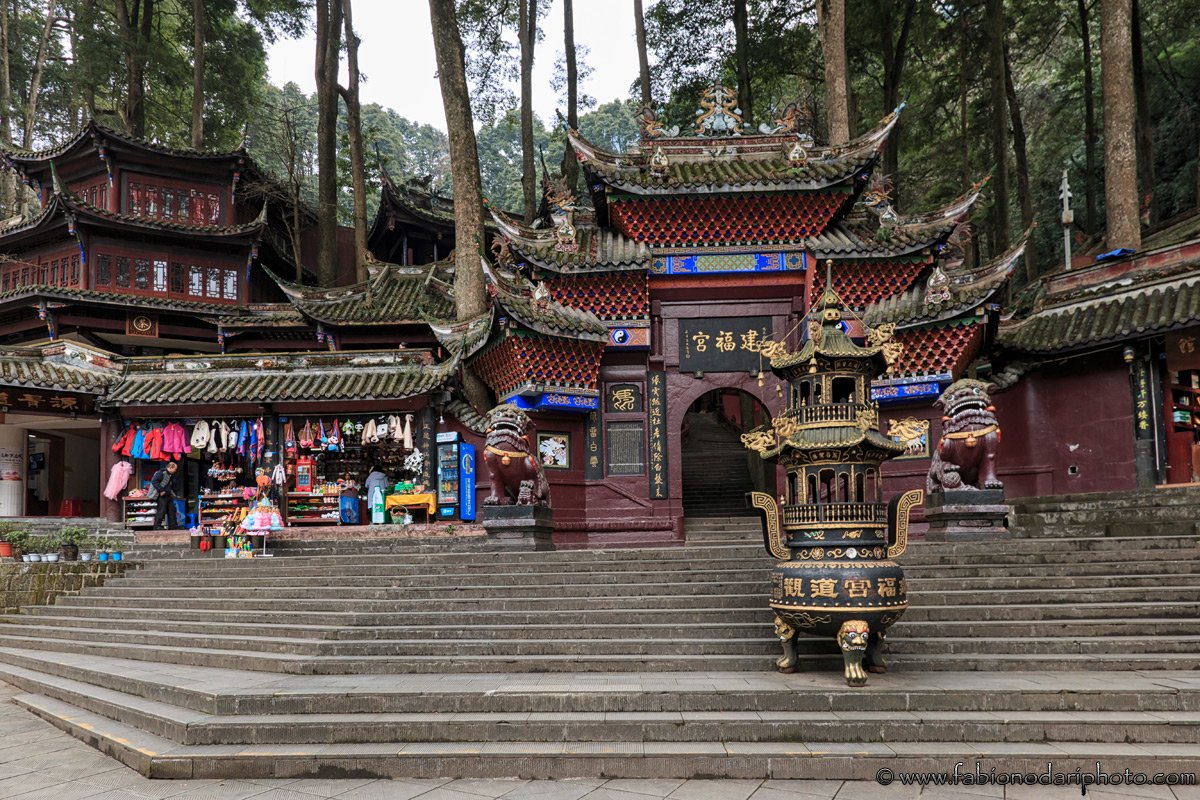
Like most other places in China, Spring and Autumn are the best months to visit Chengdu. Winters in Chengdu are not extremely cold, unlike in northern China, but the weather is often grey and foggy (Chengdu gets about 250–300 foggy, cloudy, or rainy days each year). During Summer, it rains a lot, and it’s quite hot. So, if you can choose, go in Spring and Autumn.
How long you stay depends on how many places you want to visit, especially those outside the city. Most people stay two to three days.
Where to stay
Like in most cities in China, the location of your hotel is quite important if you don’t want to spend most of your time in a taxi or on the subway. Chengdu is quite big, and a good area to explore is around the Anshun Bridge. I usually stay at this hotel, with an amazing river and bridge view.
What to visit: Anshun Bridge (安顺桥) and its surroundings
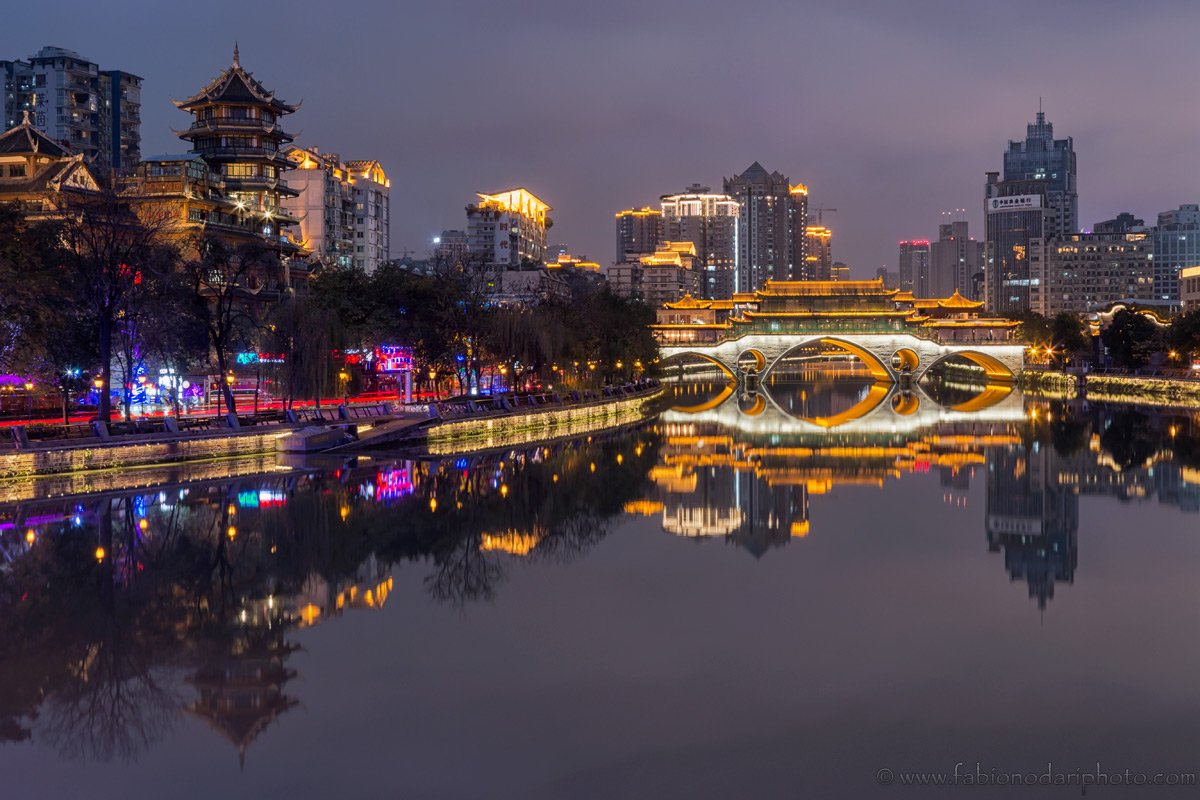
The Anshun Bridge, first built during the Qing Dynasty, is one of Chengdu’s most recognizable landmarks. It was rebuilt after being destroyed by floods, but it still keeps the style of traditional Chinese architecture. At night, the bridge is illuminated, and its reflection on the Jin River makes the whole place very photogenic.
Around the bridge, you’ll find shops, teahouses, and restaurants where you can stop for a meal or a drink with a view. In my opinion, the best time to visit is in the evening, when the lights are on, and the riverfront feels relaxed.
Kuanzhai Alley (宽窄巷子)
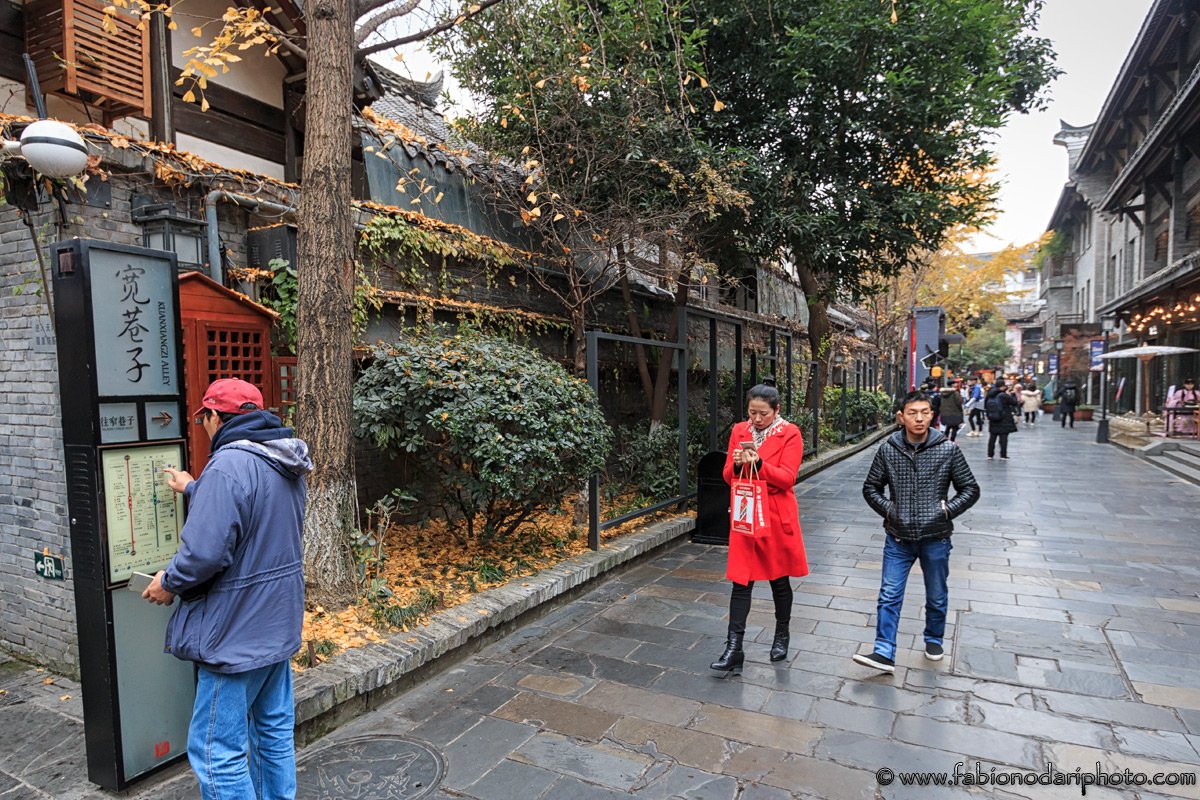
Kuanzhai Alley, comprising Kuan Alley, Zhai Alley, and Jing Alley, dates back several centuries. Many of the buildings have kept their old style, with gray brick walls and wooden doors, while inside you’ll often find modern cafés, bars, and restaurants. It’s a mix of history and everyday life that works well if you want to experience both sides of Chengdu.
The area isn’t very large, so a couple of hours is usually enough to walk through the alleys, stop for a snack, or do some shopping. Since it’s right in the city center, it’s easy to reach and fits well into a day of sightseeing.
Take a walk in People’s Park (人民公园)
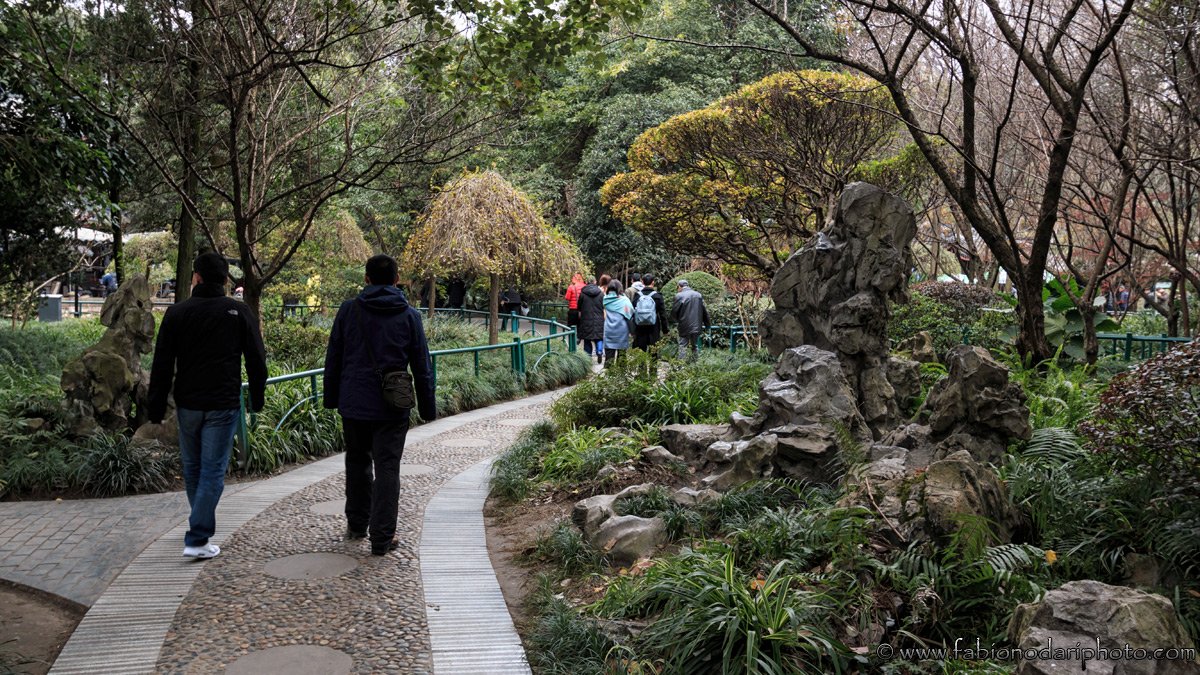
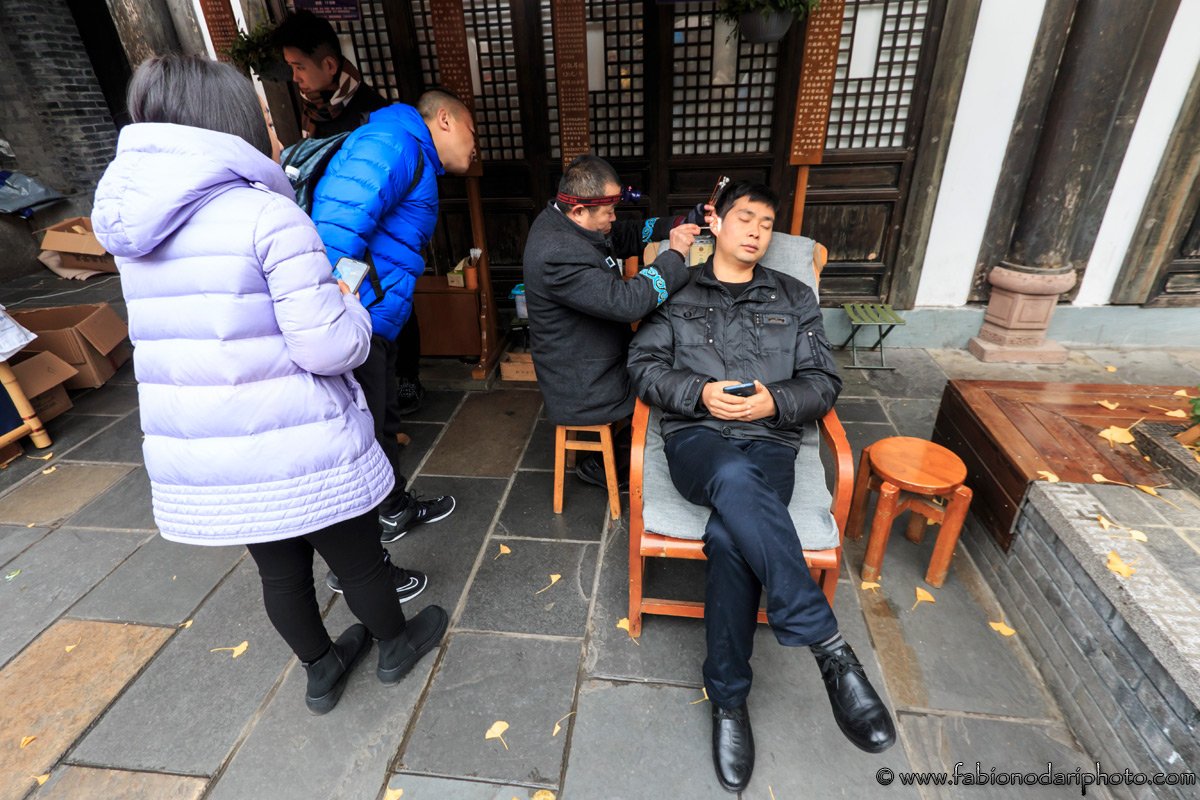
Every Chinese city has a public park where you can relax and see old people singing and dancing, and Chengdu is no exception. If you have never been to China, People’s Park is a good place to learn more about Chinese culture. The park was built in 1911 and covers a total area of 112,639 square meters.
Inside the park, you can find several gardens, a small lake, and a century-old Teahouse (鹤鸣茶馆). The park is in the city center, so getting there should be easy.
Shopping in the biggest mall in China: New Century Global Center (新世纪环球中心)
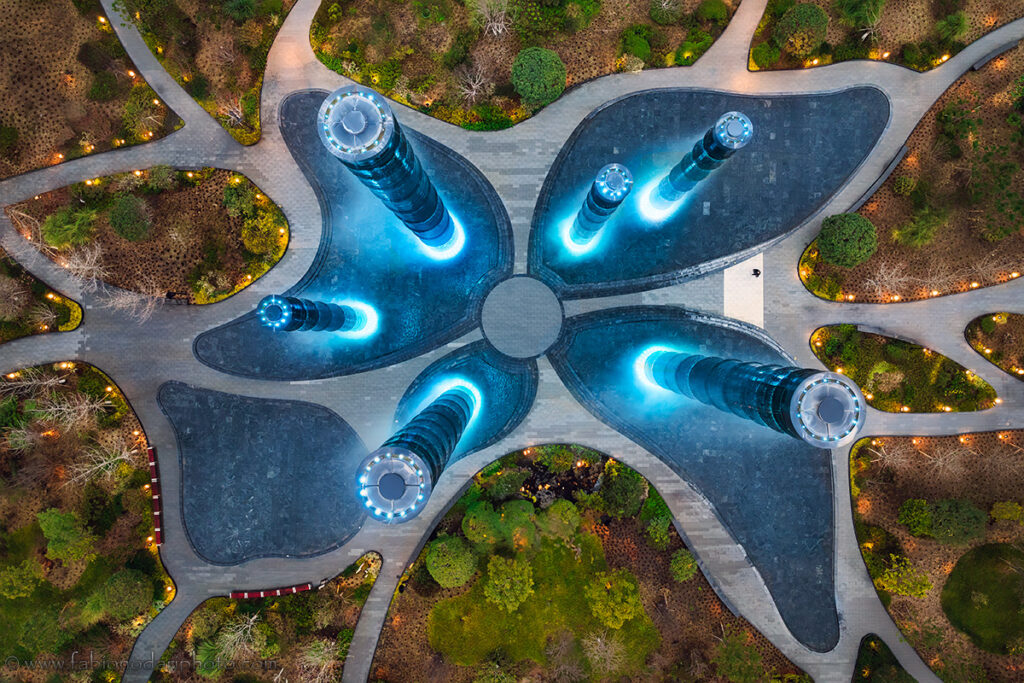

Completed in 2013, the New Century Global Center is one of the world’s largest buildings. It’s a multi-purpose building because it was designed to be a self-contained town.
It includes hotels with over 2,000 rooms available, an indoor beach area that is more than a kilometer long, countless offices and conference rooms, a university complex, two commercial centers, hotels, an IMAX cinema, a “Mediterranean village,” a pirate ship(!?), and an Olympic-size skating rink. It’s twice the size of the previous mall record holder in Dubai. You can reach the mall via the subway: take Line 1 to Jincheng Square Station.
Enjoying the spicy food
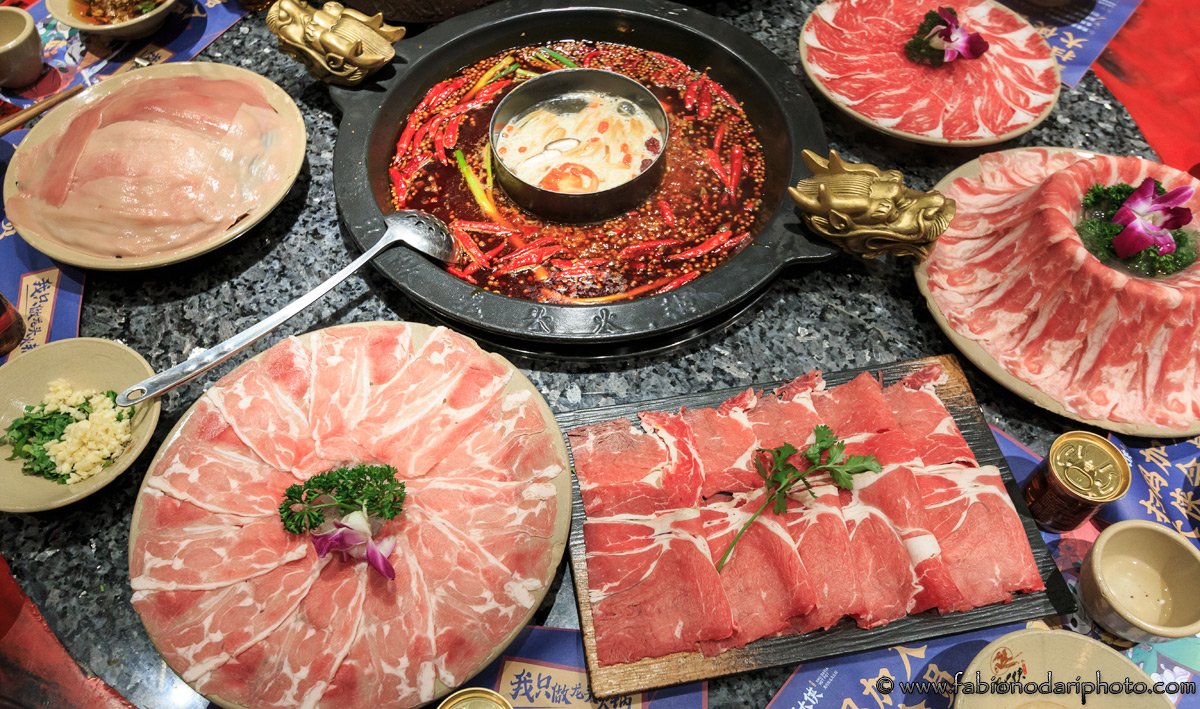
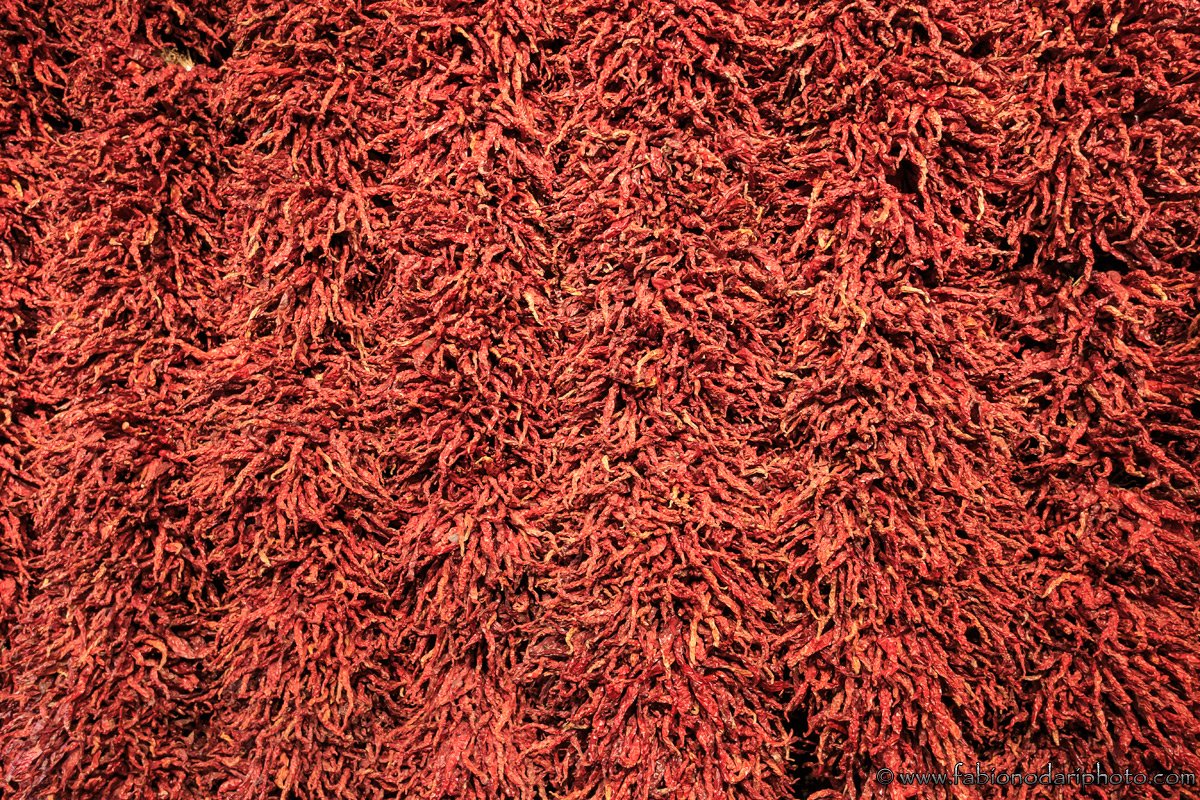
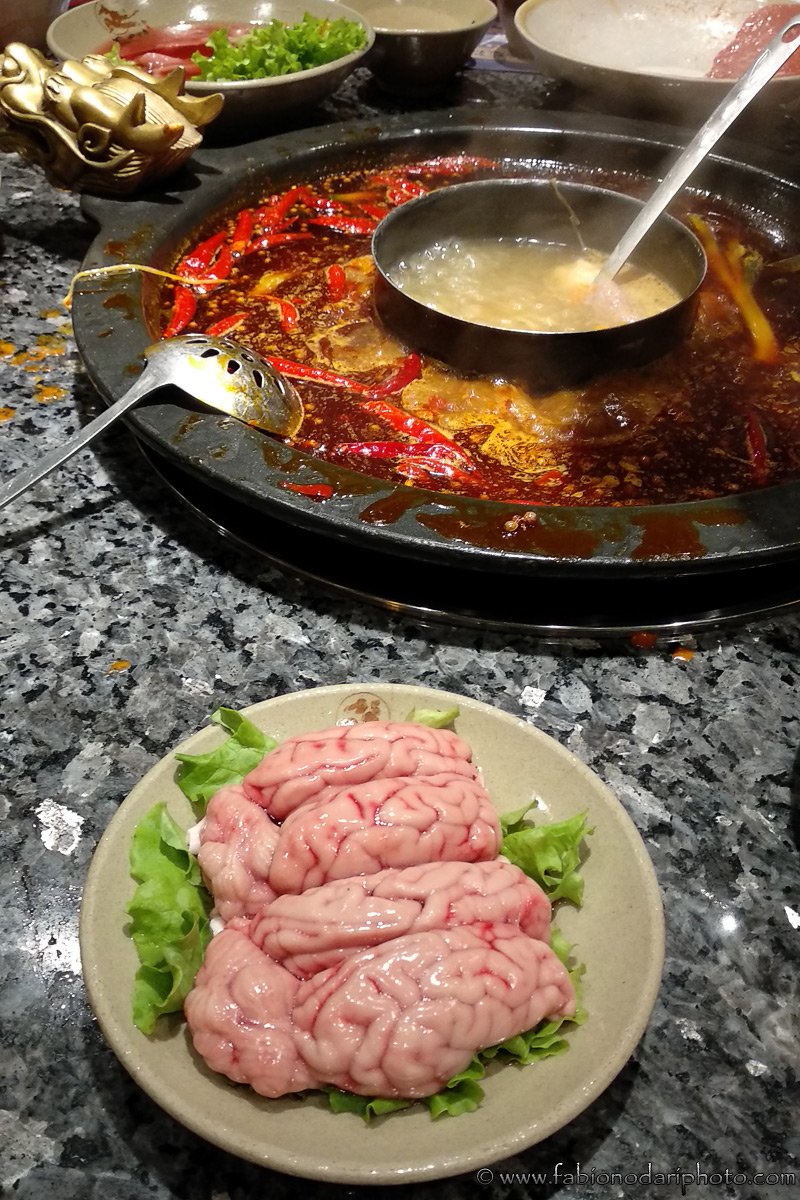
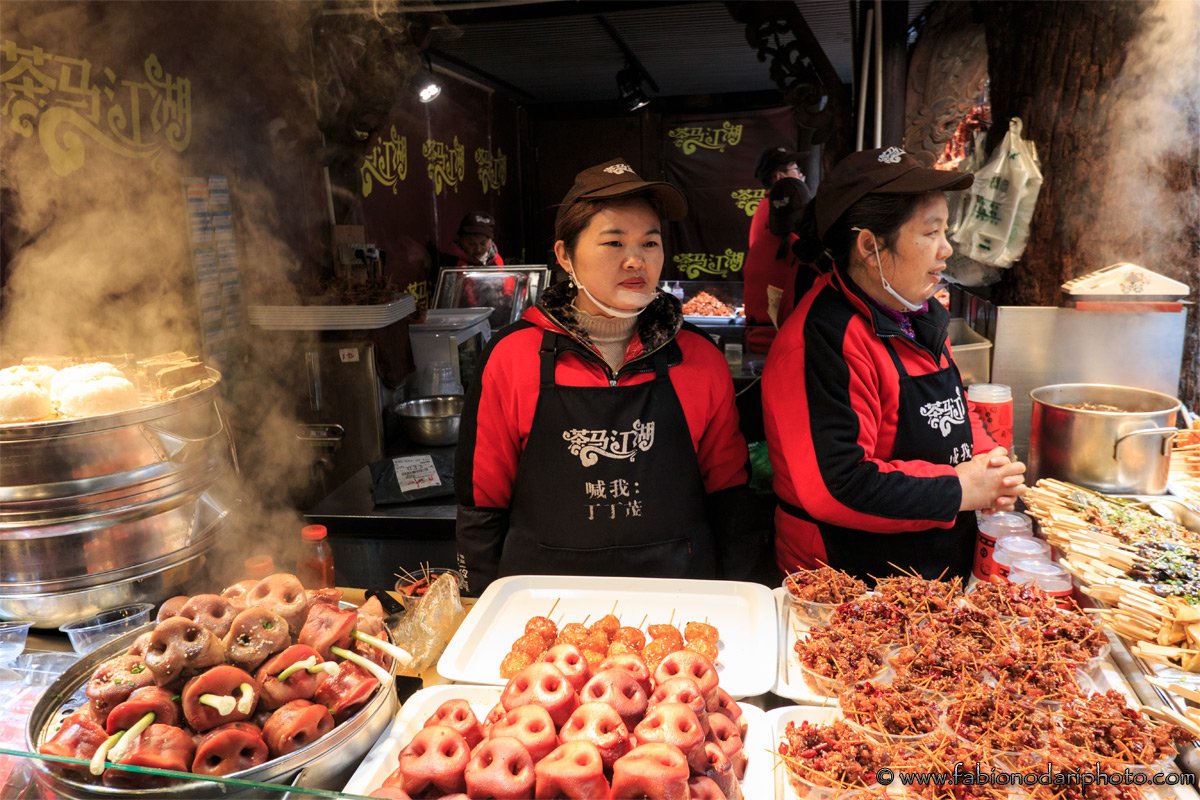
China is a foodie’s paradise, but Sichuan food is famously known for the insane amount of chili peppers used in almost every dish. One of the most popular is the spicy hot pot. Hot pots are common throughout China, and every major city has its own version. But the Sichuan hot pot is one of the best (if you like spicy food).
Eating in a restaurant in this part of China can be quite challenging if you don’t like spicy food (or have some food allergies). You can try to say that you can’t eat chili peppers, but in my experience, the waiter will usually reply: “It’s not tasty!” and add a bit of chili anyway. It can be frustrating, but it is also an interesting part of the culture. Just be aware of it.
Is the spicy hot-pot not enough? Take it to the next level with the pig’s brain!
Jinsha Museum (金沙遗址博物馆)


If you like ancient history, the Jinsha Museum is a very interesting place to visit. The archeological site over which the museum is built was accidentally discovered in 2001, and some artifacts date back to 1000 B.C.
There are several exhibition halls, and it takes about 2 hours to visit the whole complex. Ivory (elephant tusks), jade jewelry, bronze weapons, gold objects, and carved stone are among the artifacts found at the site.
Jinsha Ruins are China’s major archaeological discovery in the 21st century. The whole site covers an area of about 5 square Km. To get there, you can take subway line No.2 and get off at Yipintianxia Station, then get out from Exit B. Then, go north for around 1 km to the east gate.
Chengdu Wuhou Shrine (武侯祠)
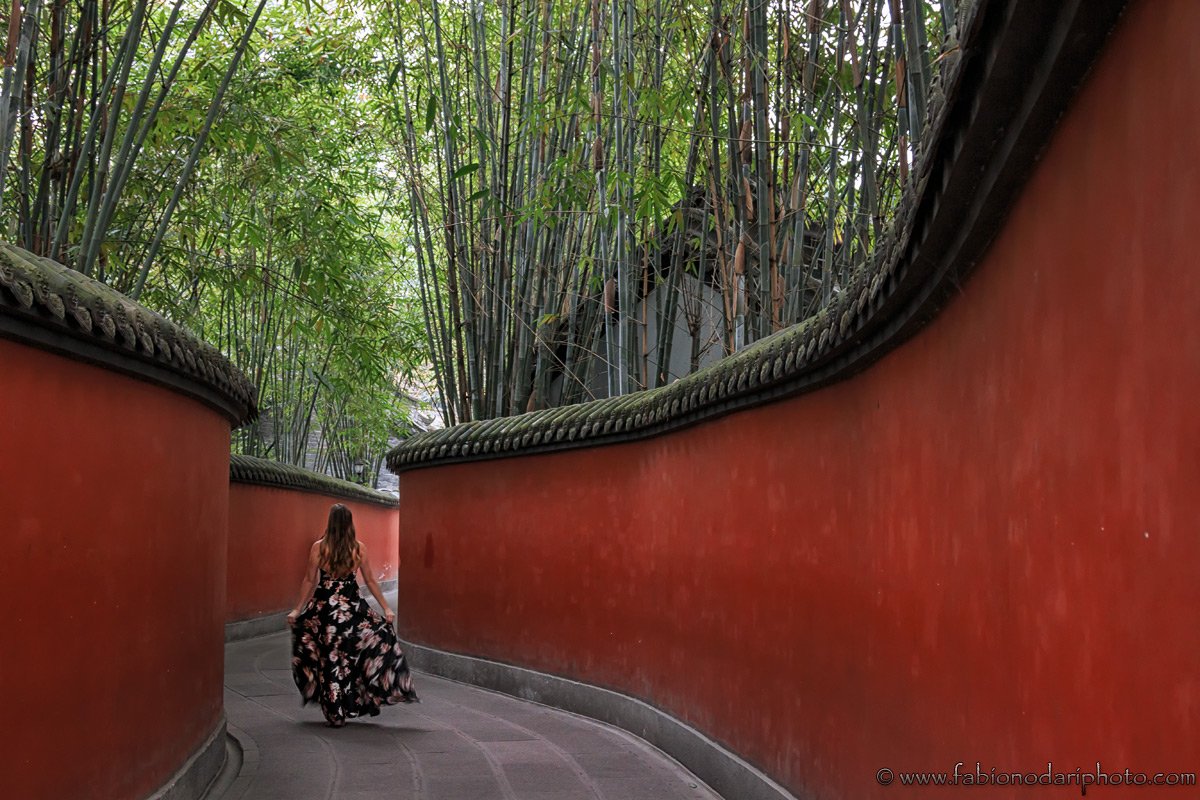
Wuhou Shrine is one of the most important historical sites in the city. The shrine is dedicated to Zhuge Liang, the brilliant strategist and statesman of the Shu Kingdom during the Three Kingdoms Period (220–280). Zhuge Liang is remembered not only as a politician and military mind, but also as a writer, engineer, and inventor, which makes this place particularly fascinating if you’re interested in Chinese history.
Inside the complex, you’ll also find the Temple of Liu Bei, the founding emperor of Shu, along with his mausoleum. Walking through the grounds, you’ll see rows of ancient cypress trees, traditional halls, and statues of the key figures from that turbulent period of Chinese history. The atmosphere is calm, and it feels more like a park than just a temple, making it a nice place to slow down in the middle of the city.
The site is quite large, and the history behind it can be complex if you’re not already familiar with the Three Kingdoms era. For that reason, I think booking a guide is worth it. They can explain the significance of the different halls and statues, and help you appreciate why Zhuge Liang and Liu Bei are still so respected today.
Shu Feng Ya Yun Sichuan Opera (蜀风雅韵川剧)
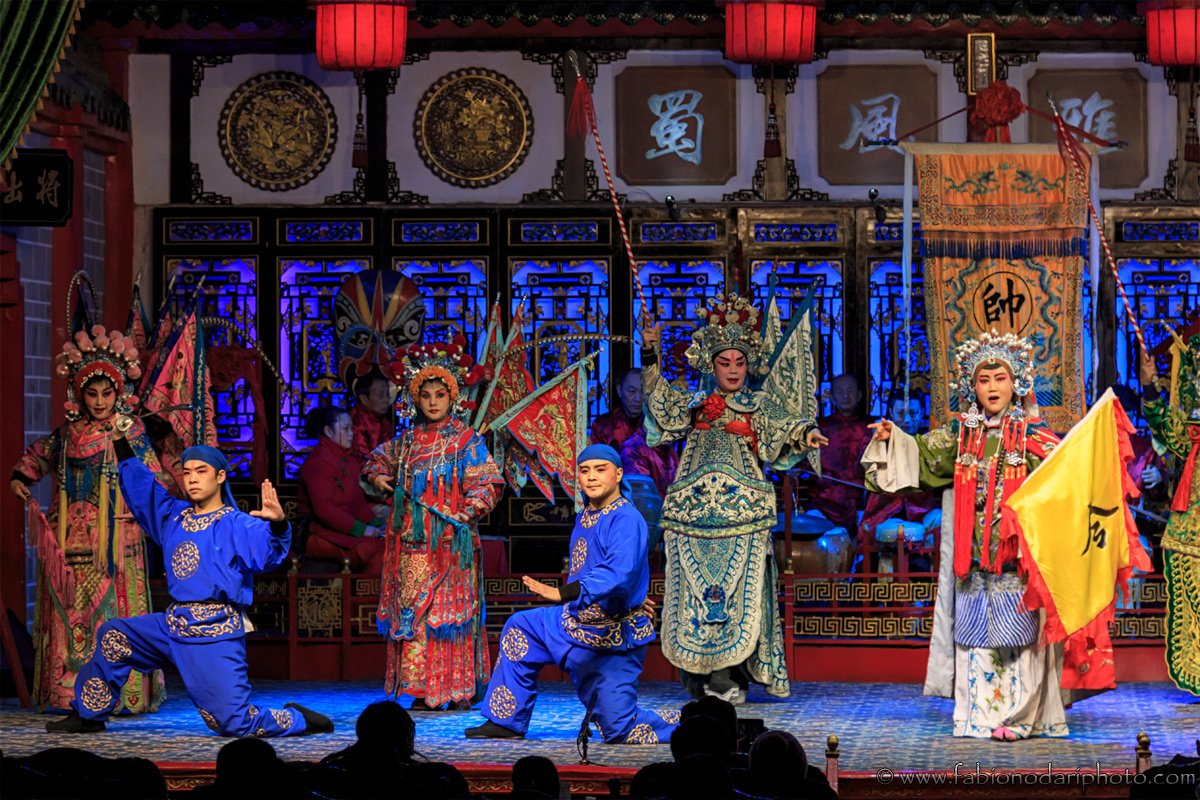
Along with hot pot and pandas, Sichuan opera is an important part of the province’s culture. Shu Feng Ya Yun Opera House (蜀风雅韵剧院) is the best venue in Chengdu for watching Sichuan opera. There are numerous performances, and even if you don’t understand Chinese, you’ll still be able to enjoy them because there is an English introduction for each act. Some performances include singing, marionettes, Chinese shadows, and acting.
Guda Sheng Temple aka Daci Temple (古大圣慈寺)


Daci Temple is a historic Buddhist temple, commonly known as the “Old Great Sage Compassion Temple.” It has an alleged history of 1600 years, although, like most other places in China, it has been rebuilt many times.
Located in the heart of Chengdu, next to Sino-Ocean Taikoo Li, Daci Temple is a rare and peaceful Buddhist sanctuary in the city. It offers interesting opportunities to capture ancient architecture against the city’s modern skyline.
See the pandas


Chengdu indeed has much to offer, but you can’t visit this city without seeing the pandas. There are quite a few breeding centers around Chengdu. I visited the one in the city and the Wolong Breeding Center (卧龙大熊猫自然保护区), which is about two hours away.
Chengdu Panda Center vs Wolong Breeding Center

Both centers have similar layouts, but Wolong is much smaller and is located near a reserve with wild pandas. Wolong is also much less crowded and slightly better for pictures, since there is a nice background of mountains and forests.
On the other hand, the Panda Center in Chengdu is very easy to visit by subway, while Wolong is quite far and probably not worth the trip if your time is limited.
One important note: some pandas are moved indoors in summer, and the Panda Center in Chengdu will be very crowded. The best time to see the pandas is before or after summer, and generally during the morning when they are more active.
You might consider visiting Wolong only if time is not a problem and/or you plan to explore Western Sichuan. You can spend a few hours there, on your way to the mountains. I recommend this great company if you are looking for a trusted travel agency (mention my name to get a better price) to explore also the incredible Tibetan Plateau in Western Sichuan. I traveled with them and had a blast. Here you can read my Western Sichuan Travel Guide.
I want to add that the project to protect the pandas in China has been so successful that since 2016, they are no longer endangered.
Dujiangyan Zhongshuge Library (都江堰中书阁)


Dujiangyan Zhongshuge is a very popular library located about 1,5 hours from Chengdu. It is part of the Zhongshuge bookstore chain, known for its beautiful, creatively designed spaces. The bookstore in Dujiangyan combines modern architecture with traditional elements, but, like most similar libraries, the books are fake, and the area is only good for Instagram pictures.
Remember that there are a couple of libraries with the same name, and this one is not located in Chengdu but outside the city. It might be worth going there on your way to the Wolong Panda Center; otherwise, it might be a bit of a waste of time since it’s far from the city.
Day trip from Chengdu
Dujiangyan (都江堰) and Qingcheng Mountain (青城山)
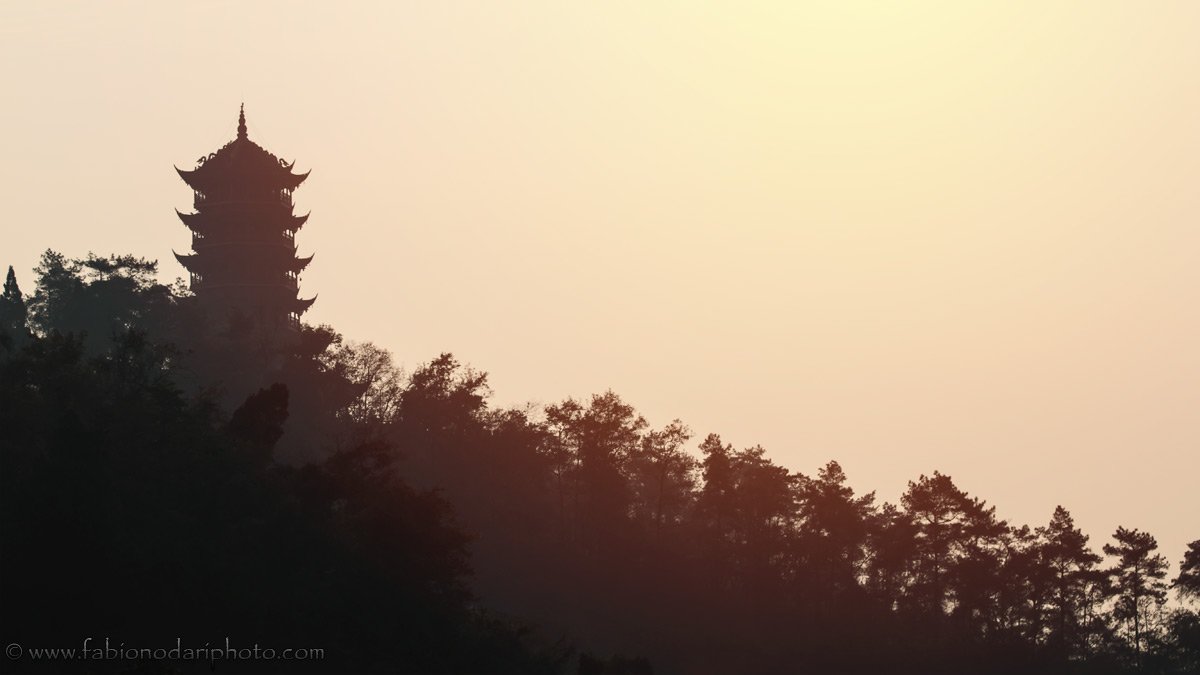
If you have extra time, you can arrange a day trip outside Chengdu. Two of the best attractions are Dujiangyan and Qingcheng Mountain.
Dujiangyan is an ancient irrigation system originally constructed by the State of Qin around 256 BC for irrigation and flood control; it is still in use today.
During the Warring States period, the Min River plagued local communities with annual floods. Qin governor and hydrologist Li Bing identified spring meltwater from the mountains as the cause, which overwhelmed the river’s slow, silted stretches. Instead of building a dam, which would block military vessels, he constructed an artificial levee to divert some flow. He cut a channel through Mount Yulei to direct excess water onto the dry Chengdu Plain.
Besides the irrigation system, you can also find several temples
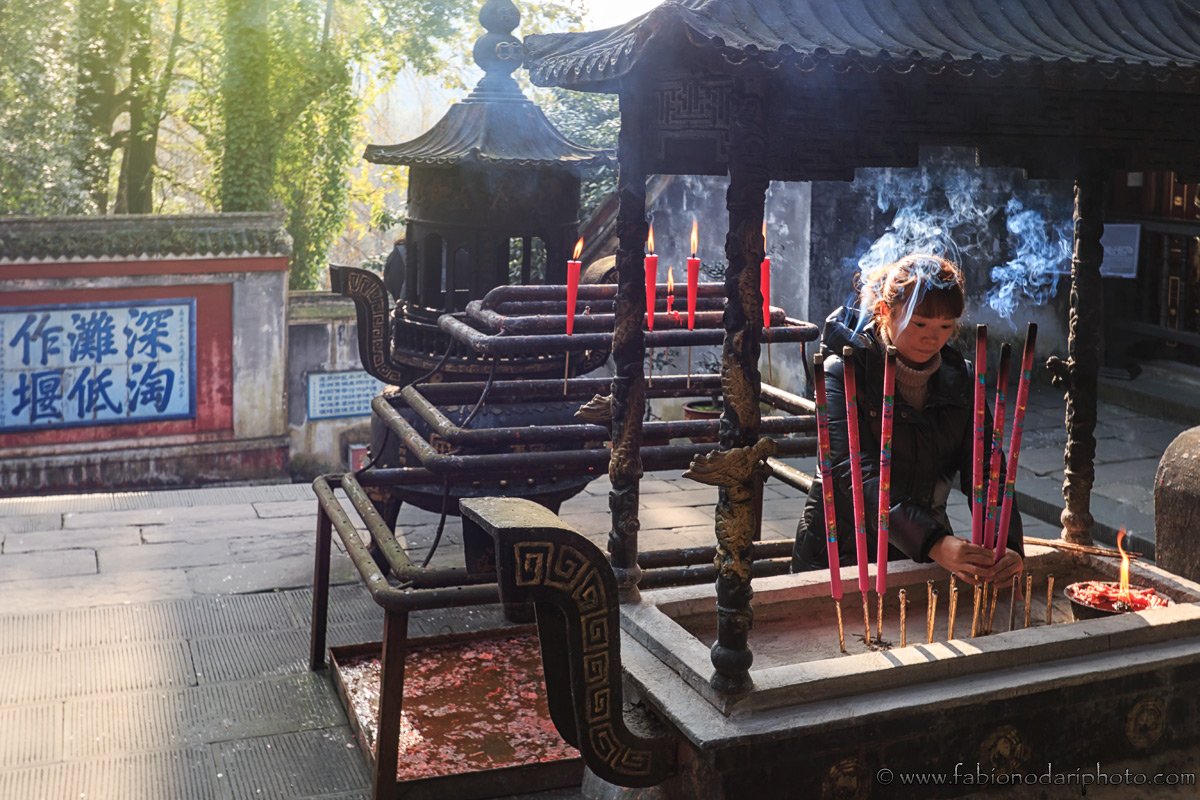
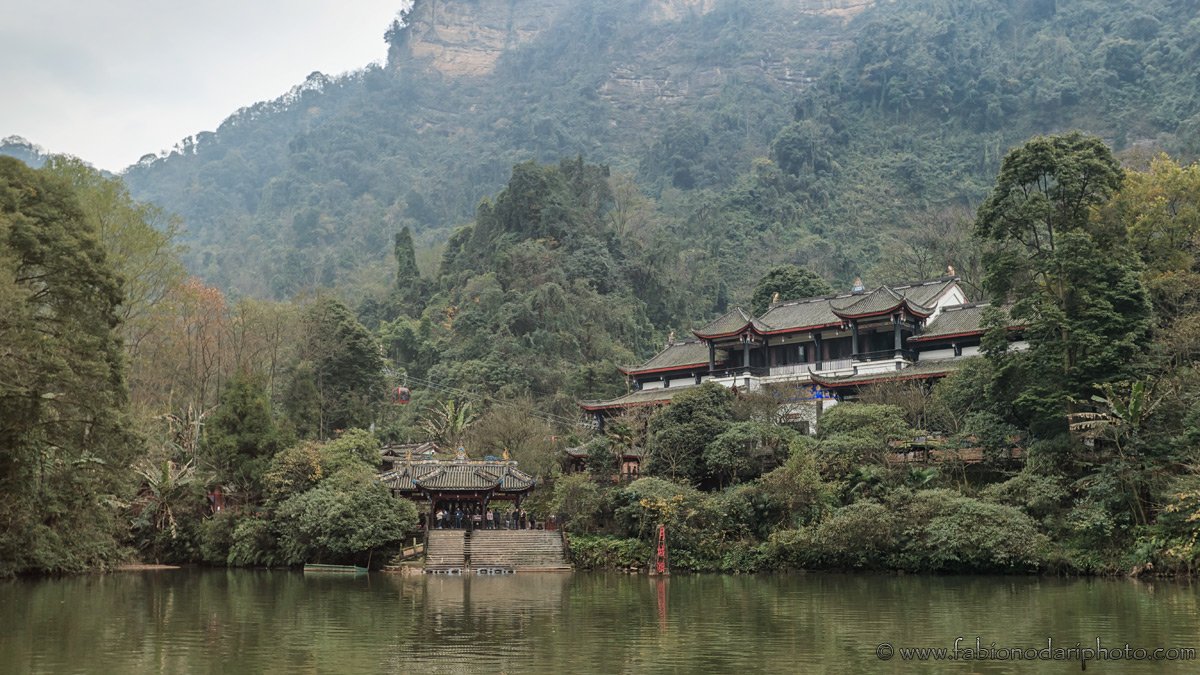
Qingcheng Mountain is one of the most famous Taoist mountains in China. The mountain is called ‘the most peaceful and secluded mountain under heaven’ in Chinese poetry. While this is quite an exaggeration, the place is peaceful. To get to the top of the mountain, you can hike and then take a cable car. The hike, though, is not difficult and consists of steps, as in most attractions in China. On your way to the top, you’ll find several Taoist temples and pagodas.
The emphasis in Taoism is on the relativity of truth and the good life. It doesn’t care so much about truth, morality, and other ideas that most religions associate with today. Taoism also teaches not to rely too much on others, unlike Buddhism, which emphasizes life’s suffering and how to alleviate it in oneself and others.
Giant Buddha in Leshan (乐山大佛)
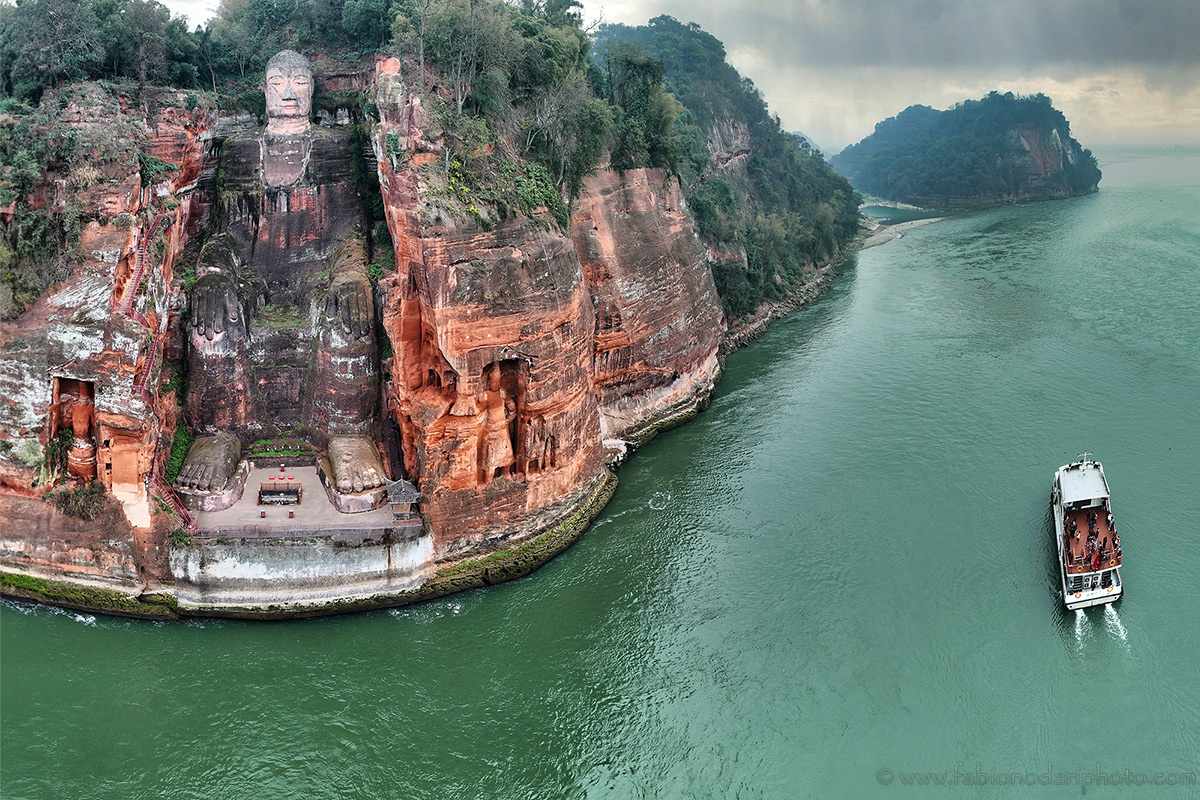
Chengdu is the ideal base for a short day trip to the Giant Buddha in Leshan, one of Sichuan’s most famous landmarks. The fastest and most convenient way to reach it is by high-speed train, which takes just about an hour from Chengdu East Station to Leshan. Once you arrive, you can take a short bus or taxi ride to the entrance. Trains sell out quickly on weekends and holidays, so I recommend booking your ticket in advance.
The Giant Buddha itself is truly impressive. Carved directly into the red sandstone cliffs where the Minjiang, Dadu, and Qingyi rivers meet, the statue stands 71 meters tall and remains the largest stone Buddha in the world. Construction began in the 8th century during the Tang Dynasty and took nearly 90 years to complete. The figure represents Maitreya, the Buddha of the future, seated calmly with his hands resting on his knees. Looking up from the base, you’ll immediately feel how immense it is, with each toe large enough to seat a person.
Beyond the central statue, the UNESCO-listed site includes several temples, pagodas, and pavilions scattered throughout the grounds. Scenic walking paths wind along the cliffside, offering different perspectives of the Buddha and views of the rivers below. One of the highlights is the narrow stairway carved into the cliff that allows you to descend from the head down to the feet, passing by the statue’s ears, shoulders, and robes along the way. Another option is to take a short boat ride on the river, which gives you the most complete view of the Buddha in its entirety.
It’s a place where you should plan to spend at least half a day. The walkways can get crowded, especially during Chinese holidays, so if possible, visit on a weekday and go early in the morning.
Shangli Old Town (上里古镇)

Shangli is a small historic village on the outskirts of Chengdu that has managed to keep much of its original charm. Walking through its cobblestone streets and alleys, you’ll notice traditional wooden houses with tiled roofs, old stone bridges, and waterways that give the town a very relaxed atmosphere. Unlike some of the more famous ancient towns around Chengdu, Shangli is not overly commercialized, so you can still enjoy a quieter, more authentic look at rural Sichuan life.
The village has a strong cultural tradition too. You’ll find local crafts on display, small workshops, and teahouses where people still spend hours sipping tea and chatting, just as they have for generations. Street food stalls and family-run restaurants serve typical Sichuan snacks, so it’s worth coming hungry.
Because of its location, Shangli works well as part of a day trip or as a stop on the way back from exploring Western Sichuan.
A day trip to Chongqing (重庆)

Considering its proximity to Chengdu (just a two-hour train ride), you could also consider a one or multi-day trip to Chongqing. I’ve written a very detailed article that explains what to see and photograph in this wonderful city, which you can read here.
Many people ask me whether it’s better to visit Chengdu or Chongqing if they only have a few days. There’s no correct answer, as both are very beautiful. Let’s say that Chongqing stands out for its contrast between old and new, and if your focus is photography only, it’s definitely the right choice.
Live and study in Chengdu
As China becomes more mainstream, I get more questions from people who want to move there or at least try living there for a short period of time. While there’s no perfect solution for everyone, one of the easiest ways to get a first real taste of China without completely changing your life is through a short-term study experience. If you are considering Chengdu for this experience, you can contact this school: [email protected]. It’s actually the same one where I first studied Chinese in Kunming (Yunnan), and I think it’s one of the best in China. You’ll also get a small discount if you mention my name (FABIO).
Final Thoughts
Chengdu might be best known around the world for its pandas, but spending time here shows that the city has much more to offer. Between its temples, lively food scene, and historic streets, you’ll quickly see why Chengdu feels so different from many other Chinese megacities. What I enjoyed most was the slower pace of life. People really do sit in teahouses for hours, play mahjong in the parks, and take time to enjoy their meals.
For me, Chengdu is the kind of place where you can balance sightseeing with simple everyday experiences. Visit a temple in the morning, wander through Kuanzhai Alley in the afternoon, then end your day with hotpot and a walk along the river. If you have a few extra days, take the chance to go beyond the city and see places like the Leshan Giant Buddha or the Tibetan areas of western Sichuan.
In the end, Chengdu is not just a stopover on the way to somewhere else; it’s a destination that deserves your time. If you travel with an open mind and a bit of curiosity, I’m sure you’ll leave with the same feeling I did, wanting to come back again.
As I mentioned, consider the weather before deciding when to visit Chengdu. This city probably won’t be your only destination, but spring and autumn are generally the best seasons to visit most places in China. The summer heat can be pretty unbearable.
Remember that most Western social media and websites are blocked. You can use this APP to unblock them. If you need an eSIM, this works well. As for travel insurance, I recommend this one.
Chengdu is the perfect location to begin some epic road trips across the Tibetan Plateau. If you need some inspiration, you can check these useful guides I wrote: Western Sichuan Guide, Xining to Yushu Road trip (but you can also drive from Chengdu to Xining), and the Yushu to Ganzi guide (or from Chengdu to Yushu). If you plan a trip to China, don’t miss my travel guide. Here you’ll find many more itinerary ideas for your trip to China.


I just found this website. I am also a traveler and photographer. I will be in Vietnam next month and looking for interesting places to visit afterwards. I considered the Yuanyang rice terraces but its not easy to get to and some photog friends tell me it’s Combat Photography. Chengdu looks intesteting.
Whish you’ll have a great trip.