
Lijiang (丽江) is one of the most popular destinations in Yunnan. In this guide, you’ll find all the info you need to organize a trip to this ancient Chinese city and the nearby attractions.

If you read my blog, it’s pretty clear that Yunnan is my favorite province in China: it’s an incredibly diverse area (here is my travel guide to Yunnan).
In this article, I discuss one of the most famous places in Yunnan: Lijiang. This city has a millennial history and has been busy with traders (since it’s located along the South Silk Road) and tourists. You may not have heard of it, but it is one of the most visited cities in China.
Best Time to Visit Lijiang (丽江)

Lijiang sits at around 2,400 meters above sea level but quite close to the tropics, keeping the weather relatively mild year-round. Still, the experience changes a lot depending on when you go.
- Spring (March to May) is one of the best seasons. The air is clear, the temperature is pleasant, and flowers bloom across the fields and mountains. It’s a great time for photography.
- Summer (June to August) is warm and brings the rainy season. Showers usually come in the afternoon, so mornings are often clear. The rain does not mean fewer crowds, especially in August.
- Autumn (September to November) is another good time. The skies are usually blue, and the air is crisp without being too cold. It’s also harvest season in nearby villages, which adds a lot of charm to the countryside.
- Winter (December to February) is cold but not extreme. Days are sunny and dry, and nights can get close to freezing. This is the quietest season (except for the Chinese New Year holidays), so this is a good option if you want to enjoy Lijiang Old Town without the heavy crowds. The nearby Jade Dragon Snow Mountain is also at its most scenic with a heavy blanket of snow.
How to get to Lijiang

Since Lijiang is a very popular destination, getting there is not difficult.
- If you’re in another province, you can fly to Lijiang from most major cities in China (including Shanghai and Beijing).
- If you’re already in Yunnan, you can take a train (both high-speed and regular) from Kunming (you can use Trip.com to book trains in China).
- Finally, there are also some buses from Kunming, but I don’t recommend this option.
Once you arrive in Lijiang, you can either take a bus or a taxi. Keep in mind that Didi rides can only be picked up outside the station, but you just need to follow the signs to find the designated pickup area.
Top things to do and see in Lijiang and the surroundings
There are many things to do and see in and around Lijiang. That’s why I recommend spending at least a few nights here, and maybe more if you want to venture further out and explore some lesser-known areas of the prefecture. Here you can find some more itineraries in the area.
Lijiang Old Town (丽江古城)

Many people get confused by the terms Lijiang Old Town (丽江古城) and Dayan Old Town (大研古城), since they are often used interchangeably. Here’s a clear explanation:
Lijiang Old Town (丽江古城)
This is the broader, official term. It refers to the entire UNESCO World Heritage Site, which includes Dayan, Shuhe, and Baisha. In practice, though, most people use “Lijiang Old Town” to refer to the central area, Dayan.
Dayan Old Town (大研古城)
Dayan is the historic heart of Lijiang, with Sifang Street (四方街), narrow alleys, canals, and stone bridges. It’s the most visited part of the old town and the one you probably picture when you think of Lijiang.
To put it simply: Dayan is part of Lijiang Old Town, but Lijiang Old Town also includes Shuhe and Baisha. The UNESCO listing covers all three, although most visitors only associate it with Dayan.
It’s also worth remembering that Lijiang itself is divided into a modern section and the Old Town. The Old Town used to require a ticket (80 RMB per person), but now it’s free to enter.
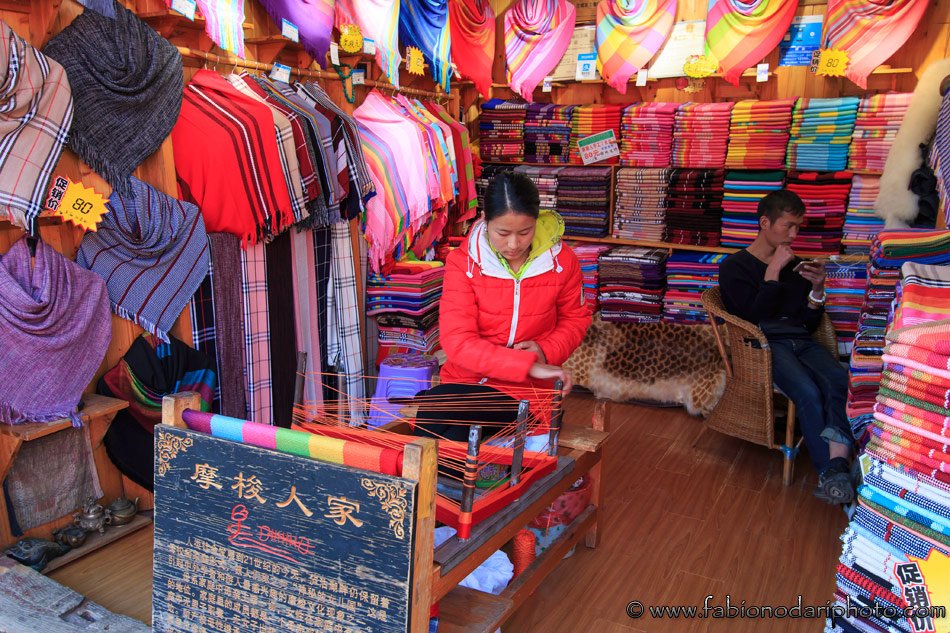
Lijiang is famous for its Naxi architecture, with wooden houses, tiled roofs, and intricate carvings. The Naxi are one of China’s many ethnic minorities, and their traditions are still visible in daily life.
In the photo, you can also see a Mosuo woman. The Mosuo are another local ethnic group (though they mostly live around Lugu Lake), known for their matriarchal society, where women head households, inheritance passes through the female line, and business decisions are often in women’s hands.
For photography, a good time to capture Lijiang is before sunrise, when the streets are empty and quiet. Once you’ve had your fill of morning shots, head over to Zhongyi Market (忠义市场), where locals shop for fresh produce and daily goods.
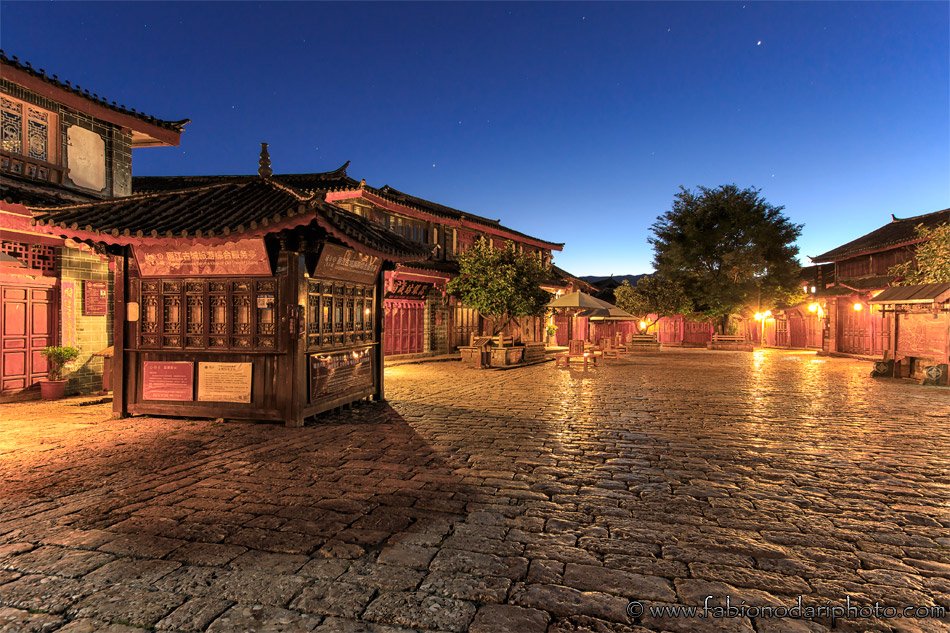

Despite its beauty, most of Lijiang Old Town is not old. A powerful earthquake in 1996 destroyed much of the historic architecture. What you see today has been almost entirely rebuilt in the traditional Naxi style, with wooden houses, stone streets, and canals carefully restored to resemble the original look. This is why the town feels both ancient and new at the same time: it was reconstructed to preserve its heritage, but the buildings themselves are relatively recent.
Unlike more authentic places such as Shaxi (here my guide), people don’t really live here anymore. Most houses have been turned into shops, restaurants, and hotels, so the town feels more like a place made for visitors than a lived-in community.
Don’t forget to visit the Mu residence (木府), the seat of the powerful Mu family, hereditary rulers of Lijiang during the Ming and Qing dynasties. This complex of buildings offers a fascinating glimpse into the region’s Naxi heritage. Often referred to as the “Forbidden City of Lijiang,” the complex features elegant courtyards, traditional architecture, and panoramic views over Lijiang Old Town from the hilltop pavilion behind the palace.
The old town of Shuhe (束河)

Shuhe is also part of the UNESCO World Heritage Site, just outside the Lijiang Old Town. It’s smaller than the main one and has slightly fewer tourists. The town is full of stone lanes, wooden houses, and flowing canals, but the water is especially clear here, lending the whole place a calm, refreshing feel. Shuhe also has a more local atmosphere. Getting there is very easy; a quick Didi ride from Lijiang will get you to Shuhe in about 20 minutes.
Historically, Shuhe was an important stop on the Ancient Tea Horse Road, where traders and caravans passed through on their way to Tibet.
Baisha Old Town (白沙)


Once considered a hidden gem, Baisha is now gaining popularity among travelers who want to experience Lijiang without the heavy crowds. It’s a small ancient town just 20 minutes from Lijiang, with quiet streets, traditional houses, and a growing number of small coffee shops and studios.
Baisha was once the political and cultural center of the Naxi people, and you can still see traces of this history in its old murals and temples. It’s a lovely place to spend a few hours, and I recommend visiting sooner rather than later, before it becomes as busy as the other old towns. Check out my travel guide to Baisha.
Yuhu Village (玉湖村)

Yuhu is a beautiful village at the foot of Jade Dragon Snow Mountain. Unlike in Lijiang, people still live here, and until 2024, it was literally a hidden gem. Unfortunately, the government decided to “develop” it, and now it’s pretty much a Lijiang 2.0: same shops, same “influencers coffeshops” and tons of B&Bs. The only real difference is the architecture of the houses, which are made of stone here. Not gonna lie: I was quite sad to see what happend in the last few years.
Yuhu was once home to the Austrian explorer Joseph Rock, the first Westerner to write extensively about the Naxi people and their traditions. For decades, his former residence functioned as a small museum, but in recent years, all traces of him have been removed, including the museum built in his former home. It’s an odd decision considering his historical role.
You can easily get to Yuhu by Didi and then walk from the tourist center or take one of the electric cars.
Yulong or Jade Dragon Snow Mountain (玉龙雪山)

This national park is one of the main highlights of the region, and on clear days you’ll almost certainly spot the sharp, snow-covered peak of Jade Dragon Snow Mountain rising above Lijiang. The mountain is sacred to the Naxi people and has long been part of their legends and traditions.
The weather changes quickly at high altitudes, so if you want to see the mountain in its best light, visit early in the day when the skies are usually clearer and less windy. Don’t expect to have a pristine mountain all to yourself, though: the cable cars are often packed, and thousands of visitors come here daily.
I wrote a detailed guide with everything you need to plan a trip to Jade Dragon Snow Mountain, including transport, ticket prices, and photography tips. Don’t miss it if you’re considering going. As always, in very touristy places, I recommend booking the cablecar in advance.
Blue Moon Valley (蓝月谷)

Blue Moon Valley is one of the highlights inside Jade Dragon Snow Mountain National Park. The turquoise water comes straight from the melting glacier, and on a sunny day, the color is so bright it almost doesn’t look real. The valley is surrounded by forested hills and snow-capped peaks, making it one of the most photogenic spots in the park, but also one of the busiest. Large groups from Lijiang usually arrive mid-morning, so if you want to enjoy a quieter atmosphere and take better photos, plan to be there early.
I’ve written a complete guide with all the details you need to visit the Blue Moon Valley.
Tiger Leaping Gorge (虎跳峡)


Another worthwhile trip from Lijiang is to Tiger Leaping Gorge. With a maximum depth of around 3,790 meters from the river up to the snow-covered peaks, it’s considered one of the deepest and most spectacular river canyons in the world. The Jinsha River, a main tributary of the Yangtze, carves its way through the gorge, creating incredible landscapes.
Getting to Tiger Leaping Gorge by public transport can be a bit complicated. For this reason, I recommend arranging a quick tour or hiring a driver in Lijiang, which makes the trip much easier and lets you enjoy the landscape without the stress of figuring out logistics. Send me a DM on Instagram if you need one.
Shigu (石鼓)

A short and enjoyable day trip from Lijiang is to Shigu, a small town named after the stone drum monument in its center. Shigu is famous for the First Bend of the Yangtze River, where the river makes a dramatic 180-degree turn. The viewpoint is impressive, and the surrounding countryside is good for light hiking. The town was once an important stop on the Ancient Tea Horse Road; you can still feel some of that history as you walk around.
At the same time, the area is changing. The Central Yunnan Water Diversion Project begins near Shigu, and there are also plans for a new expressway to pass through the town. These projects will make Shigu easier to reach, but they also mean the landscape around the First Bend won’t stay the same forever. The viewpoint is still beautiful and worth visiting, but if you want to see it before more changes come, I’d recommend not waiting too long.
Check out my article for a detailed guide to visit Shigu.
Lugu Lake (泸沽湖)

Lugu Lake (泸沽湖) is now conveniently connected to Lijiang by a new road, and the drive takes about three hours. The lake is stunning, with clear blue water surrounded by mountains, but what really makes it special is the Mosuo minority who live here. The Mosuo are often described as one of the last matriarchal societies in the world, where women play the central role in family life, and inheritance passes through the female line.
Spending time here gives you a glimpse into traditions that are very different from those elsewhere in China. However, this area has recently seen a massive increase in tourist numbers and an accelerated loss of traditions.
A visit to Shangri-La (香格里拉)

Lijiang is the ideal starting point for visiting Shangri-La (香格里拉), a Tibetan town that you can easily reach by bus or high-speed train. The old town was destroyed by a fire in 2014, but it has since been rebuilt in a traditional style.
If you don’t have the chance to travel to Tibet or Western Sichuan, Shangri-La is a good and more affordable way to experience Tibetan culture. Monasteries, prayer flags, and high-altitude landscapes give you a taste of what life is like on the plateau. Shangri-La can be extremely overcrowded, unlike the other Tibetan areas, though, especially now that it’s connected by train. That said, you can head farther north to avoid the crowds.
Here you can find my complete travel guide to Shangri-La.
After your trip to Lijiang, you might also consider continuing your journey through Yunnan by visiting Dali Old Town (大理古城) and Shaxi Old Town (沙溪古镇).
Where to stay in Lijiang

Even though Lijiang is one of the most popular destinations in Yunnan, you don’t need to spend much on accommodation. Hostels start at around 5€ per night, and there are plenty of hotels and guesthouses for every budget. When planning your trip to China, I usually recommend booking through Trip.com, as it generally offers more options than Booking.com.
If you don’t plan to stay in a luxury hotel, consider a couple of things. Beds in regular hotels and guesthouses are usually very hard, which can be uncomfortable if you’re not used to it. Also, most rooms don’t have central heating, and nights in Lijiang can be surprisingly cold, especially in winter. On the plus side, almost every room comes with an electric blanket, which keeps things warm enough.
This is an excellent option just outside the Old Town, with very clean rooms and incredibly helpful staff.
Final Thoughts

Lijiang is undoubtedly a beautiful place, and it’s not hard to see why it has become one of the most visited destinations in Yunnan. The combination of Naxi culture, mountain landscapes, and UNESCO heritage sites makes it an appealing destination and an excellent base for exploring the surrounding region.
That said, it’s impossible to ignore the fact that many of the area’s most beautiful villages have been transformed into highly commercialised tourist zones, so don’t expect to have them all to yourself. If you don’t mind sharing the streets with large crowds, you’ll likely find Lijiang to be a very enjoyable stop. But if you’re looking for something quieter and more authentic, you might want to consider other areas such as Jingmai Mountain, in southern Yunnan, which remains a bit less commercialised, or the Samaba Rice Terraces.
If you want to try a unique experience and take a study holiday in this beautiful city, I recommend this school, the same one where I studied when I moved to China: [email protected].
To conclude, get a VPN before visiting China. Otherwise, you will lose access to all social media and Google, including Gmail. If you need an eSIM, you can use this one. As for travel insurance, I recommend this one.
If you have other questions, please feel free to ask. Here are some more pictures I took in China. Here is an article about a few places that are not very popular among tourists: the beautiful Jiuxiang caves and Puzhehei.


Great post! I don’t see a date for the posting though. Is Shangri-la still basically just a construction site? I was hoping to travel there this summer, flying into Lijiang and then also visit and fly out of Shangri-la.Thx!
Hi. It should be completed now. I visited the city about 2 years ago. Next year there is also a new fast train connecting Lijiang to Shangri-La.
Oh, I love your photos. They look authentic but still charming, completely different from other travel bloggers. Thanks so much for your sharing!
Thanks a lot!
Great post! I’m excited to explore Lijiang now. This post has helped me plan my itineraries. Thanks!
Glad it helped!
Such detailed itinerary! Thanks so much!
My pleasure.