
Kazakhstan is one of the largest countries in the world. In this article, I’ll take you through the Southeast of the country, with tips on what to see and do.

Having spent most of the past few years exploring East Asia and Europe, I must admit that before visiting Central Asia, I wasn’t entirely sure what to expect: Central Asia was a big question mark for me.
So I was more than happy to travel through Southeastern Kazakhstan and Northeastern Kyrgyzstan to discover some of the incredible places these two countries have to offer. And I wasn’t disappointed at all, quite the opposite: great food, spectacular landscapes (a real paradise for photographers), and a fascinating culture in both countries are just a few of the reasons this trip was truly memorable.
During this journey, I only had the chance to explore a small portion of Kazakhstan. However, considering the vast size of the country, I saw enough to appreciate what it has to offer both to first-time visitors and those returning after their first trip.
One advantage of Kazakhstan is that it’s the most developed (and wealthiest) of the Central Asian states, making it a good starting point for a trip in this part of the world, especially if it’s your first time. It’s also well-connected to neighboring countries like Kyrgyzstan, so it’s worth considering a combined itinerary between the two.
FAQ about Kazakhstan
Before writing about what to do and see in Southeast Kazakhstan, I’d like to first answer some of the most common questions that someone unfamiliar with the country might ask when considering a first-time visit.
Is Kazakhstan safe for tourists?
This is a perfectly normal question to ask when visiting a country you don’t know much about. While Kazakhstan doesn’t have a crime rate as low as Taiwan, it’s still considered a safe country. During my trip, I met many women traveling solo, and people were generally kind. Personally, I never felt unsafe, even though I was always carrying a lot of photography gear.
When is the best time to visit?
Kazakhstan isn’t exactly famous for its pleasant weather. Winters can be extremely cold, while summer, particularly in the lowlands, can be scorching and dry. That said, the climate varies depending on the region and altitude. If you’re planning to explore the outdoors, hike, or camp in the steppe or mountainous areas, the best time to visit is between May and early October. During these months, the temperatures are milder, the landscapes are at their best, and the conditions are generally ideal for outdoor adventures.
Is it possible to explore Kazakhstan without a tour guide?
Yes, absolutely, but keep in mind that some places are so remote that it’s not possible to visit them without a 4WD car, and unless you are a very skilled driver (or have plenty of time to hike), it’s much better to ask a tour company to provide a car and a driver.
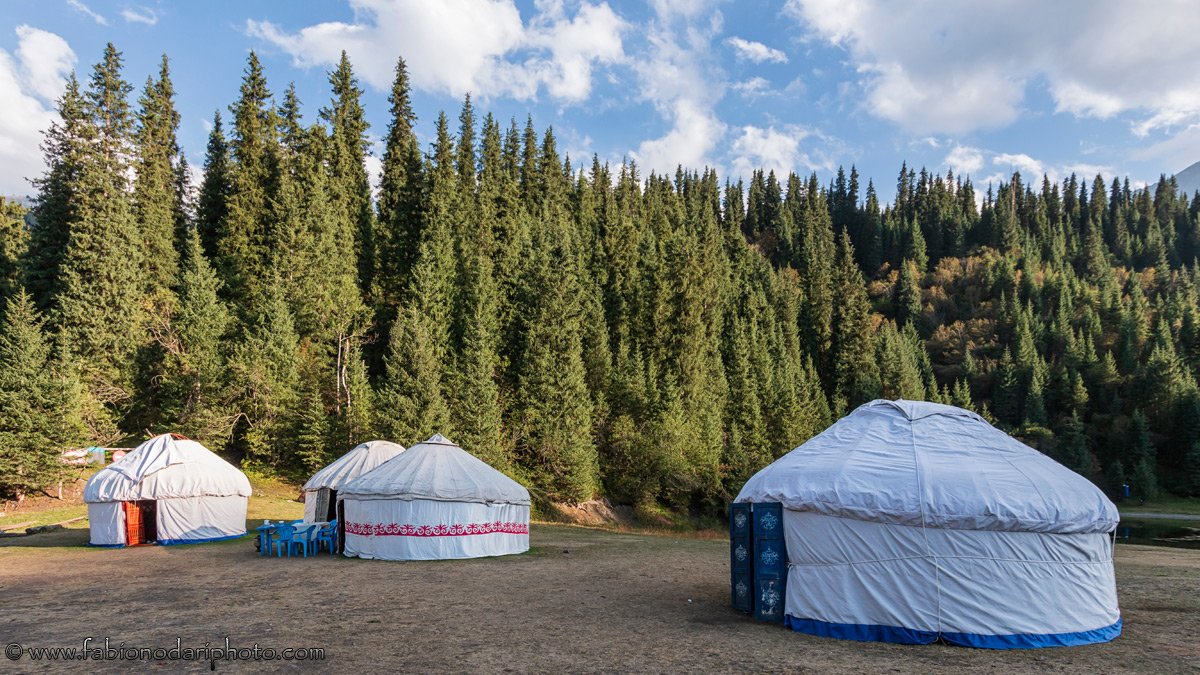
Another problem I noticed is that most remote villages where you can stay with local families have very poor internet connections (or no internet at all). So, their apartment is not listed on any website. I’ve seen some incredibly cool yurts that are impossible to book in advance if you are a foreigner. With a tour operator, you can find the best and most isolated places and stay there for a few nights, which would be impossible if you organized everything yourself.
I suggest arranging the easiest part of the trip and then relying on a local tour agency for the most interesting and remote places. If you need recommendations for a travel company, send me a DM on Instagram. Alternatively, on GetYourGuide, you can find numerous tours throughout the country.
Why are places spelled in so many different ways?
One thing I noticed during this trip is that place names are often spelled differently. This is mainly because Kazakhstan is in the process of switching from the Cyrillic to the Latin alphabet, a transition that will affect everything from road signs to official documents. Originally planned for completion by 2025, the government confirmed in 2021 that the timeline has been extended: the Latinization process will now unfold gradually from 2023 through 2031. (Uzbekistan has already completed a similar transition.) Even the country’s name will officially change in Latin script, from Kazakhstan to Qazaqstan.
Why the change? There are several reasons, but as the BBC put it: “The hope is that Latin letters will make it easier to push for modernization in a global and digital world.” Since Russian remains the country’s second official language, signs and documents will still be bilingual, Kazakh in Latin script and Russian in Cyrillic.
Top things to do in Southeast Kazakhstan
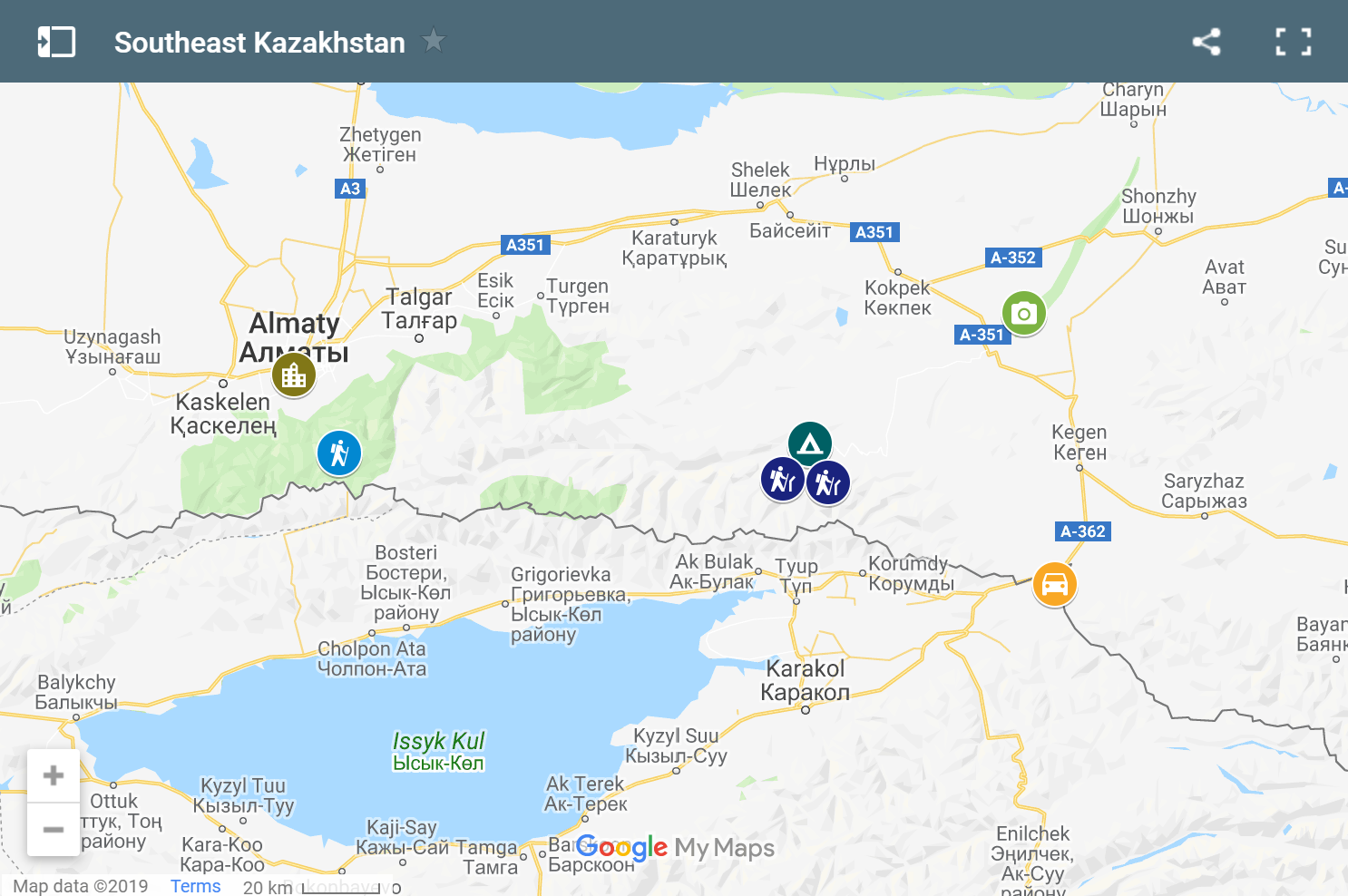
Here are some tips to help you organize your trip to this part of Kazakhstan. By clicking on the map above, you’ll be redirected to Google Maps, where I’ve marked all the locations mentioned in this article. This way, you can easily see where each place is and start planning your itinerary.
Things to see and to do in Almaty
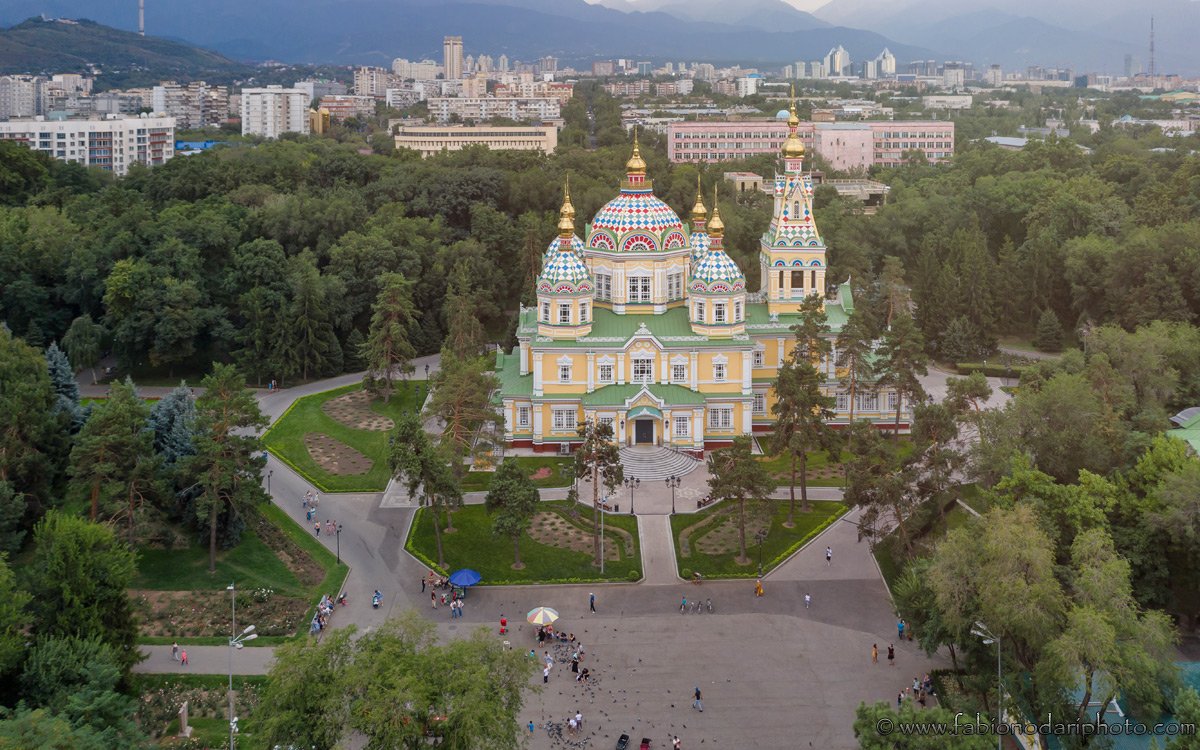
The starting point for your trip would be the city of Almaty, Kazakhstan’s former capital and the country’s biggest city. You can find my travel guide about what you can do and see in Almaty here. Two days should be enough to visit Almaty, which is also a good choice during winter if you like skiing. Although Kazakhstan was part of the Soviet Union, the city’s architecture is surprisingly less Soviet than that of other cities.
Almaty is well-connected to Istanbul, and cheap flights can be found on Trip.com. Accommodation is not too expensive, and good deals can also be found on Booking.com. One thing I noticed is that, compared to other Asian countries, the rooms are quite small. Getting around Almaty is quite convenient, thanks to the subway and several pedestrian roads.
Day trip to the Big Almaty Lake
One of the best day trips from Almaty is to Kazakhstan’s most famous lake: Big Almaty Lake. Although it’s only about 30 km from the city, it usually takes around an hour and a half to get there due to the winding mountain roads.
You can either take a taxi and ask the driver to wait for you while you explore and take photos (send me a DM on Instagram if you need a recmmendation), or take bus number 28 from President’s Park to a village called Kokshoky (the ride takes about 30 minutes), and then hop on one of the shared minivans you’ll find there.
Another option is to book a guided day tour from Almaty: your hotel can likely recommend a reliable provider. The best time to visit the lake is in early autumn, when the colors are at their most vibrant and the scenery is especially stunning.
Visiting Saty Village: Gateway to Kolsai and Kaindy Lakes
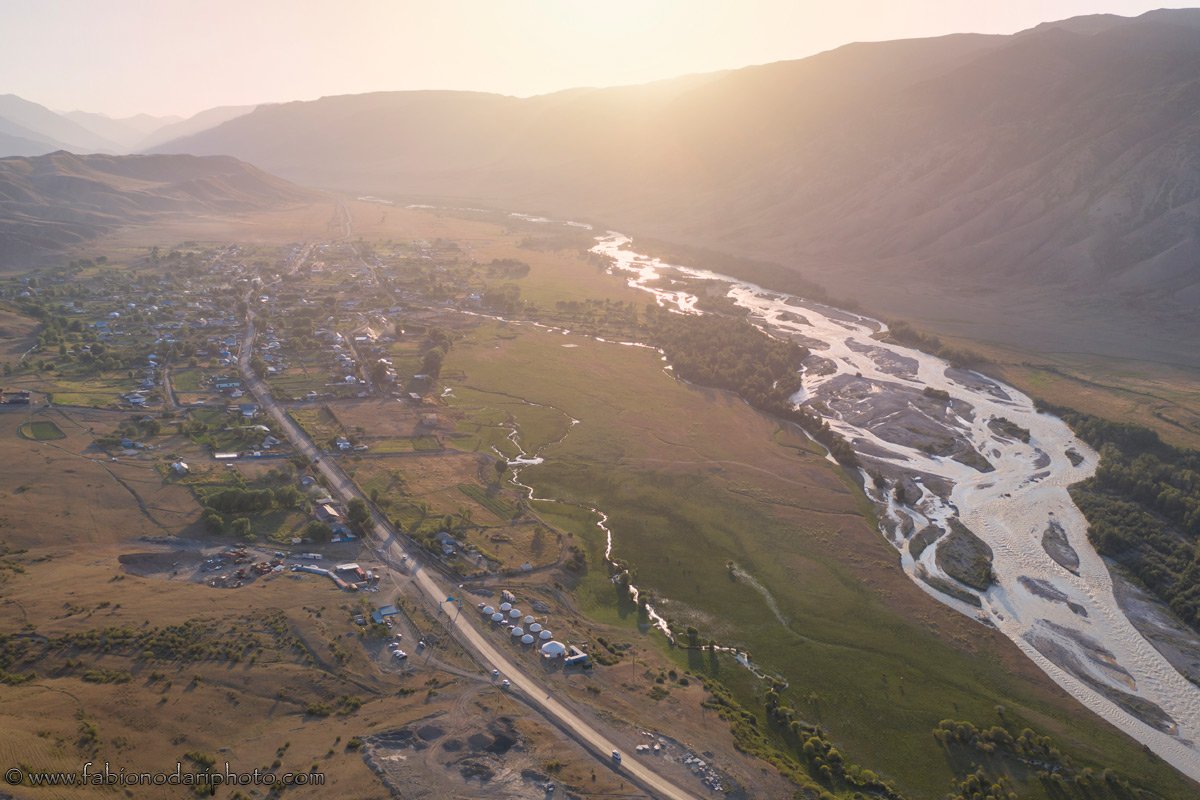
Saty is a remote village located about five hours by car from Almaty. As far as I know, there are no public buses that go there, so your only options are to rent a car or book a tour.
Saty is the gateway to two of the region’s main attractions: Kaindy Lake and the Kolsai Lakes. Reaching them requires a 4WD vehicle and an experienced driver, especially when it rains, as road conditions can quickly become challenging.
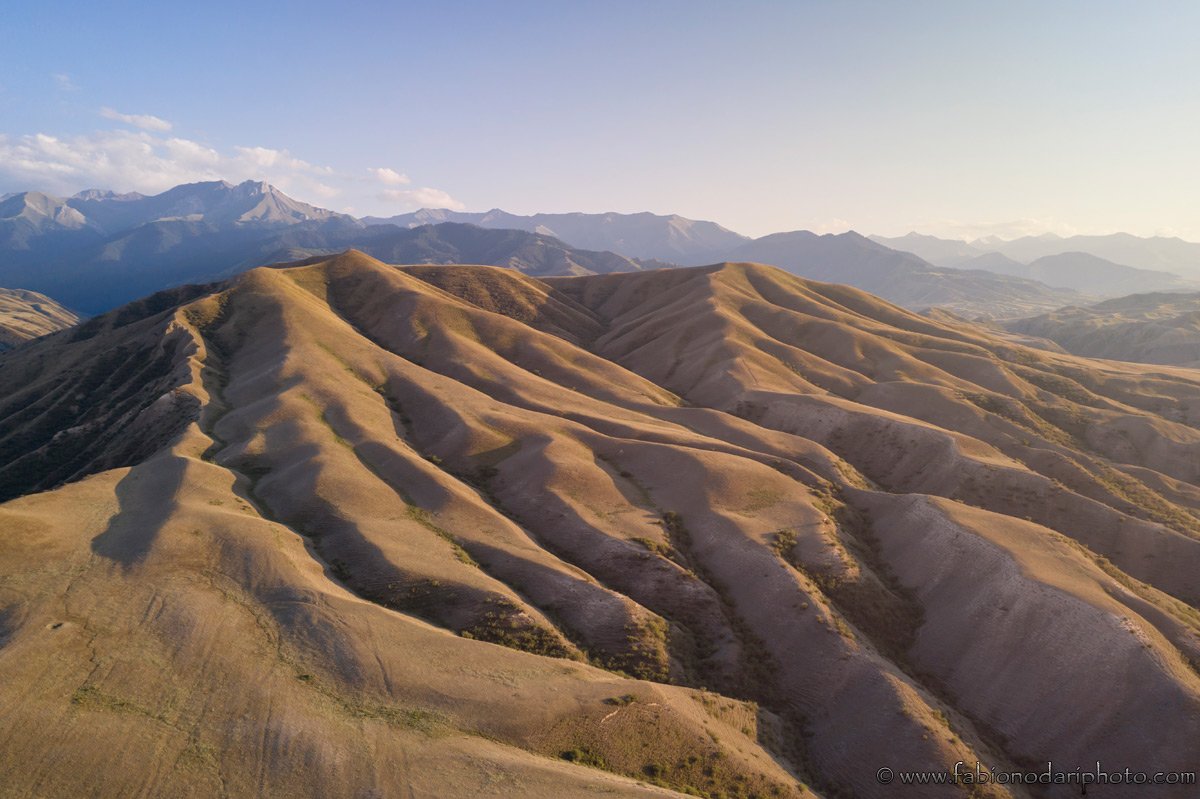
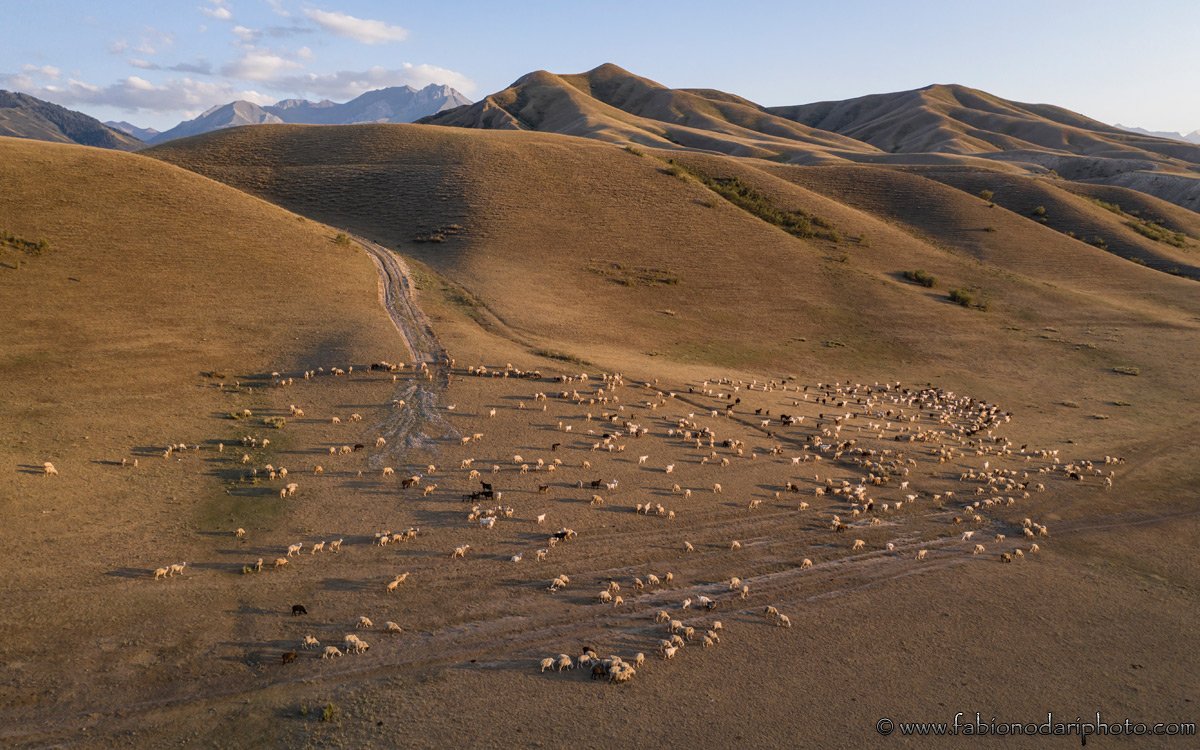
In the village, you’ll find several guesthouses where you can stay overnight and get a taste of local village life. There isn’t much to do in the village itself, but if you’re into photography, you can hike up one of the hills flanking the entrance to the village. The view from the top at sunset is well worth the effort.
That said, you won’t be able to capture the same perspective you see in my photos unless you have a drone (you can read more about international drone regulations here).
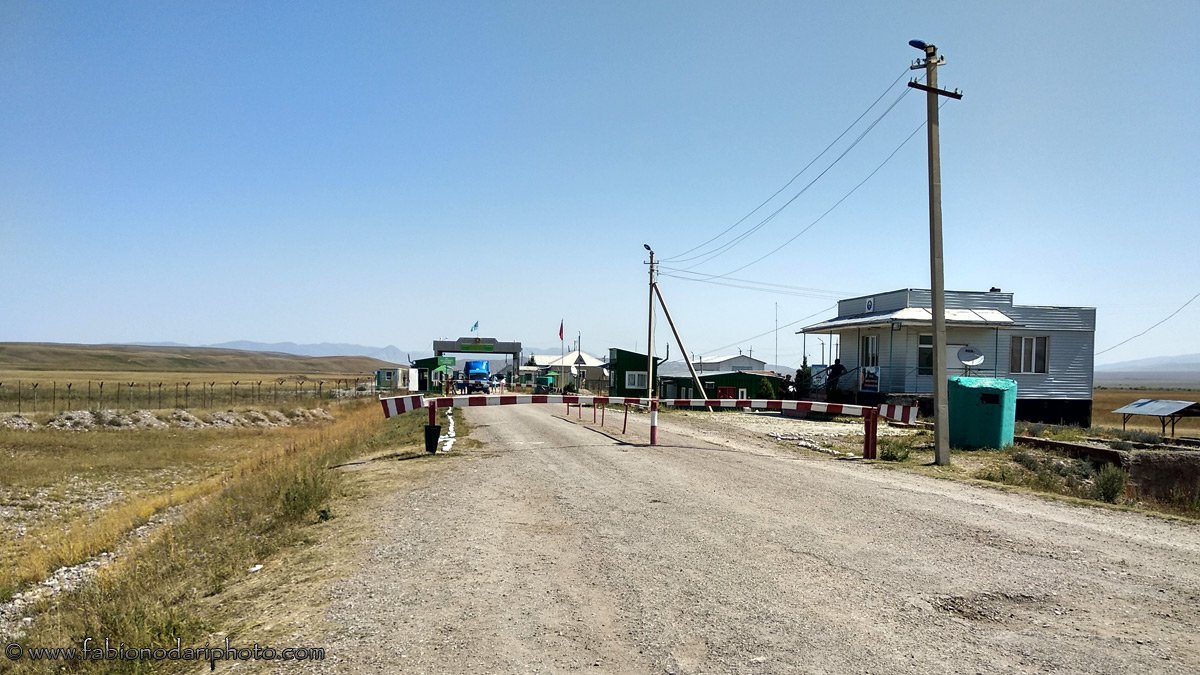
Just before reaching Saty, there is a military checkpoint where all travellers are required to show identification. You won’t be allowed to pass if you don’t have your original passport with you: photocopies are not accepted. Don’t forget it, or your trip will end there.
I recommend spending at least two nights in Saty. On the first day, you can visit Kaindy Lake, famous for its submerged forest and surreal beauty. It’s best to arrive early to avoid the crowds and take advantage of the best lighting for photography.
On the second day, head to Kolsay Lake 1, which is easily accessible by car. From there, hike to Kolsay Lake 2, a scenic trail that takes around 3 to 4 hours each way, depending on your pace. After the hike, return to Saty for one more night to rest before heading back to Almaty.
Explore Kaindy Lake
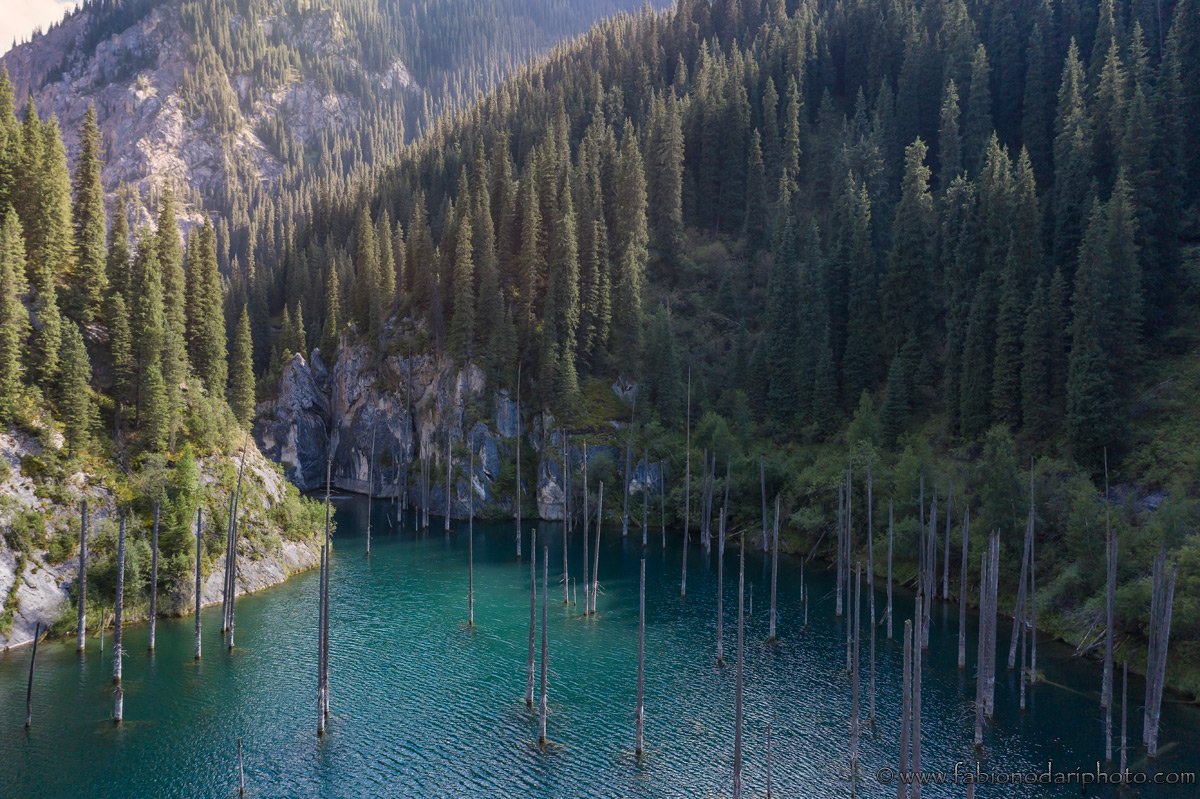
Kaindy Lake is famous for its surreal sunken forest. The lake was formed in 1911 after a powerful earthquake triggered a massive limestone landslide that created a natural dam, blocking the flow of mountain water. Over time, the valley filled with water, submerging an entire forest of Shrenk spruce trees, which now rise eerily from the turquoise surface like spikes.
This was actually the second sunken forest I’ve had the chance to see. The first was in Taiwan, in the central region of Nantou, where a similar geological event caused a forest to become submerged. However, while the Taiwanese version was fascinating, it didn’t have quite the same dramatic setting or visual impact as Kaindy Lake, which truly feels otherworldly, especially when the light hits the water just right.
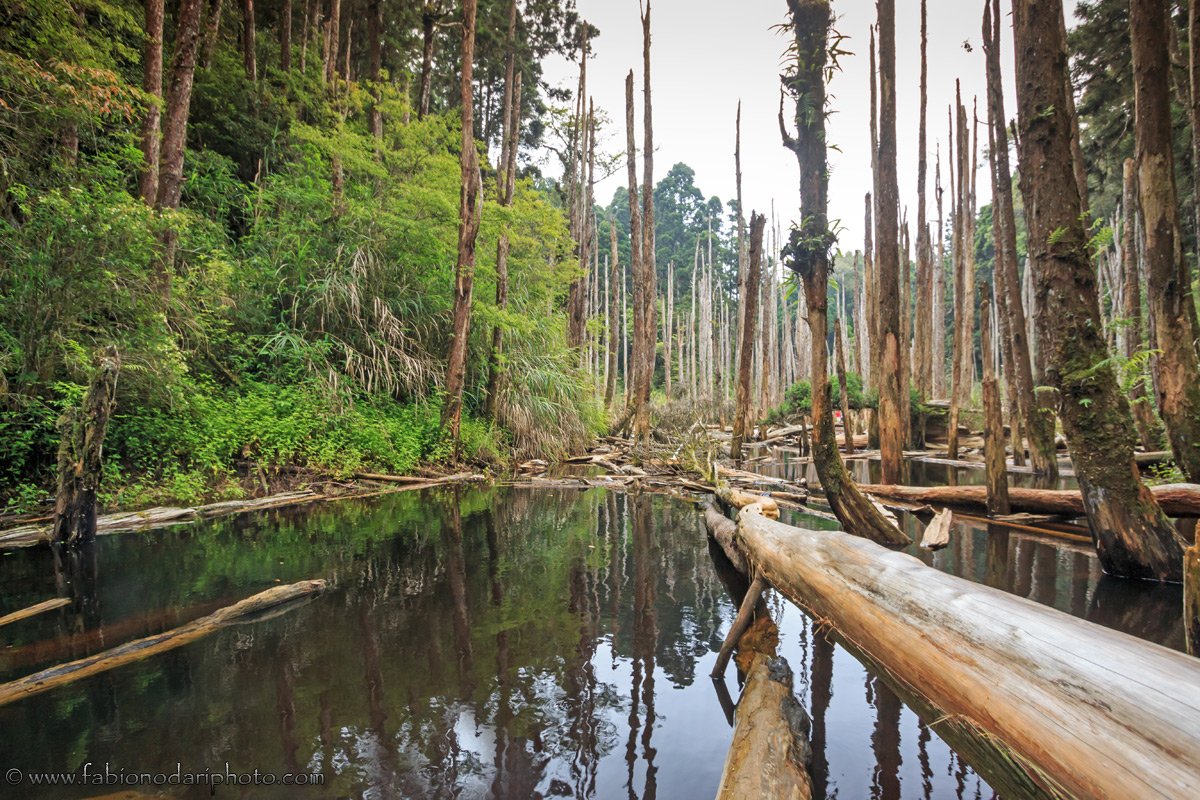
It takes about 45 minutes by car from Saty to reach Kaindy Lake. Once there, you can hike along a trail that follows the lake from one end to the other, which takes roughly an hour at a relaxed pace. The hike is relatively easy, making it accessible even for casual walkers.
Along the way, you’ll find several scenic viewpoints where you can stop to admire and photograph the iconic submerged spruce trees rising from the crystal-clear water. Each spot offers a different angle and elevation, perfect for capturing the lake’s unique beauty.
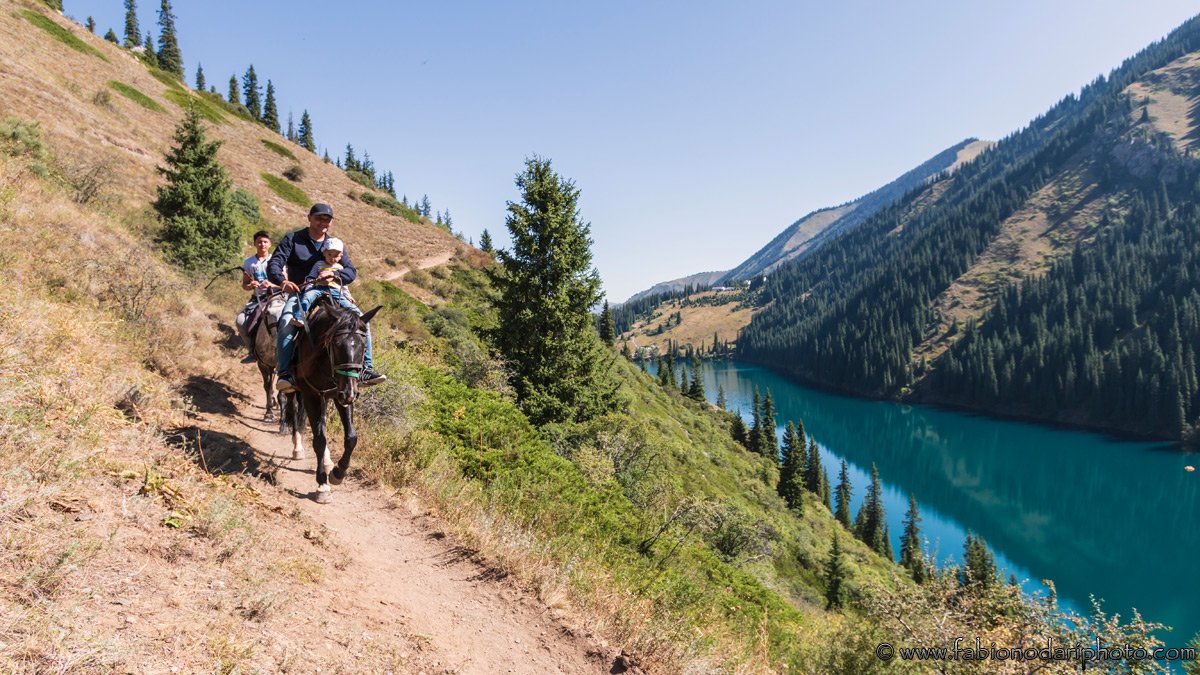
If you’re not in the mood to walk or simply want a more local experience, horseback rides are available at the entrance to the lake area.
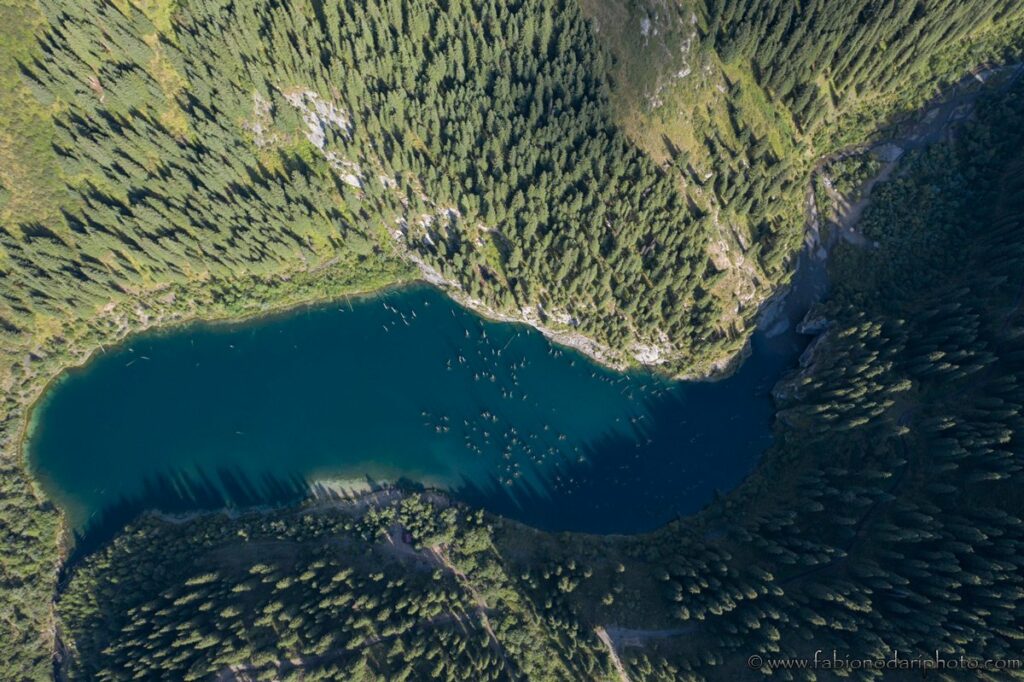
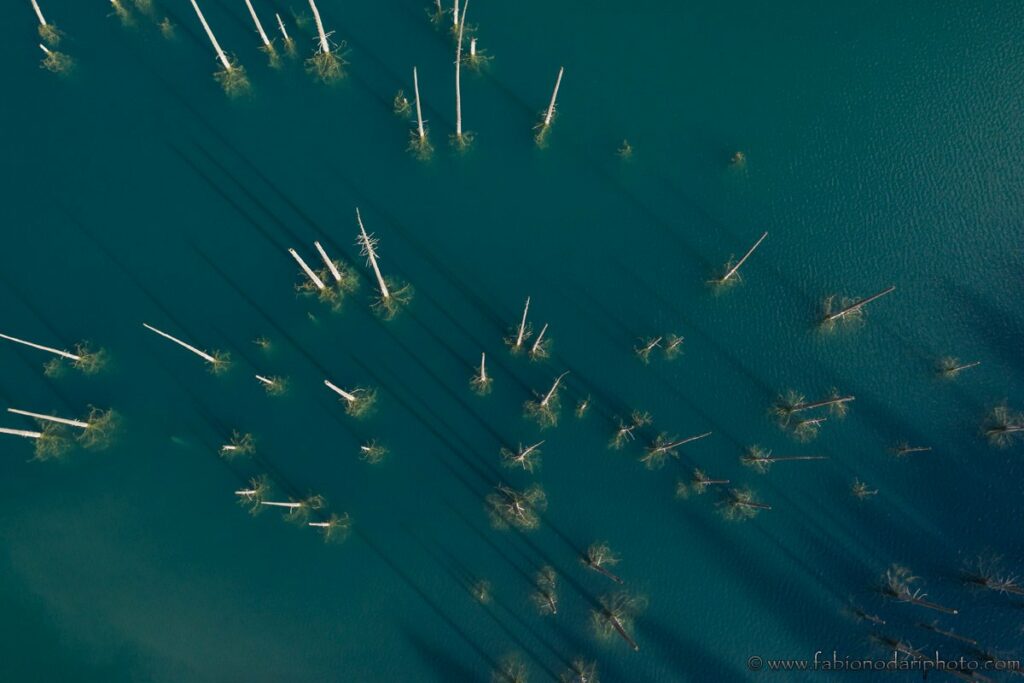
Even though more than 100 years have passed since the flooding, the branches of the submerged trees are still clearly visible beneath the surface. Thanks to the lake’s cold, clear mountain water, the trunks have been remarkably well-preserved, giving the forest an almost otherworldly appearance. On calm days, the reflections and visibility underwater make for truly stunning photos.
After spending the day exploring Kaindy, head back to Saty and get a good night’s rest: you’ll need it. The hike to Kolsay Lake 2 the following day is long and demanding, especially if you’re not used to walking at higher altitudes.
Hike to the Kolsay Lake 1 and Kolsay Lake 2
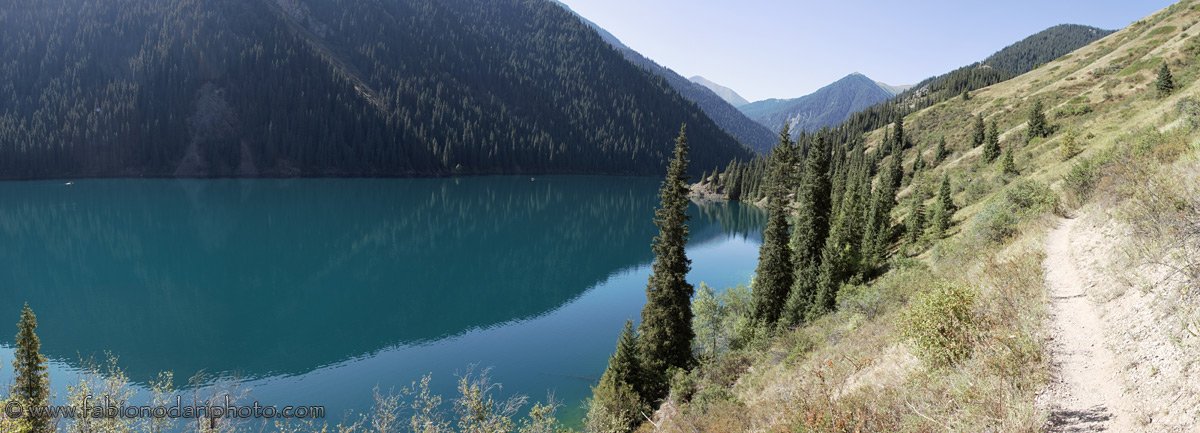
If you love hiking and nature, Kolsay Lakes 1 and 2 are an absolute must. The first lake, Kolsay Lake 1, is located about 30 minutes by car from Saty Village and is easily accessible via a paved road. Surrounded by dense pine forests and towering mountains, it’s a peaceful spot where you can walk around, rent a boat, or simply relax by the water
But if you’re up for a real adventure, the hike from Kolsay Lake 1 to Kolsay Lake 2 offers stunning views and a rewarding challenge. I’ll be honest: I wasn’t fully prepared, and the hike turned out to be more demanding than I expected. The trail is approximately 8 to 9 km each way, featuring a steady incline and sections that can be muddy or slippery, especially after rainfall.
The elevation gain is significant: Kolsay Lake 1 sits at 1,818 meters, while Lake 2 is at 2,252 meters. That climb, combined with the thinner mountain air, makes the hike physically challenging, but absolutely worth the effort. Along the way, you’ll pass alpine meadows, dense forests, and dramatic landscapes that change with the light. Just make sure to bring enough water, snacks, and proper footwear.
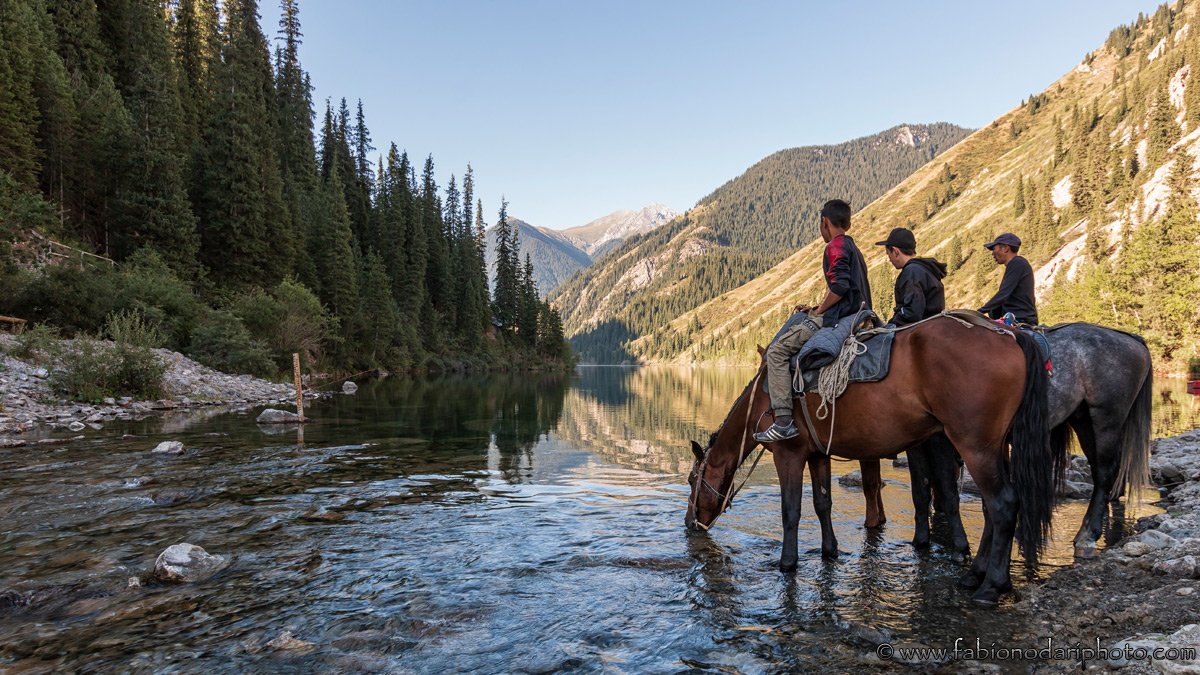
That said, if you’re someone who treks regularly or has experience with mountain trails, you might not find the hike too challenging. But if you’re not used to hiking, especially at higher altitudes, it can be quite tough. The combination of the distance, elevation gain, and terrain makes it physically demanding for beginners or casual walkers.
Looking back, I wish I had planned differently. A great option would be to ride a horse to Kolsay Lake 2, which can be arranged at Lake 1. That way, you can enjoy the scenery without exhausting yourself on the way up, and then either return on horseback or hike back down at your own pace.
An even better idea, if you’re equipped for it, is to hike to Lake 2, bring a tent, and camp overnight. The area around the second lake is stunning, especially at sunset and sunrise, and spending the night there gives you time to truly appreciate the beauty of the area. The next day, you can hike back down refreshed. Just make sure you have all the essentials, including warm clothing, food, and enough water: there are no facilities up there.
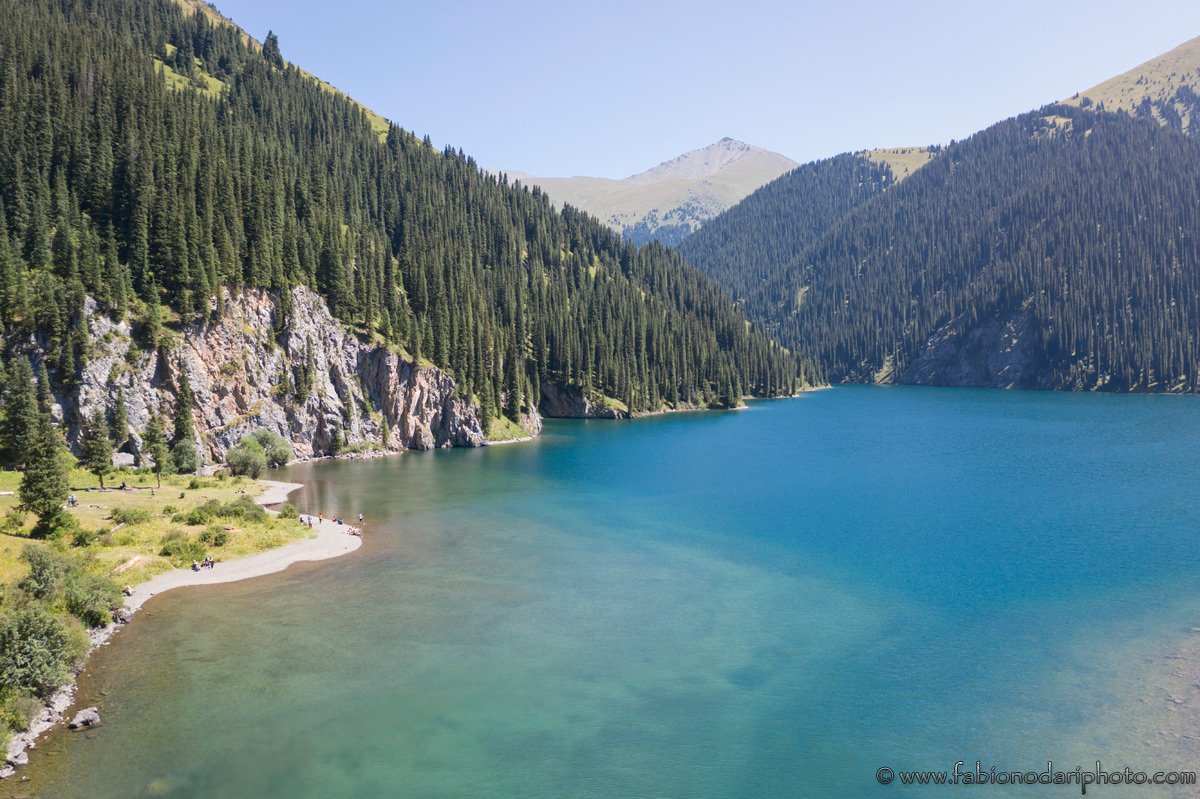
The third Kolsay Lake lies very close to the Kyrgyz border, and unfortunately, foreigners are not allowed to access it. It’s located about 6 kilometers beyond the second lake, at an elevation of 2,650 meters.
There’s also a fourth Kolsay Lake, situated on the other side of the Sary-Bulak Pass (3,278 m), which serves as the border between Kazakhstan and Kyrgyzstan. However, as of now, cross-border hikes are not permitted, so reaching that area is not legally allowed for travelers.
How to visit the Charyn Canyon
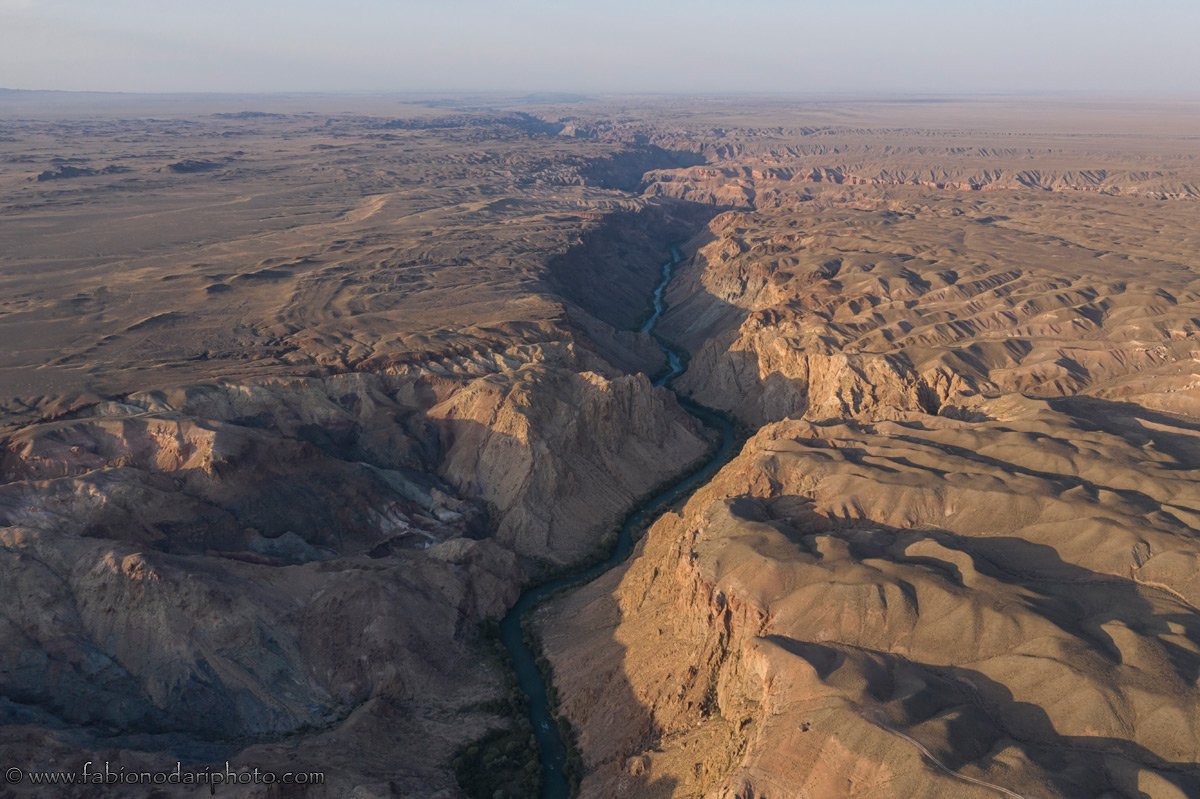
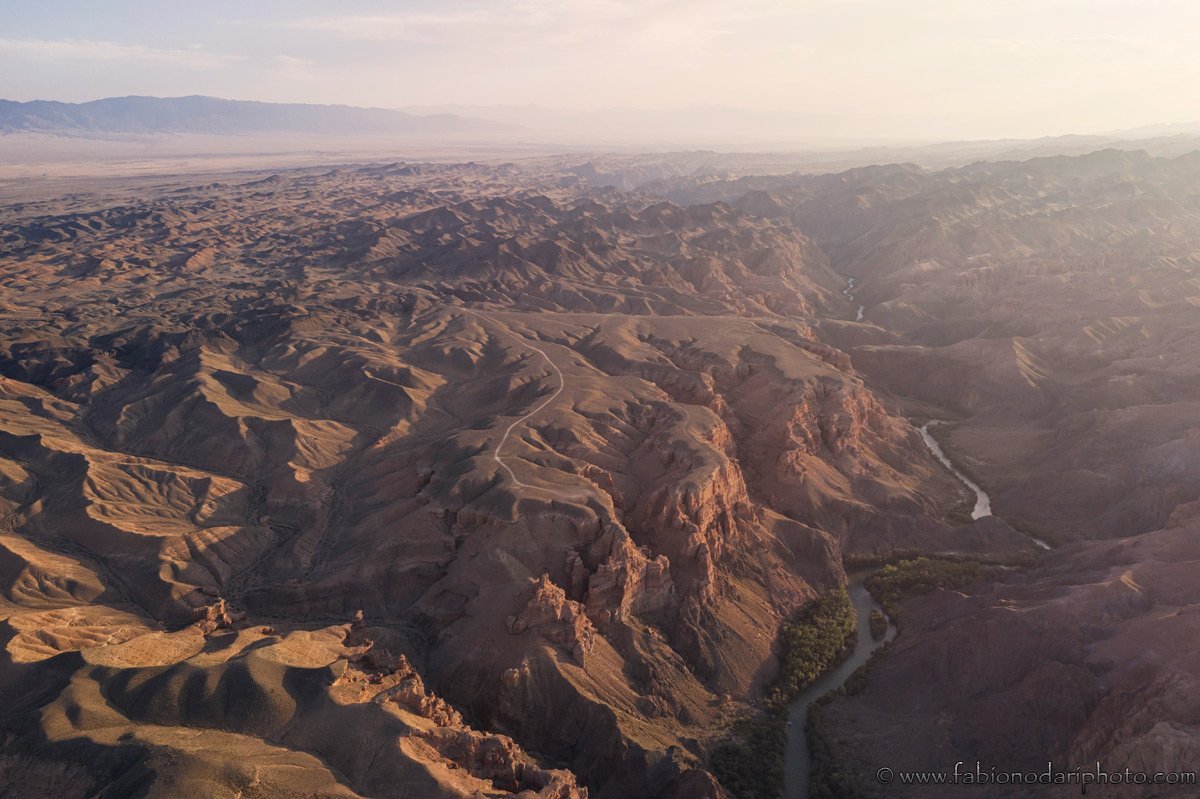
Charyn Canyon was the most beautiful and spectacular place I saw during my trip to Southeast Kazakhstan, as you can see from the pictures above.
Charyn Canyon (also spelled Sharyn Canyon) is part of the Charyn Canyon National Park and stretches 154km along the Charyn River. The first stop from Saty village would probably be at the Charyn Canyon point of view (Google Maps coordinates: 43.269381, 78.972902). It takes about 1,5 hours to get there (again, no public transport). You can take pictures of the Charyn River flowing through the canyon there.
From this viewpoint, you have a few options. Some people decide to spend the night camping in the canyon. Others opt for the yurt resort in the canyon. You can book it directly from Booking.com. I stayed in a small camp prepared just for our group. The camp’s name is Bestamak: it’s quite remote, and the road is so bad that even with a 4WD car, it can be quite challenging to get there.
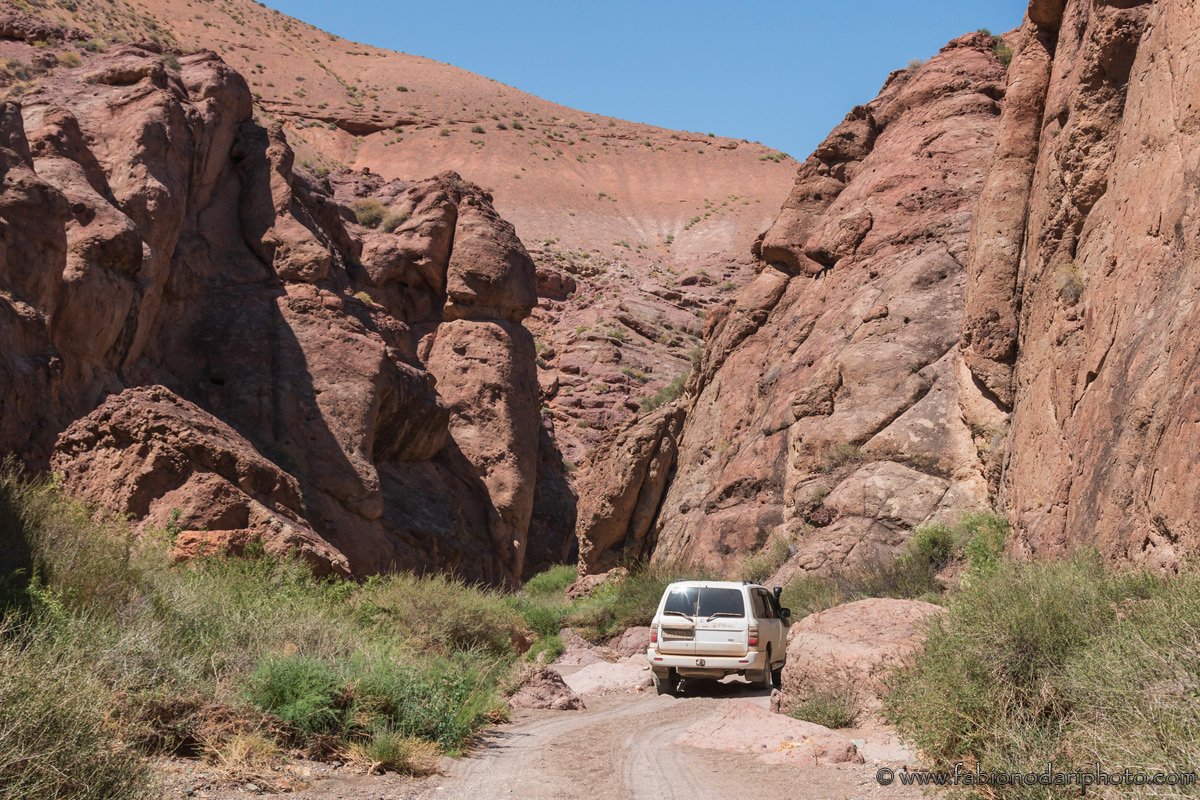
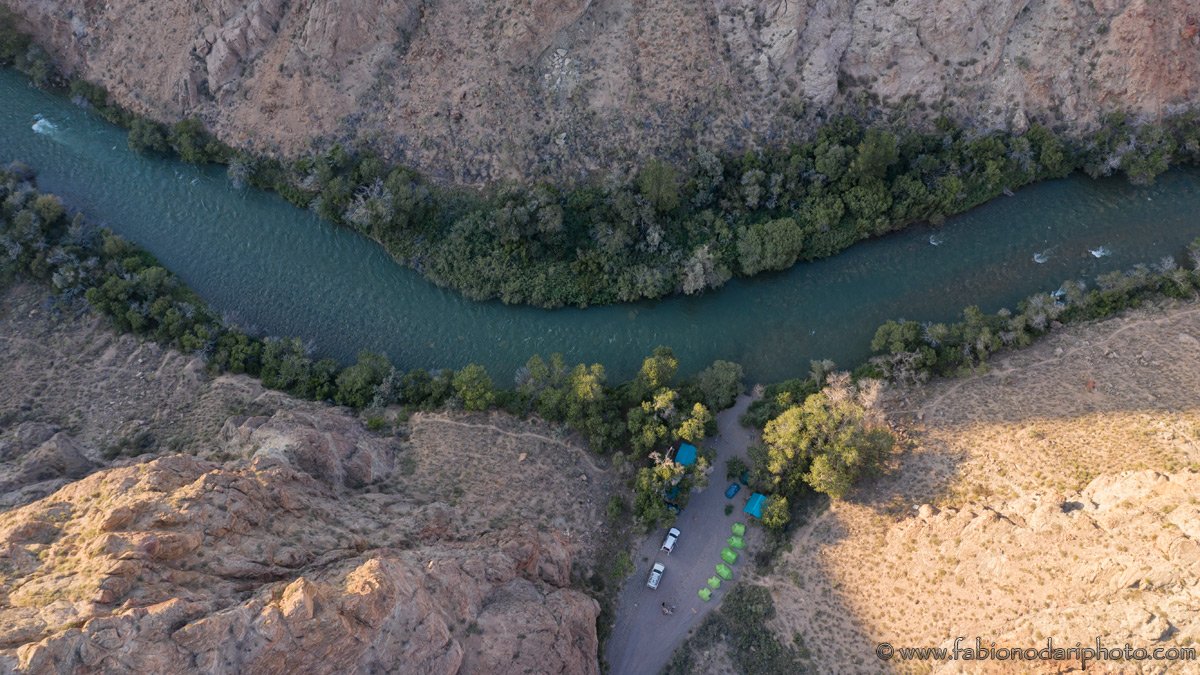
At the Bestamak camping site, there isn’t much to do unless you want to use it as a base camp to hike the canyon. There is no electricity or phone signal, so you must bring your food unless you book a tour with a travel agency. It was great to disconnect from the world for a while, but if it’s too extreme for you, you might opt for the yurt camp.
After resting the whole afternoon, we woke up at 2:30 am to see the sunrise in another location in the canyon called Valley of Castles (on Google, it’s called Charyn Canyon View Point, and you can find it at these coordinates: 43.355800, 79.056852).
It’s probably the best spot to photograph the sunrise: the viewpoint is just perfect.
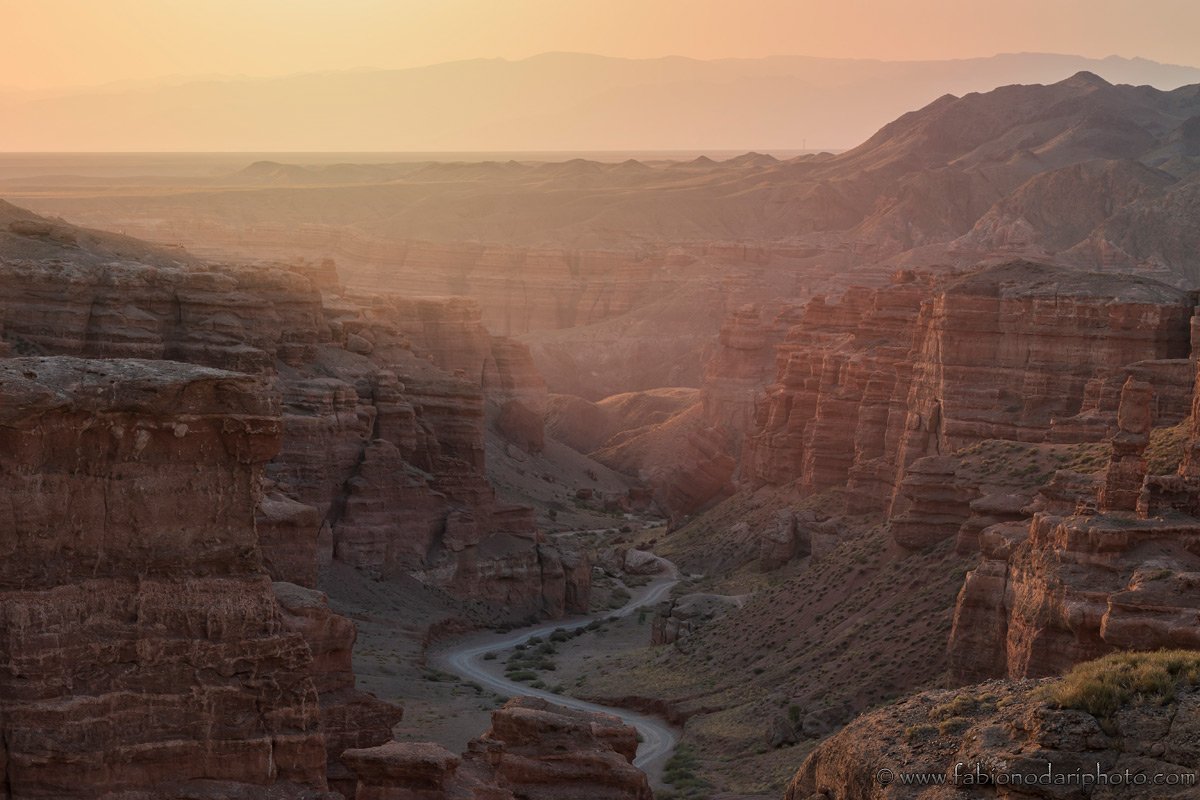
And this was the end of my itinerary in Southeast Kazakhstan. From the Valley of Castles, our driver took us to Karkara to cross the border between Kazakhstan and Kyrgyzstan. You can find more info about Kyrgyzstan in this article.
Tips for your trips to Kazakhstan
- Very few people speak English. The common language is Russian, so it might be a good idea to learn a few words in Russian and download an app to translate from English to Russian.
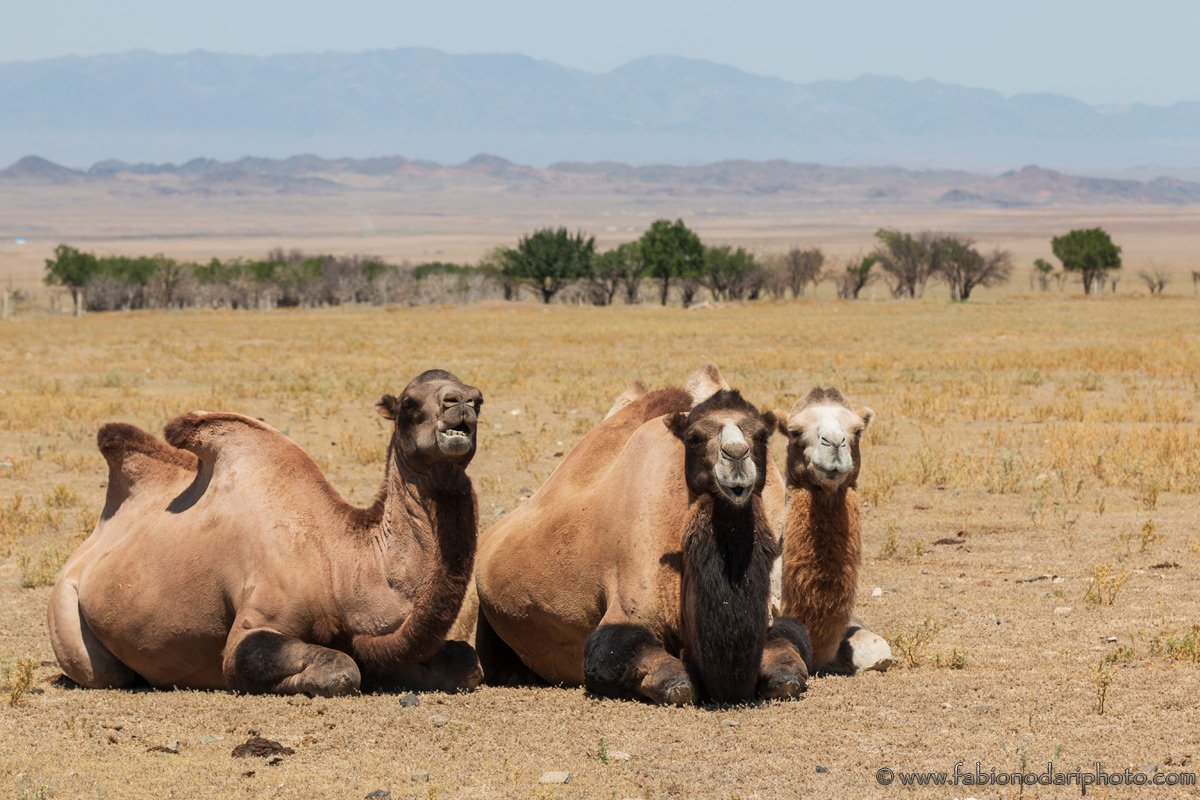
- Central Asian countries are all about meat. Don’t expect to find many vegetables. This is partially due to the harsh climate and the people’s nomadic past. If you are a vegetarian/vegan, you’ll have a hard time.
- I suggest using a VPN whenever you connect to public wifi. Here, I explain why. I use this VPN, and it works great.
- It’s easy and convenient to exchange money in big cities, but finding an ATM is difficult when you go outside. So bring some cash with you.
- Horse meat is quite common. It’s not surprising for me since we eat horse meat in Italy, but I know that it is a no-no for some countries.
- Outside bigger cities, the phone signal is weak, if nonexistent.
Final Thoughts
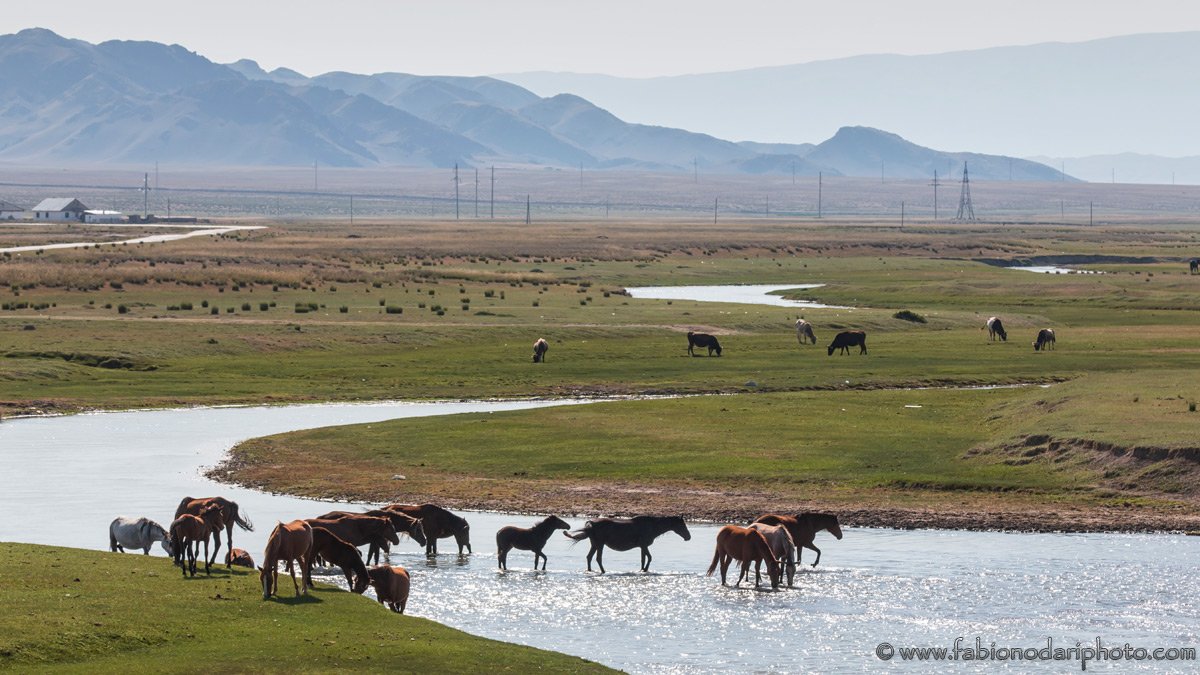
Southeast Kazakhstan really surprised me. I didn’t expect such a mix of landscapes, from alpine lakes to desert canyons, all within a few hours’ drive from Almaty. It’s one of those regions where you constantly feel like you’re discovering something new.
If you’re into nature, hiking, or want to explore somewhere different and less touristy, this area is absolutely worth your time. Just make sure to plan your logistics well, as distances can feel much longer once you leave the city, even if they appear shorter on the map.
Here you can find my photos from the trip to Kazakhstan. If you’re thinking of continuing your journey into China, don’t miss this travel guide to the beautiful village of Hemu, in nearby Xinjiang.
Watch the video from my trip to Kazakhstan and Kyrgyzstan in 4K.


It is really nice places and superb photographs. There are plenty of things you can do there to enjoy.
https://www.provab.com/car-rental-booking-software.html
Thanks for the article. We are planning a trip to Kazakhstan. Looking forward to visiting Charyn Canyon!
Thanks Robert. Enjoy your trip. 🙂
Is Kazakstan okay to be visited during Mosleem Eid holiday? Will the places and restaurants open?
Kazakshtan is quite secular.
Hey
I know interested fact about this country.
Kazakhstan is considered to be a developing nation. The developmental stage of a nation is determined by a number of factors including, but not limited to, economic prosperity, life expectancy, income equality, and quality of life. As a developing nation, Kazakhstan may not be able to offer consistent social services to its citizens. These social services may include things like public education, reliable healthcare, and law enforcement. Citizens of developing nations may have lower life expectancies than citizens of developed nations.
It’s true?
Thanks for the info. Probably true.