
Planning a trip to Taiwan? This travel guide covers the best things to see and do on this beautiful island on the Pacific Ocean.
Taiwan is probably not the first place that comes to mind when planning a trip to Asia. Back home in Italy, very few people even consider it for tourism. When I started organising my own trip, some friends thought I was going to Thailand, others guessed Tasmania. I don’t know about you, but in Europe, Taiwan simply isn’t on many travel bucket lists.
Things look very different from within Asia. Taipei, the island’s vibrant capital, ranks among the most visited cities in the world. It’s a popular destination for regional travellers, business visitors, and an increasing number of digital nomads.
If, like many others, you don’t yet know much about this island, keep reading. In this guide, I’ll take you through Taiwan’s highlights and hidden corners, and by the end, I’m willing to bet you’ll be adding it to your own travel plans.
General Info
For centuries, Taiwan was known as Ilha Formosa, which means “beautiful island” in Portuguese. The name wasn’t given by chance. Taiwan truly has a bit of everything: tropical beaches, dramatic gorges, hundreds of natural hot springs, and mountain ranges that soar to nearly 4,000 metres. If you enjoy hiking, you could spend weeks exploring its trails without ever getting bored.
You can also surf along the wild east coast, trek through lush tropical jungle, or relax in a tea house while sipping high-quality Oolong tea. If you are a foodie, then you’ll enjoy tasting aboriginal specialities and exploring Taiwan’s world-famous night markets.
The tropical climate supports the lush growth of countless fruit plants, many of which you’ve probably never even heard of. Thanks to its mild weather, the island is also known as the “Kingdom of Butterflies.”
When is the best time to visit?
Summer is definitely not the ideal time. The heat and humidity are unbearable. I recommend coming at another time of year. Keep in mind that the rainy season roughly corresponds to summer in the Northern Hemisphere.
To avoid the hottest months, the best time to visit Taiwan is from November through April. Winters are mild, but due to the high humidity, you might feel a bit cold, especially in the southern part of the Island.
Flights to Taiwan are generally more expensive than to other Asian countries, but if you search in advance, you can sometimes find good deals. I recommend using Trip, as it works well for destinations in Asia. Alternatively Booking.
How to Get Around Taiwan
Taiwan’s High-Speed Rail (HSR) runs along the West Coast from Taipei to Kaohsiung, making long distances quick and comfortable. The East Coast is served by regular trains and buses. For short distances, renting a scooter is the best way to get around.
Taipei, Your First Stop in Taiwan
Taipei is the ideal starting point for a trip to Taiwan. Give yourself two or three days to settle in, eat good food, and plan the rest of your route around the island.
Taipei 101 (台北101)

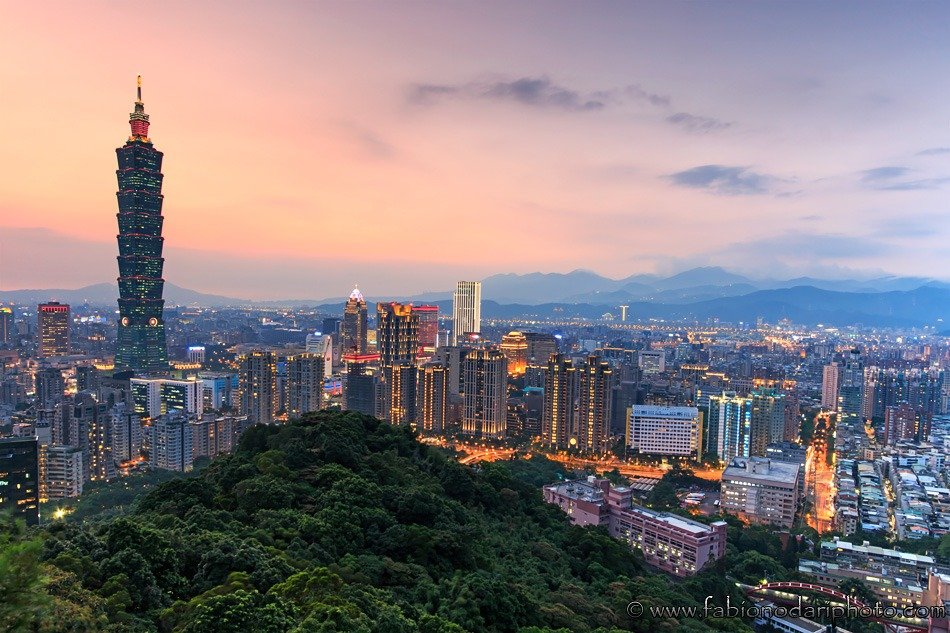
The most famous landmark of the city is the Taipei 101 (台北101) which until 2010, itheld the title of tallest building in the world. The name comes from its 101 floors above ground, and the design is inspired by a bamboo stalk.
Inside, it’s a mix of high-end shopping, offices, and restaurants, but the real highlight is the observation deck on the 89th floor. The building has a massive wind damper, a 660-ton steel sphere suspended between the 87th and 92nd floors, that helps it withstand the strong typhoons and frequent earthquakes that hit Taiwan.
Chiang Kai-shek Memorial Hall (中正紀念堂) and Longshan Temple (龍山寺)

The Chiang Kai-shek Memorial Hall (中正紀念堂) is another iconic landmarks and a place you can’t really miss. Set in a vast square surrounded by gardens, its bright white walls and deep blue roof stand out against the skyline. Built in honour of Chiang Kai-shek, the former President of the Republic of China, the hall houses a large statue of him inside, guarded by soldiers in ceremonial uniform and every hour you can watch the changing of the guard.
Even if you’re not particularly interested in politics or history, the scale of the building and the symmetry of the surrounding Liberty Square (自由廣場) make it a great spot for photography.
Your next stop could be Longshan Temple (龍山寺). It was founded in 1738 by settlers from Fujian (here’s my travel guide to the Tulou in Fujian) and is dedicated to Guanyin, one of the most beloved figures in East Asian Buddhism. Despite earthquakes, fires, and the bombings of World War II, it has been rebuilt several times and remains a cornerstone of Taipei’s spiritual and cultural life.
If you into history, the National Palace Museum (國立故宮博物院) holds one of the largest collections of Chinese art and historical artefacts in the world, with pieces spanning thousands of years of history. Many of these treasures were moved from the Forbidden City in Beijing (here’s my Beijing Travel Guide) during the Chinese Civil War, which is why you’ll find imperial jade carvings, ancient bronze vessels, delicate porcelain, and intricate calligraphy all in one place. The collection is so vast that only a small portion is displayed at any time, with exhibits rotating regularly.
Explore the Night Markets

Night markets (夜市) are a big part of everyday life in Taiwan, and they’ve been around for centuries. The first ones appeared during the Qing Dynasty, when traders would set up stalls in the evening to sell food and goods to locals after the heat of the day. Over time, they grew into lively hubs where you could eat, shop, and socialise all in one place.
Today, nearly every city and town in Taiwan has at least one, and I think visiting a night market is one of the best ways to understand Taiwan’s food culture. You’ll find everything from famous snacks like oyster omelettes (蚵仔煎), pepper buns (胡椒餅), and stinky tofu (臭豆腐) to fresh fruit juices and weird desserts. Prices are low, portions are small enough to try a bit of everything, and there’s no pressure to rush.
Some of the most popular markets in Taipei are the Shilin Night Market (士林夜市) and Raohe Street Night Market (饒河街夜市). Night markets are a must on any trip to Taiwan. Here’s my article about one of the most famous Night Markets in the Southern City of Kaohsiung.
Jiufen and Pingxi: Old Streets and Lanterns

If you only have time for one day trip from Taipei, I’d put Jiufen (九份) and Pingxi (平溪) at the top of the list. Jiufen is a hillside town with narrow alleys, steep staircases, and a mix of tea houses and street stalls. It became famous for its gold mining past and later as the setting for several films, but what keeps people coming back is the atmosphere: red lanterns glowing at dusk, the sea in the distance, and the feeling of stepping back in time while exploring Jiufen Old Street (九份老街).
Pingxi is smaller and quieter, best known for its Sky Lantern Festival, when thousands of paper lanterns are released into the night sky. You don’t have to visit during the festival to enjoy it, though. Any day of the year, you can buy a lantern, write your wishes on it, and watch it float away against the backdrop of the old railway tracks and surrounding hills. While you’re here, make sure to stop at Shifen Waterfall (十分瀑布), just a short walk from Shifen Old Street. It’s one of Taiwan’s most famous waterfalls and a nice contrast to the busy old streets.
You can reach both places by taking a train from Taipei to Ruifang (瑞芳), then a bus or taxi to Jiufen, and continuing on the Pingxi Railway Line for Pingxi itself. Doing them together makes for a long but very rewarding day out.
Yehliu Geopark (野柳地質公園)
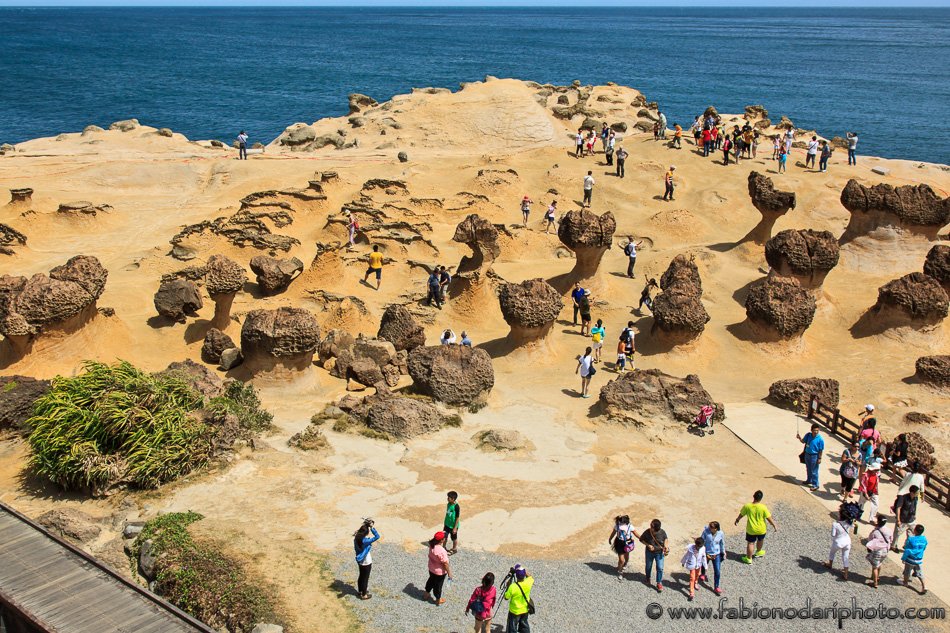
Yehliu Geopark (野柳地質公園) is one of northern Taiwan’s most unique natural attractions, known for its strange rock formations shaped by wind and sea erosion. The most famous is the Queen’s Head (女王頭), a slender neck of stone supporting a head-shaped rock that has become a symbol of the park.
If you have some time left in Taipei you might consider visiting this area on a day trip from the capital
Relax in one of the many hot springs
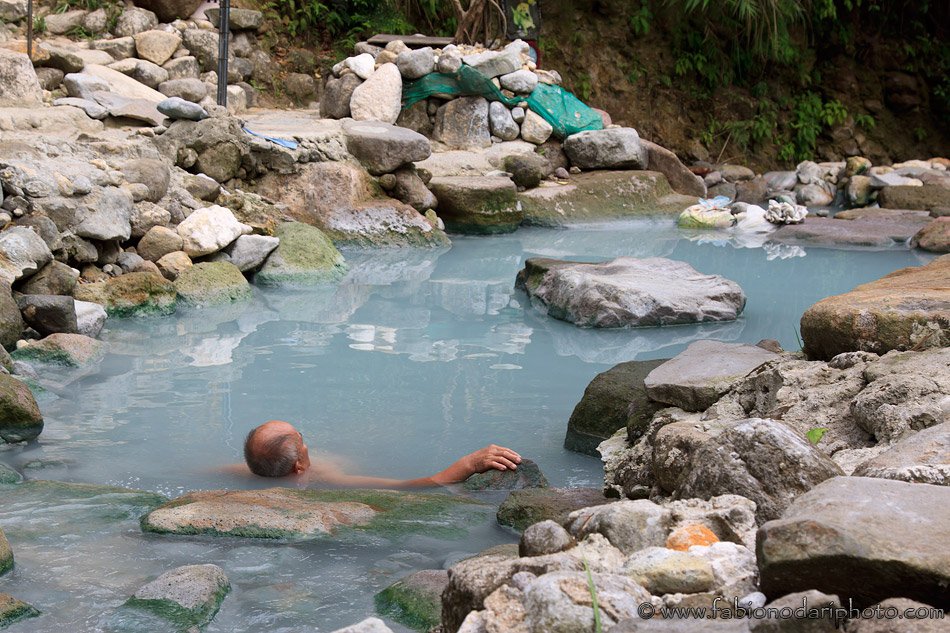
Taiwan is full of natural hot springs (溫泉), thanks to its volcanic geology. Some of the most famous are in Beitou (北投), just a short MRT ride from central Taipei, where you can visit public bathhouses, private resorts, and even a hot spring museum. In the mountains, places like Wulai (烏來) and Jiaoxi (礁溪) offer outdoor pools surrounded by nature, while in the south you’ll find Guanziling (關子嶺), known for its rare mud hot springs.
Whether you choose a simple public bath or a luxury spa, I recommend setting aside a few hours for a hot spring. It’s one of those experiences that makes you feel like you’re living like a local.
Taiwan’s East Coast: Wild Nature and a Different Side of the Island


Taiwan’s east coast feels like a completely different country compared to the west. While the western side is home to most of the population with busy cities and the high-speed rail line, the east is wilder, quieter, and framed by mountains that drop straight into the Pacific Ocean.
It’s also the best place in Taiwan for surfing, with breaks around Donghe (東河) and Jinzun (金樽) attracting more and more people. Life here moves at a slower pace, and the coastal towns have a laid-back charm you won’t find in the big western cities.
Heading south from Taipei, your first stop is Yilan (宜蘭), a relaxed area known for its seafood and hot springs such as Jiaoxi Hot Springs (礁溪溫泉). From Yilan, the road to Hualien is one of the most scenic in Taiwan, hugging cliffs and weaving through tunnels with constant views of the Pacific.
Hualien (花蓮) is the base for exploring Taroko Gorge (太魯閣峽谷), a marble canyon carved by the Liwu River and one of Taiwan’s top natural attractions. To get there, you can take a bus or taxi from Hualien station to the park entrance. There are many popular hikes you can do, including the Shakadang Trail (砂卡噹步道), the dramatic Swallow Grotto (燕子口), and the Baiyang Trail (白楊步道) with its waterfalls. If you can, spend the night nearby so you can enjoy the gorge early in the morning or late in the afternoon, when it’s quieter and the light is perfect for photos.
I recommend avoiding weekends, and keep in mind that during the rainy season the gorge may be closed.
Taitung & Kenting — From Peaceful Coasts to Tropical Shores

Taitung (台東) is a nice stop on Taiwan’s east coast, good for cycling along Taitung Seashore Park (台東海濱公園. In summer, the Taitung International Hot Air Balloon Festival brings dozens of balloons drifting over the hills in a mix of shapes and colours.
Another interesting area is the East Rift Valley (花東縱谷) for rice paddies and mountain views and if you have the time, a ferry to Green Island (綠島) or Orchid Island (蘭嶼) for some more off the beaten path areas.
Then, further south lies Kenting National Park (墾丁國家公園), Taiwan’s southern coast famous for its golden beaches and coral reefs. It’s still one of the island’s most beautiful beach destinations, perfect for snorkeling and diving. That said, recently there has been a sharp drop in visitors. That makes Kenting feel quieter now: more space for long beach walks and peaceful sunsets, which is exactly why I think it’s worth visiting despite the shift.
Kaohsiung: Art, Culture, and Harbour Views
Kaohsiung (高雄) is Taiwan’s second-largest city and also my favourite city in the country: it’s where I used to live, so I know it quite well. It’s a major port, but in recent years the city has transformed its waterfront with bike paths, parks, and public art. The Pier-2 Art Center (駁二藝術特區) is a perfect example: once an abandoned warehouse district, it’s now a creative space filled with murals, sculptures, galleries, and cafés. I used to go there in the late afternoon when the light is warm and the sea breeze makes wandering around more pleasant.
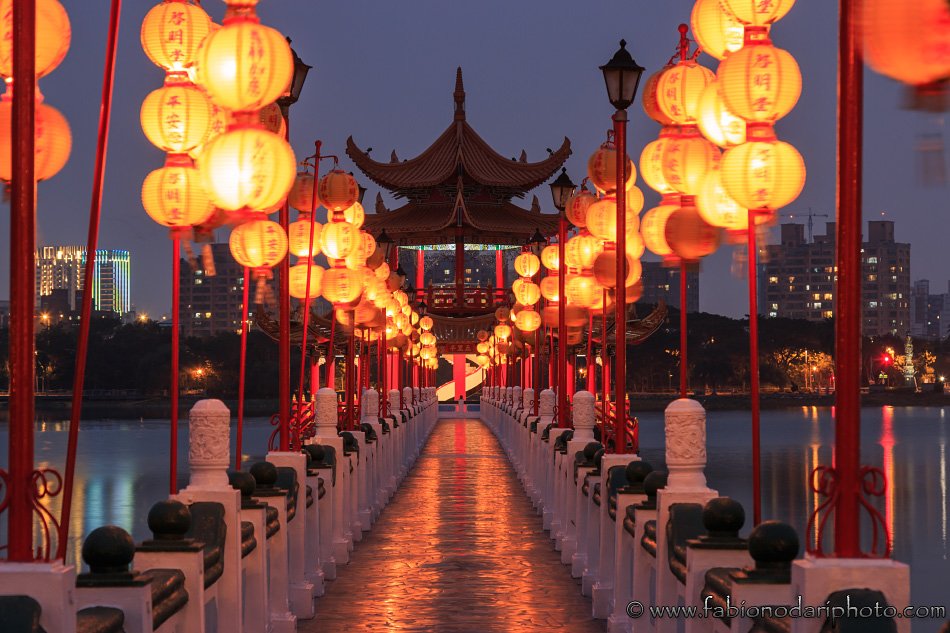
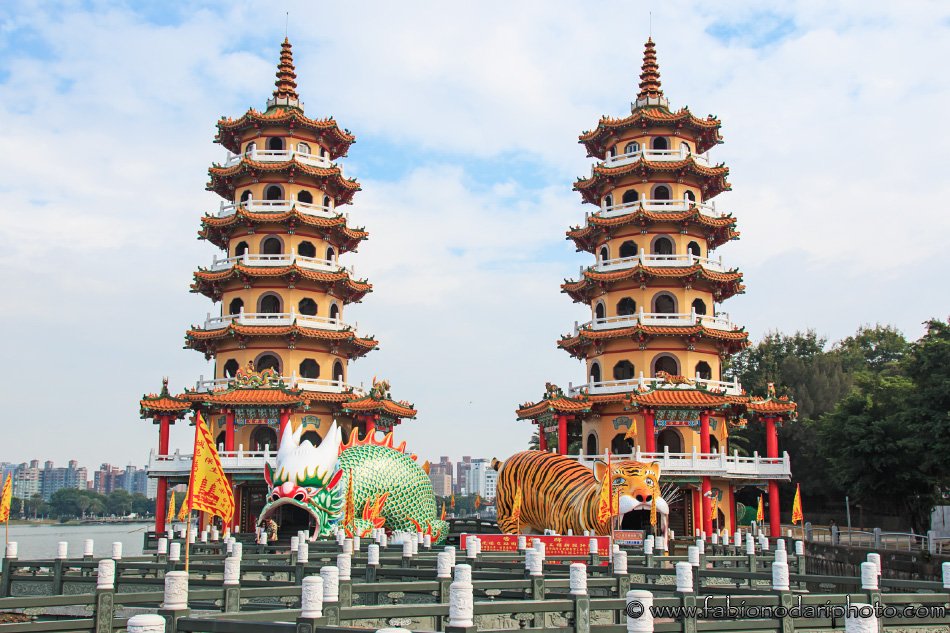
Another must-see is the Lotus Pond (蓮池潭) in the Zuoying district. You can find my detailed Lotus Pond Travel Guide here. This beautiful park it’s surrounded by colourful temples and pagodas, the most famous being the Dragon and Tiger Pagodas (龍虎塔), where you enter through the dragon’s mouth and exit through the tiger’s for good luck. The area is especially busy in the early morning when locals come to exercise, and in the evening when the lights on the temples reflect on the water. It’s easy to spend a couple of hours here exploring on foot or renting a bike to loop around the pond.
I also recommend taking a short ferry ride from Gushan Pier to Cijin Island (旗津). It’s a narrow strip of land known for fresh seafood which is very delicious and quite cheap. Just above Gushan, you’ll also find Shoushan (壽山), better known as Monkey Mountain for the macaques that roam the trails. It’s a good short hike with views over the harbour. Here you can find my detailed Monkey Mountain Guide.
What I like the most about Kaohsiung, especially compared to Taipei, is the vibe: lots of artists and modern museums, slightly better weather, and the city is right in front of the Ocean.
Tainan: Taiwan’s Historic Capital

Tainan (台南) is the oldest city in Taiwan and was once the island’s capital during the Qing Dynasty. It’s a place where history and tradition are part of daily life, with hundreds of temples hidden among narrow lanes and traditional markets.
One of the most interesting places is the Chihkan Tower (赤崁樓), a historic fort built by the Dutch in the 17th century. I also recommend visiting the Anping Old Street (安平老街), where the smell of shrimp crackers and oyster rolls fills the air. Tainan is also known for its food: dishes like danzai noodles (擔仔麵), coffin bread (棺材板), and milkfish soup (虱目魚湯) are the most popular. The Garden Night Market (花園夜市) is one of the biggest, with row after row of food stalls and games. Tainan is just 40 minutes by train from Kaohsiung, making it an easy day trip.
Chiayi and Alishan: Mountain Retreat

Chiayi (嘉義) is a small, relaxed city, but for most travellers it’s the gateway to Alishan (阿里山), one of Taiwan’s most famous mountain areas. The Alishan Forest Railway (阿里山森林鐵路) is a century-old narrow-gauge line that winds through dense forests and steep valleys, and riding it is quite an experience.
Alishan is best known for its sunrise views above a sea of clouds from Zhushan (祝山), where the mountain peaks look like islands floating in mist. During the day, the area’s forest trails take you past giant cypress trees, serene temples, and tea plantations that produce Taiwan’s famous high mountain oolong. You can reach Alishan by taking the forest railway or a bus from Chiayi, and I recommend staying at least one night so you can catch that sunrise.
Sun Moon Lake
Sun Moon Lake (日月潭), in the mountains of central Taiwan, is one of the country’s most famous spots. The lake gets its name from its shape: one side resembles a crescent moon and the other a round sun. If you decide to get there I recommend cycling around the lake’s shoreline. Boat cruises are another good way to explore, with stops at Ita Thao Village (伊達邵) for local food and Xuanzang Temple (玄奘寺) for views over the water.
Taichung: Art and Food Hub
Taichung (台中) is Taiwan’s second-largest city and has a mix of modern design, art spaces, and a thriving food scene. One of its most famous sights is the Rainbow Village (彩虹眷村), a former military housing area transformed into a colourful artwork by an elderly veteran known as “Grandpa Rainbow.” At night, Fengjia Night Market (逢甲夜市), one of the largest in Taiwan, is packed with food stalls. Taichung is just 30 minutes from Chiayi on the high-speed rail, and from here it’s an easy trip back to Taipei, making it a convenient final stop before ending your loop around Taiwan.
Is Taiwan safe?

Yes, Taiwan is a very safe country to travel in. It consistently ranks among the top destinations in the world for low crime rates, and violent crime against tourists is extremely rare. You can walk around most cities at night without feeling unsafe, and locals are generally friendly and willing to help if you need directions or advice.
That said, nature is less predictable. Taiwan sits on the Pacific Ring of Fire, so earthquakes are fairly common, though most are minor and pass quickly. The island is also in the path of tropical storms, and typhoons can hit between June and September, bringing strong winds and heavy rain. Good infrastructure and early warning systems mean you’ll usually have plenty of notice to adjust your plans and stay safe.
Final Thoughts

What stands out the most about this small Island is how much variety fits into such a small place. In just a few hours, you can go from hiking through marble gorges to cycling along the coast, from sipping tea in a beautiful hillside cafés to lying on the sand in a tropical beach. The distances aren’t huge, but each stop feels different: not just in scenery, but also in food, pace of life, and even the way people speak.
If it’s your first visit, I suggest keeping your itinerary simple and following a loop, either clockwise or anti-clockwise, so you spend less time backtracking. Trains and buses are reliable, but renting a scooter or car in certain areas, especially along the east coast or in the mountains, gives you the freedom to stop wherever you like.
Taiwan is also a place where the small moments matter: chatting with a night market vendor, getting caught in a sudden downpour, or stumbling across a temple you hadn’t planned to visit. Go with a rough plan, but leave space for those unexpected detours: they’re often the parts you’ll remember most.
Don’t miss my Yushu to Ganzi travel guide if you are ready to explore some remote but beautiful areas in China. If you fly into Taiwan and have a stopover in Dubai, you can find my travel guide here.
Here are some more pictures I took in Taiwan.


