
In this article, I talk about some of the top things to do and see in Ohrid, a beautiful village in North Macedonia.

This is the third and final article about my trip to North Macedonia. In the first one, I shared my impressions while visiting this small Balkan country, and in the second, I gave some practical tips on what to see in Skopje, the capital. In this last article, I’ll explain why Ohrid is a must-visit stop if you decide to travel to North Macedonia.
Quick Facts about Ohrid
- Location: Ohrid is a lakeside city in southwestern North Macedonia, on the shores of Lake Ohrid, one of Europe’s oldest and deepest lakes.
- UNESCO Site: Both the city and the lake are UNESCO World Heritage Sites, recognised for their unique natural and cultural value.
- Churches Everywhere: Ohrid once had 365 churches, one for each day of the year.
- Ancient History: The area has been inhabited since prehistoric times, with visible layers of Greek, Roman, Byzantine, and Ottoman heritage.
- Cultural Hub: Ohrid is a major centre for Macedonian culture, hosting festivals like the Ohrid Summer Festival of music and drama.
- Landmarks: Key sights include the Church of St. John at Kaneo, Samuel’s Fortress, and the Ancient Theatre of Ohrid, dating back to the 2nd century BC.
Why you should visit Ohrid

In short, because if you haven’t seen Ohrid, you’ve missed the most beautiful place in North Macedonia. Ohrid is, without a doubt, the most picturesque destination in the country and one of the most stunning in the Balkans. The city lies on the eastern shores of the lake of the same name, which is one-third Albanian and two-thirds Macedonian.
It’s one of the oldest lakes in Europe and incredibly clear: despite being surrounded by villages, the water is as transparent as in the Alpine lakes. It’s also among the deepest in Europe, reaching about 300 m.
In summer, it gets very crowded and you probably won’t enjoy the atmosphere. Still, if you have the chance to visit Ohrid in the low season, you’ll understand why UNESCO declared it a World Heritage Site (one of the rare cases where it’s both a natural and cultural site).
Besides the crystal-clear waters, Ohrid is famous for its many Byzantine churches: initially, there were 365, one for each day of the year. That’s why it was once known as the Jerusalem of the Balkans.
Once you land, it’s best to rent a car, as public transportation is somewhat limited. Ohrid is about 170 km from the capital, Skopje. As for accommodation, you’ll find plenty of options on Booking.com or Trip.com. If you want to book a short city tour, I recommend using GetYourGuide.
Best Time to Visit
The best time to visit Ohrid is from May to early October, when the weather is warm and dry. July and August are the busiest months; the town fills up with both locals and tourists, and prices go up. If you prefer a quieter experience, I think June or September are ideal: the weather is still pleasant, the crowds are thinner, and most attractions are open.
Winter, on the other hand, is very quiet and peaceful, but many places shut down, and it gets quite cold.
Top things to do and see: Ohrid Travel Guide

This small lakeside town feels like an open-air museum, but with a much more relaxed atmosphere. It has a peaceful vibe, almost like a Mediterranean village. With its ancient churches perched on cliffs, stone-paved alleys, and the clear waters of Lake Ohrid, it’s the kind of place where history and nature blend perfectly.
I recommend starting your day by exploring the old town, where you can really feel the soul of Ohrid. The ideal first stop is St. Sophia Church (Света Софија), one of the most important landmarks in the country. It dates back to the 11th century and preserves spectacular Byzantine frescoes, among the best-preserved in the region. It’s a quiet and atmospheric place, perfect for connecting with the spiritual side of the city.
From there, you can slowly walk uphill to reach the small Ancient Theatre (Антички театар). This Hellenistic-era amphitheatre isn’t very large, but its setting is special: surrounded by traditional houses with views over the red-tiled rooftops of the city.

Continuing uphill, you’ll reach Plaošnik (Плаошник), an archaeological site still partially under excavation. Here you’ll find the remains of early Christian basilicas, beautiful mosaic floors, and the Church of St. Clement and Panteleimon (Црква „Свети Климент и Пантелејмон“), initially built in the 9th century by St. Clement of Ohrid, a disciple of Saints Cyril and Methodius. This site is considered one of the first medieval universities in the Slavic world, where Clement trained future priests and helped spread the Glagolitic alphabet.
A few more minutes on foot will take you to Tsar Samuel’s Fortress (Самоилова тврдина), the highest panoramic point in the city. From the top of its walls, you can enjoy sweeping views over the lake and most of Ohrid. Visiting in the morning is a great idea, you’ll avoid both the heat and the crowds.
For lunch, you can head back down into the old town. There are plenty of restaurants with lake-view terraces or shaded garden courtyards.

In the afternoon, after a relaxing break, I suggest following the wooden boardwalk that starts from the center and runs along the lake. It’s an enjoyable walk, with the sound of the water on one side and small coves on the other. After about twenty minutes, you’ll reach St. John at Kaneo Church (Свети Јован Канео).
This is the undisputed symbol of Ohrid, and when you see it, you’ll immediately understand why: it sits in a spectacular spot, perched directly above the lake, with the mountains as a backdrop. It’s the perfect place to sit for a while and take in the view, especially in the late afternoon when the light is softer and the area is less crowded than at sunset.
To end the day, you can slowly make your way back toward the old town. Ohrid at night has a charm all its own.
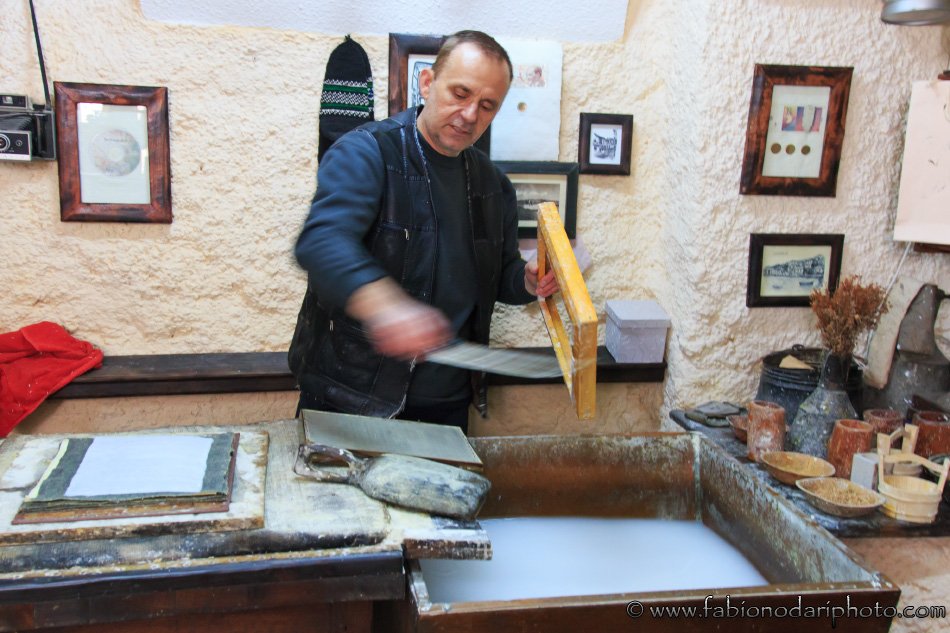
On your second day, you can take a boat trip on the lake, even just an hour-long ride is enough. Seeing Ohrid from the water is a relaxing experience and offers an entirely different perspective on the town and the surrounding hills.
For lunch, try a local dish made with lake fish, such as belvica. I would avoid the Ohrid trout, though, unfortunately, it’s an endangered species. Many restaurants still serve it, but it’s better to skip it for sustainability reasons.
A Detour to the Prespa Lakes

If you have an extra day or want to get away from the more touristy areas, I recommend heading to the Prespa Lakes, about an hour and a half from Ohrid. There are two lakes, Great and Small Prespa, less known than Lake Ohrid, but for that very reason, much quieter. The landscape here is different: more open, wilder, with small farming villages and very few tourists around.
Don’t miss the village of Brajčino, nestled in the mountains, perfect for a walk or a quiet lunch in one of the few family-run taverns. You could also visit Golem Grad Island, also known as “Snake Island” (don’t worry, the name is more dramatic than the reality), which is reachable by boat from the Macedonian side.
The Prespa Lakes are also crucial for biodiversity: Dalmatian pelicans nest here (I wrote about them during my trip to Lake Kerkini in Greece), along with herons and many other species. If you enjoy nature photography or want to unplug for a few hours, this is a great alternative.
Is it worth going to Ohrid?

Ohrid is undoubtedly the place I liked the most in Macedonia. The atmosphere is unique, and the local people are great. I suggest spending at least two days in Ohrid and, if possible, visiting the country nearby to explore more beautiful landscapes.
You can read my post about another beautiful European destination, Slovenia, here, and find more pictures of North Macedonia here.


Ciao Fabio! I really enjoyed the article about Macedonia. It brought back memories of my trip a few years ago when I visited Skopje and Ohrid during summer. Ohrid especially surprised me, such a peaceful lake vibe compared to other Balkan destinations. Btw, great photos!
Thanks Eduard!
Great post Fabio, we’ll post it in all our channels for sure. We also posted it on our website Macedonia Timeless, down at the bottom.
Thanks from Mats Lindborg at the Share Macedonia team.
Thank you Mats! Looking forward to visiting Macedonia again! 😉
Great post Fabio, we’ll post it in all our channels for sure.
Thanks from Mats Lindborg at the Share Macedonia team.
Thank you Mats. I really love your country. It’s a shame that only few people know about it. I hope that with my article I can somehow promote the tourism over there…
Yes Fabio, thanks for the promotion help <3
Hi Fabio. I loved this article: essential, but beautiful filled in by wonderful pictures.
I’m Italian and, some days ago, I was on the Lake Ohrid with my daughter for the first time. We were impressed, couldn’t imagine it was so beautiful.
We ❤️ Ohrid
Sveta Bogorodica Pervlepta church at the top of the hill. Inside, covered with frescos. And the icon museum across the courtyard. Don’t miss these!
Thanks!
Glad you liked it Annalisa 🙂
Fabio..thank you for your amazing photography and in capturing the beauty of my country of birth..yes not many people know about the natural beauty history and culture of this place..cheers Gordana
Thanks Gordana! I love Macedonia and its people.
Thank you Fabio for sharing this awesome list of things to do in Ohrid.
My pleasure!
I came across your website while exploring traveling to lake Kerkini. This was the first time I read of another lake to visit with Dalmation Pelicans which is the reason. I want to visit lake Kerkini.
I am inspired by your philosophy about life, travel and photography. I will explore more of your blogs shortly
Thanks Irene. Hope you have a great time.
Great post but too bad you had changed the title recently by adding the word North next to Macedonia… The word “north” is offensive to us ,to all Macedonians. So we are feeling offended by it. The name of our country was changed by force not by people will !!
When visiting our country and you talk to people if you are using the word “north” you’ll break our heart, it’s just very hurtful.
If you say Macedonia (my recommendation) oh my… than you will be treated like a king/queen!
Thanks for sharing your thoughts on this topic. Would love to hear more from other people from your country though. Is this a common view?
Well, having this luxury of living in Ohrid lake is fun, amusing and seriously a fun treat for people. I enjoyed this article a lot, so thanks for pointing out my country and home city. Appreciate it 😀
Ohrid is definitely a nice place to stay!
Im planning to visit Italy and a couple other countries. Have any advice on where i should visit? 🙂
Italy is quite big, it really depends from what you like, history, culture, nature, etc…
Well, i like to learn it all! I have 2 months in Italy, so what are You’r recommendations on what i should visit.
~Thanks 😀
Besides the most famous places I’d suggest to visit Puglia, a beautiful region in Southern Italy. 🙂
Bitola isn’t the only way to Prespa. You should go trough Galicica national park, its closer and the landscapes are stunning, and if you want a little climbing you can reach a spot than you can see both lakes in same time.
bye
Wow! I had no idea that Ohrid was so beautiful. Your pictures do a great job of capturing the water, especially at Sveti Jovan Kaneo as the blue water just kind of fades out into the sun and casts a tranquil spell out to anyone who views it.
I’d also love to draw on some handmade paper.
Thank you Chris. Ohrid is really a stunning place, especially on low season.