
Planning a trip to this remote spot can be challenging. Read this travel guide to learn the best time to visit Yuanyang, how to get there, and how to plan your trip.

China is a unique country: despite being one of the most populous and biggest in the world, it’s still mysterious to many people.
Of all the truly amazing places in this country, there is one in particular that I have always wanted to visit: Yuanyang (元阳) in Yunnan. It is famous for the huge rice terraces built on mountain cliffs at an elevation of about 2000 meters.
There are many countries with rice terraces, but in my opinion, none are as amazing as Yuanyang. In the past, I visited Sapa in Vietnam and Longji in Guangxi, but Yuanyang is hard to match.
What about Yuanyang? Is it worth getting to this remote part of China, close to the border with Laos and Vietnam? Absolutely yes!
Yuanyang (元阳): a bit of history
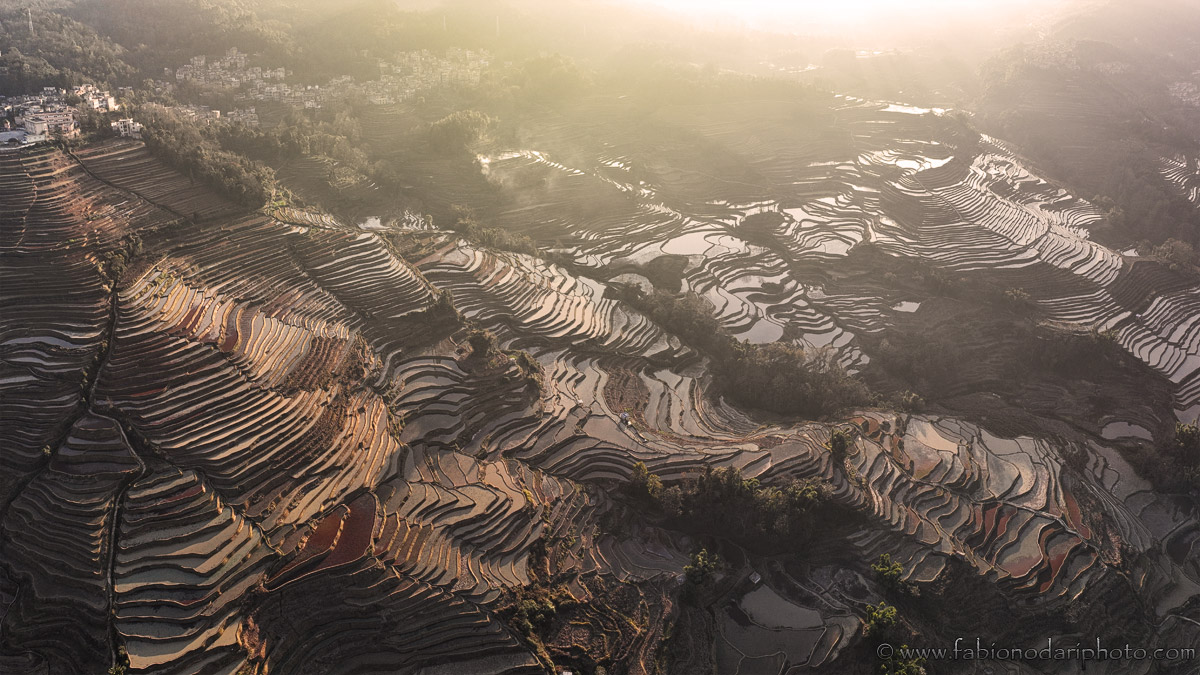
Yuanyang is located in the HongHe (红河) prefecture (here is an article about Mile in the same prefecture). The elevation of this prefecture ranges from 144 meters to almost 3000 meters. This means that the climate varies greatly, depending on where you are. 34% of the people belong to the Han group (what we generally call Chinese people), and the other 66% belong to other ethnic groups. One of them is the Hani (哈尼), who built the rice terraces over several centuries, and the others are Yi, Miao, Yao, Zhuang, and Dai.
How did those people fill the rice terraces with water since they are built on steep mountains? The Hani took advantage of this region’s unique climate! In winter, there is a large temperature difference between the valleys (with a tropical climate) and the mountains (with much colder weather), which leads to heavy evaporation.
In the form of fog and clouds, water evaporates and filters through the forest in the mountains. All this mist forms streams of water that flow into the rice terraces and then back down to the valley. Simple but very efficient!
Best time to visit the Yuanyang rice terraces
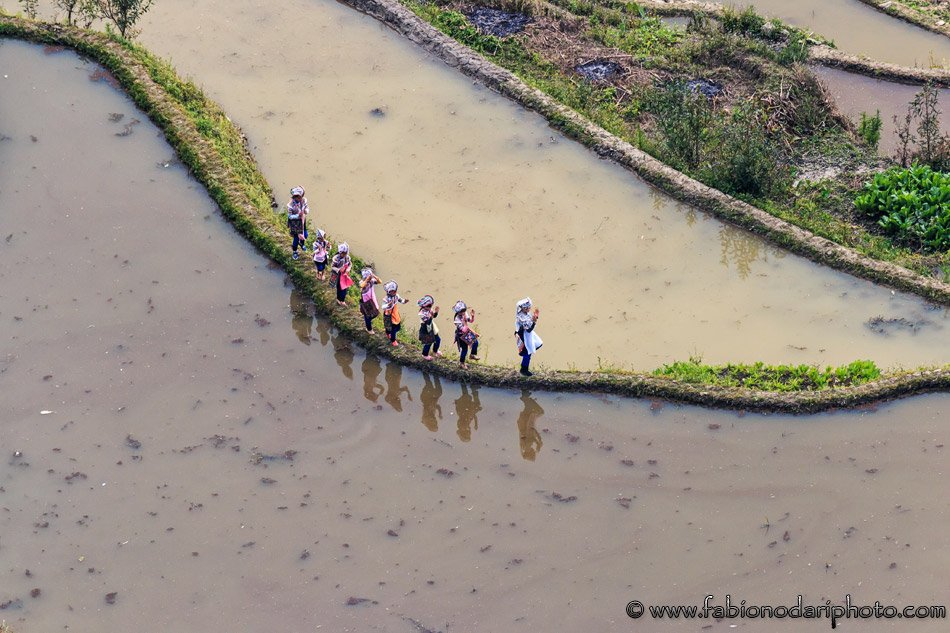
The best time to visit the Yuanyang rice terraces is when the fields are filled with water. Due to the elevation, even though Yuanyang is in the Tropics, the rice is harvested only once a year, which means the fields are filled with water only from the end of November until the end of April.
If you plan a trip during that season, avoid the Spring Festival (usually between the end of January and the beginning of February).
If you prefer to visit the terraces when the rice has grown, August and the beginning of September are the best months. Unfortunately, after the beginning of September, the harvest season starts, and for a couple of months, you won’t find either water or rice.
How to get to Yuanyang and how to get around
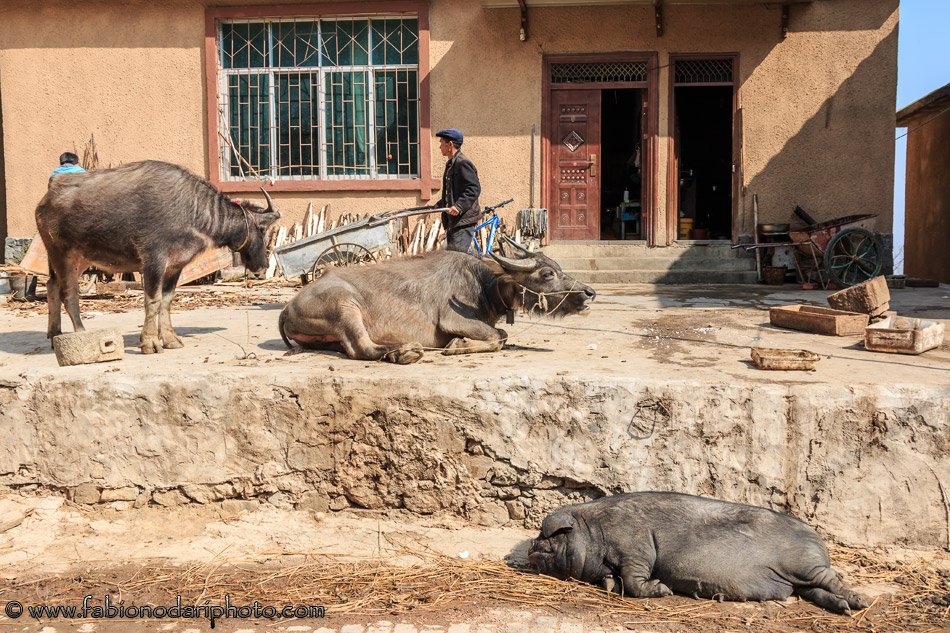
Getting to Yuanyang is not easy since there are no trains or airports nearby.
Here are some options for getting to Yuanyang from Kunming:
- Bus from Kunming to Xinjie: This is the easiest and most inconvenient option, since the journey can take up to 7 to 8 hours, depending on traffic. You can take a long-distance Bus from the South Bus Station in Kunming. There are two buses daily: one at 10:20 a.m. and one at 12:30 p.m., but the times may change, so ask for confirmation at the hotel. The bus arrives in Xinjie, about 15 km before the rice terraces area. From there, you must take a minivan to get to the hotel you booked. It’s best to book the bus a day before departure; the same goes for the return bus. Unfortunately, foreigners cannot use online services to book buses, so you will have to go to the bus station in person.
- Train from Kunming to Jianshui (建水), then bus to Xinjie: not the fastest option, but it has some advantages over the previous option. You’ll avoid spending too many hours on the bus, and you can stop in Jianshui, which I recommend visiting. It’s very beautiful and has a great night market. I recommend staying one night there. From Jianshui, you can take a bus to Xinjie and then a minivan to the hotel. Here you can book a train and a hotel. Alternatively, you can take a bus from Jianshui to Nansha (also known as Yuanyang town) to your hotel. The railway connecting Kunming and Jianshui was initially built by the French and a few Italian workers. It has a fascinating history, and I wrote an article about it. You can read it here.
- Train from Kunming to Mengzi (蒙自) and then bus to Xinjie: this option is similar to the above but faster. There is not much to see in Mengzi, so you can take a bus to Xinjie when you arrive in town. From there, take a minivan to your hotel.
- Car from Kunming: This is the best option and the most expensive. You can ask the hotel where you are staying to help you book a shared car (cheaper option) or a car just for you to take you directly to Yuanyang. If the driver takes the new highway, it takes only 5 hours to get to Yuanyang, and you won’t have to stop in Xinjie.
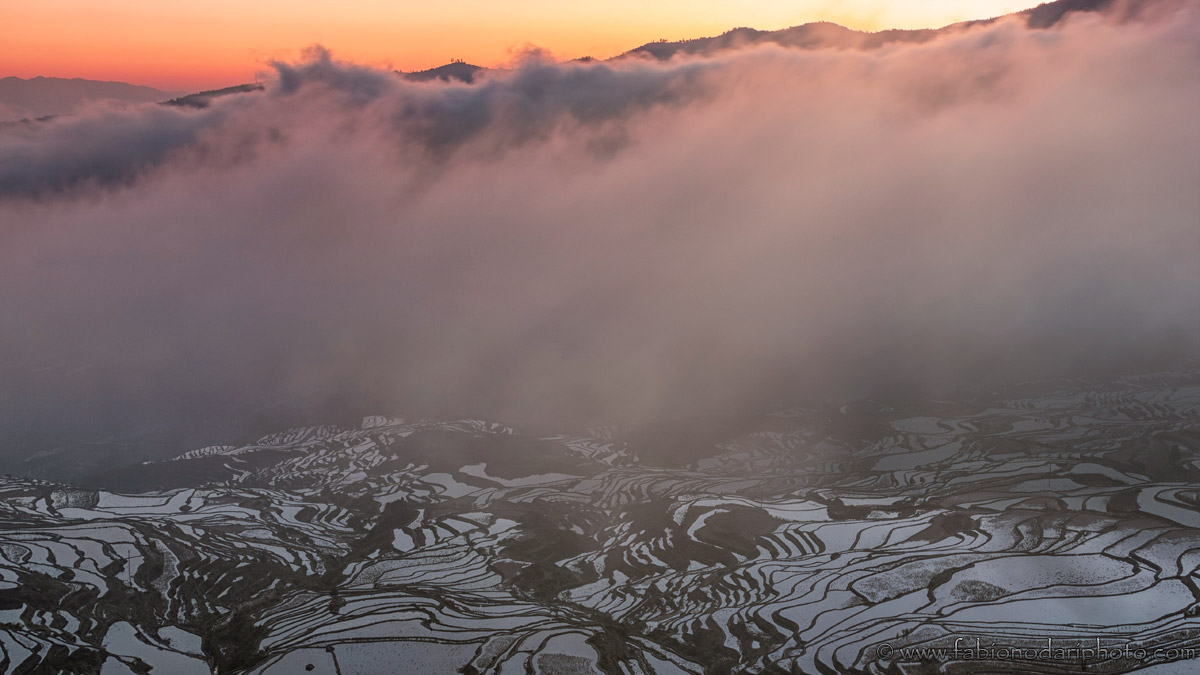
Once you arrive in Yuanyang, remember that the rice terraces are quite spread out. The best way to get around is by private driver. Feel free to message me on Instagram if you want some contact information.
Since there is no public transportation and you can’t rent a motorbike, another way to get around the area is to stop one of the minivans that connect the villages. If you don’t speak Chinese, write your destination in Chinese on a piece of paper and show it to the driver.
If you like meeting new people, you can try talking with some photographers who rented a car to explore the area and split the costs for that day, which is what I did, and it honestly was a good choice.
Travelling in China is not easy, and doing it in remote places is even more difficult, but you will be rewarded with some of the most beautiful landscapes on earth.
If you are looking for ideas for planning your itinerary in Yunnan, check out this page.
What to see in Yuanyang: the travel guide
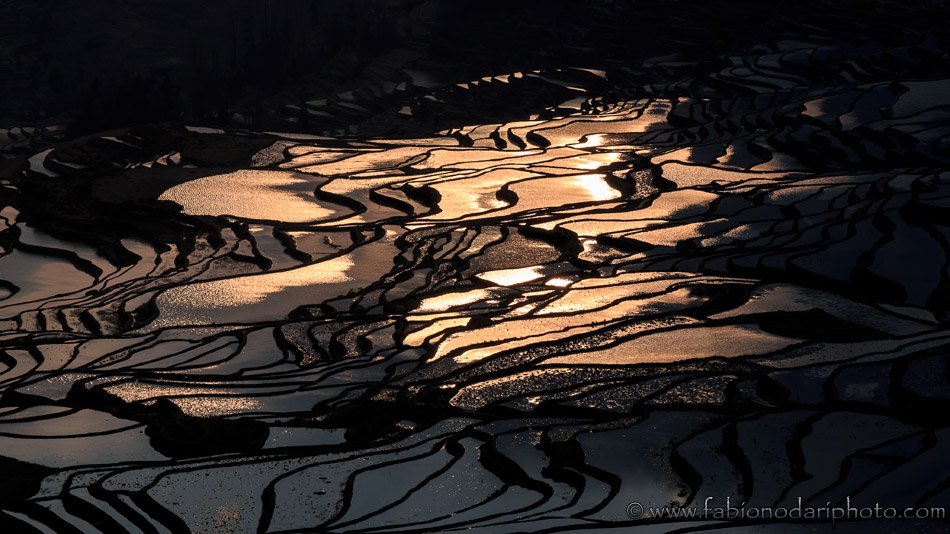
Even though there are several rice terraces in Yuanyang, only three have been included on the UNESCO World Heritage list. In every one of them, observation platforms have been built to accommodate hundreds of tourists and photographers.
To access these platforms, you’ll have to pay a 100 RMB fee. It’s not very cheap, but I think it’s worth the money. In my experience, whenever I see many tourists, I try to avoid the crowd and find some off-the-beaten-path spots. Often, those spots are empty and have a better view, but Yuanyang is an exception. The official platforms have the best view you’ll find in Yuanyang, and even though you can still find great “unofficial” observation spots, you can’t miss these three platforms:
- Duoyishu (多依树)
- Laohuzui (老虎嘴)
- Bada (坝达)
Duoyishu (多依树)
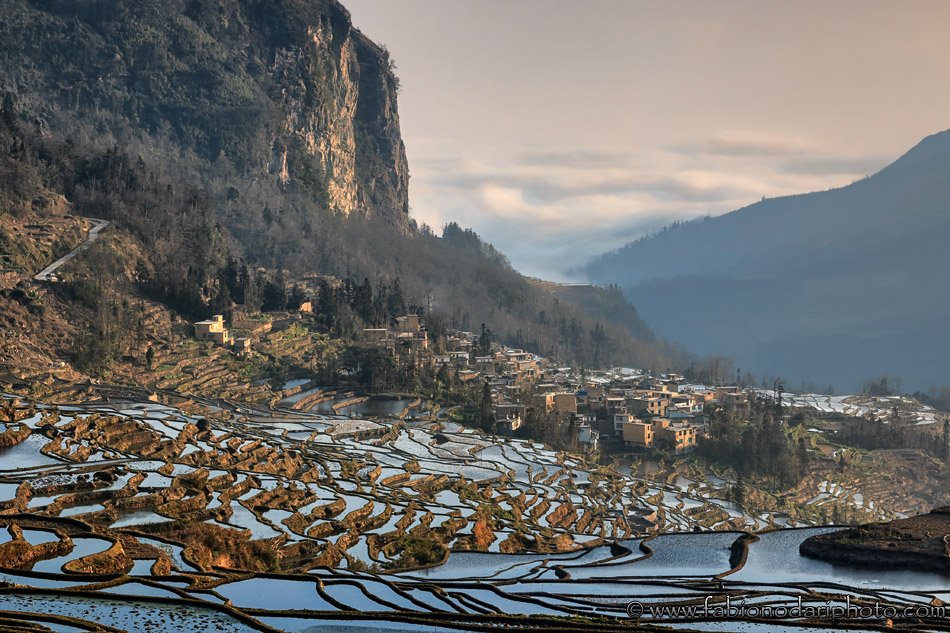
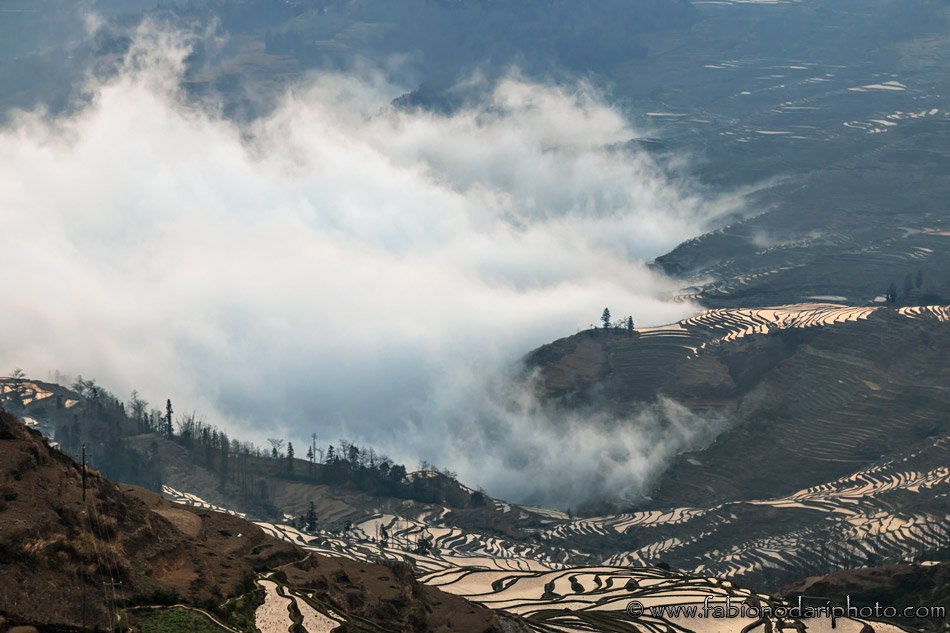
Duoyishu is the best place to see the sunrise, so finding your accommodation nearby is a good idea. This way, you can walk to the platform early in the morning without needing to find transportation (no public buses). Finding someone who can drive you to Duoyishu before sunrise will be difficult unless you hire a private driver.
This is the guesthouse recommended if you are looking for accommodation in Duoyishu.
Duoyishu is famous for the sea of clouds that, early in the morning, covers part of the terraces: truly a beautiful sight. This place is named after the nearby village, and the Hani people call this place “the paradise on earth”.
Laohuzui (老虎嘴)
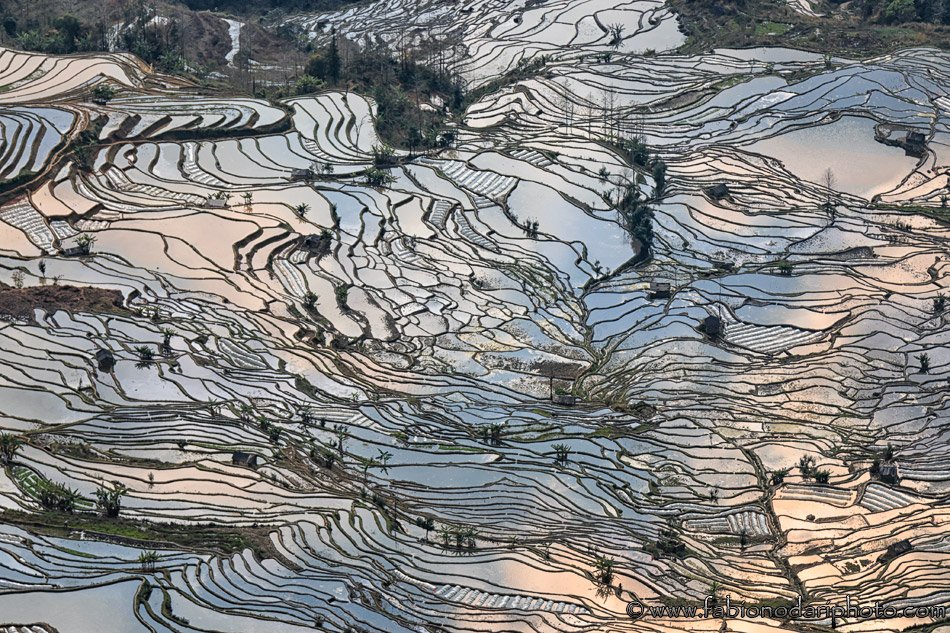
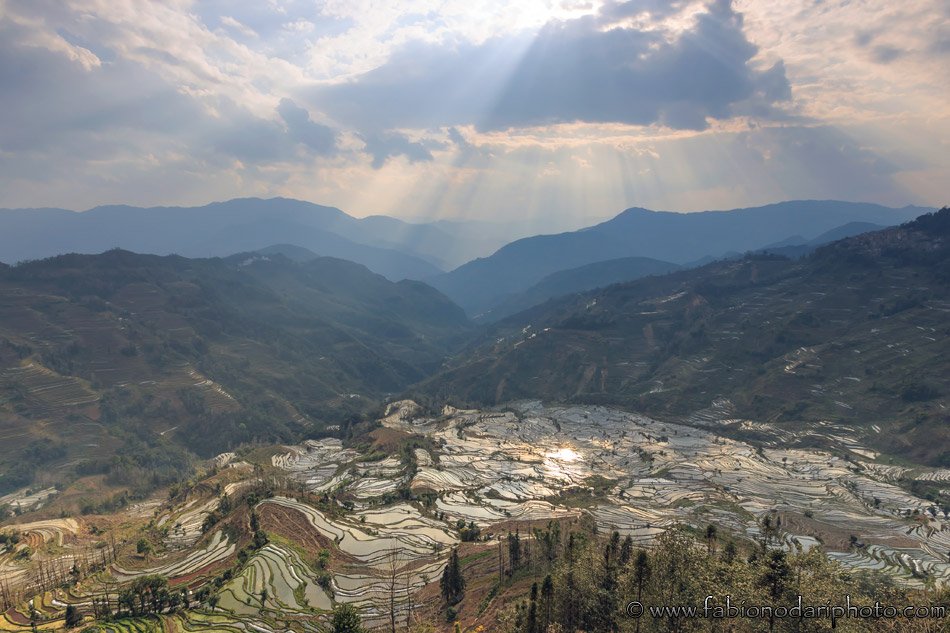
Laohuzui means “tiger mouth” and got its name from the shape of some fields that resemble tiger mouths. This place is 1400 meters high, and it’s one of the two ideal spots to see the sunset.
Laohuzui is China’s steepest, most spectacular, and most magnificent terraced landscape. For this reason, it’s a good idea to come well before sunset. Many people in China seem to like Laohuzui, too!
EDIT: unfortunately, the terraces were damaged by a landslide and then rebuilt, without taking into account the mountain’s geography. So, they are no longer as photogenic as they once were.
Bada (坝达)
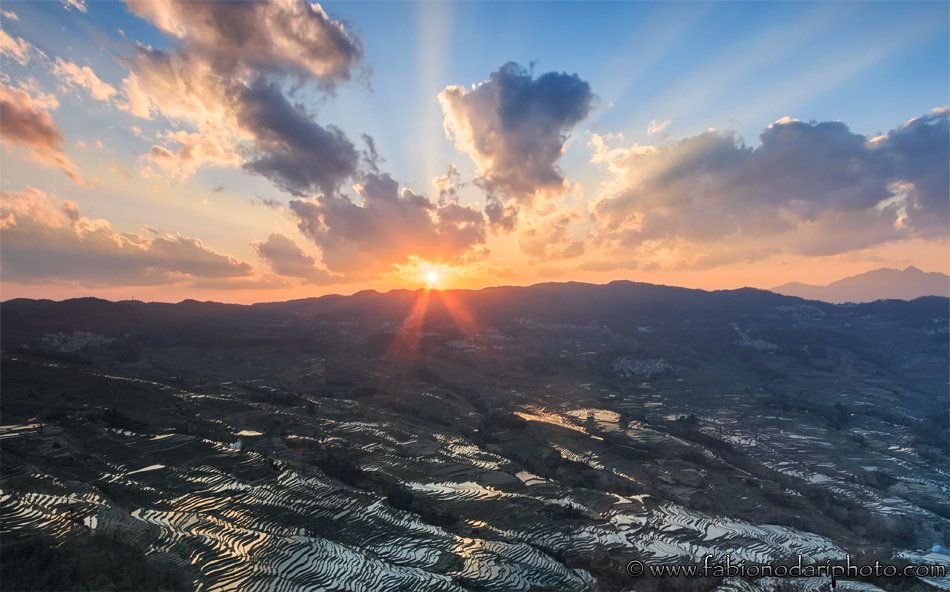
Bada is a direct translation from the Hani language, meaning “Hani is the nearest place to the sky.” Bada is also the ideal place to see the sunset.
This place is huge: it covers a surface of 56 square kilometers. Remember that all the rice terraces were built by hand and took centuries to make, so 56 square Meters is a lot! The place is honestly really stunning.
The terraces start at an elevation of 800 meters and go up to about 2000 meters. The whole place looks like a “Stairway to Heaven”.
Dawa (大瓦)
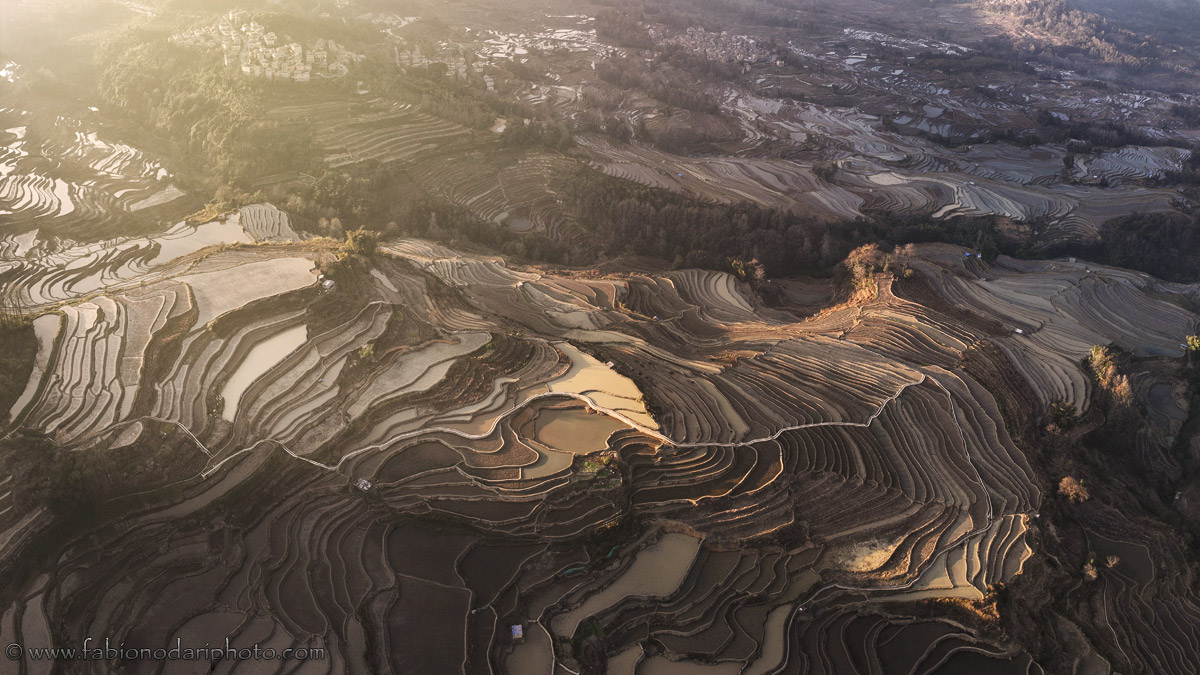
Dawa is a little-known place ideal for photographing sunsets. There are no special places for photographers, and space for a tripod is limited, but there are also fewer tourists than in other areas. Remember that it is impossible to find minivans after sunset, so plan how to get back to your hotel.
Laoyingzui (老鹰嘴)
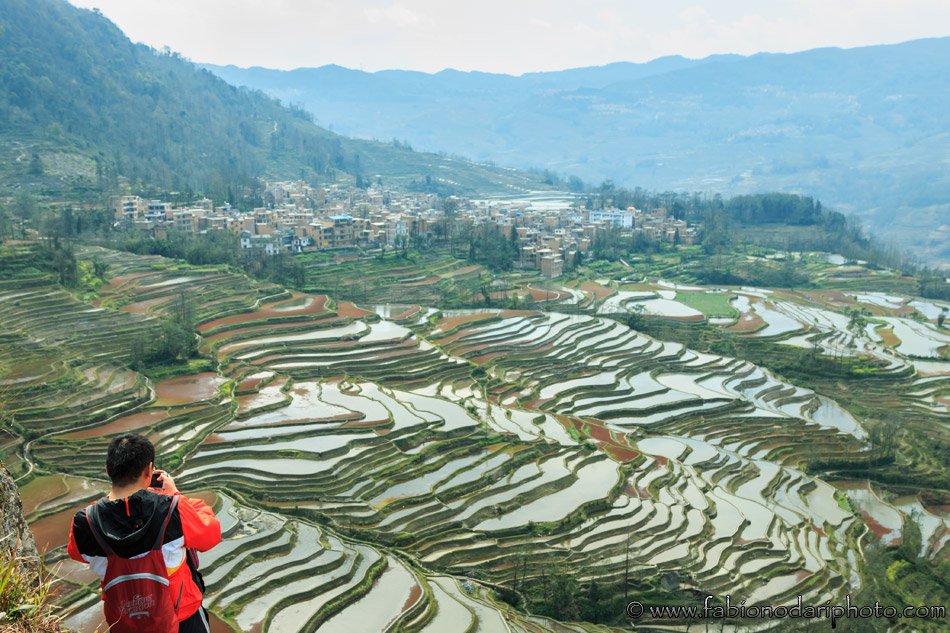
Laoyingzui (not to be confused with Laohuzui, one of the three official platforms) is one of the “unofficial” viewpoints. Laoyingzui is at the top of a cliff, and you’ll have a bird’s eye view of the terraces below (Laoyingzui means Eagle’s beak).
Be careful, though: the place can be dangerous since there are no protections, and the wind can be intense.
Laoyingzui is on the way to Bada, but, strangely, it’s not mentioned on the maps or the street signs, so it’s very easy to miss. The only way to find it is to ask around or show the Chinese name to some local people, who will surely know where it is. This is an ideal spot for Sunsets.
Azheke (阿者科) Mushroom village
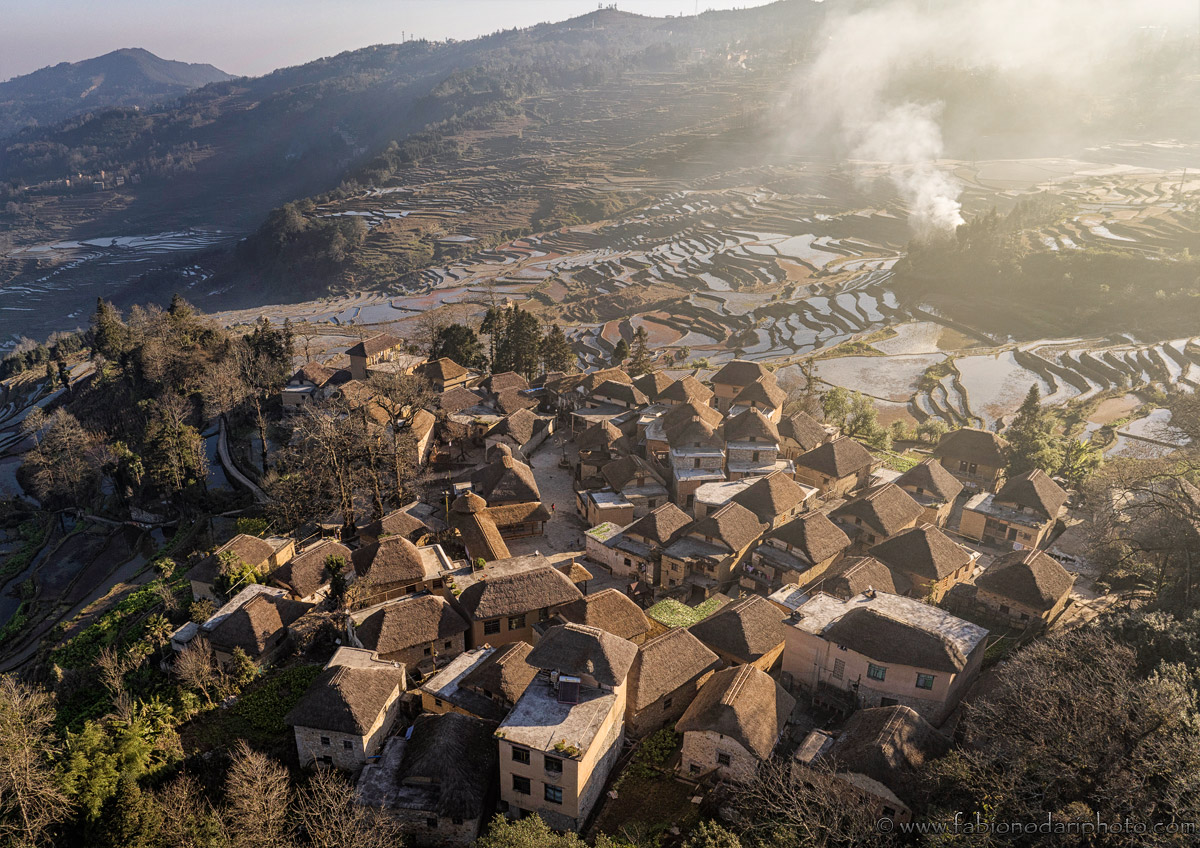
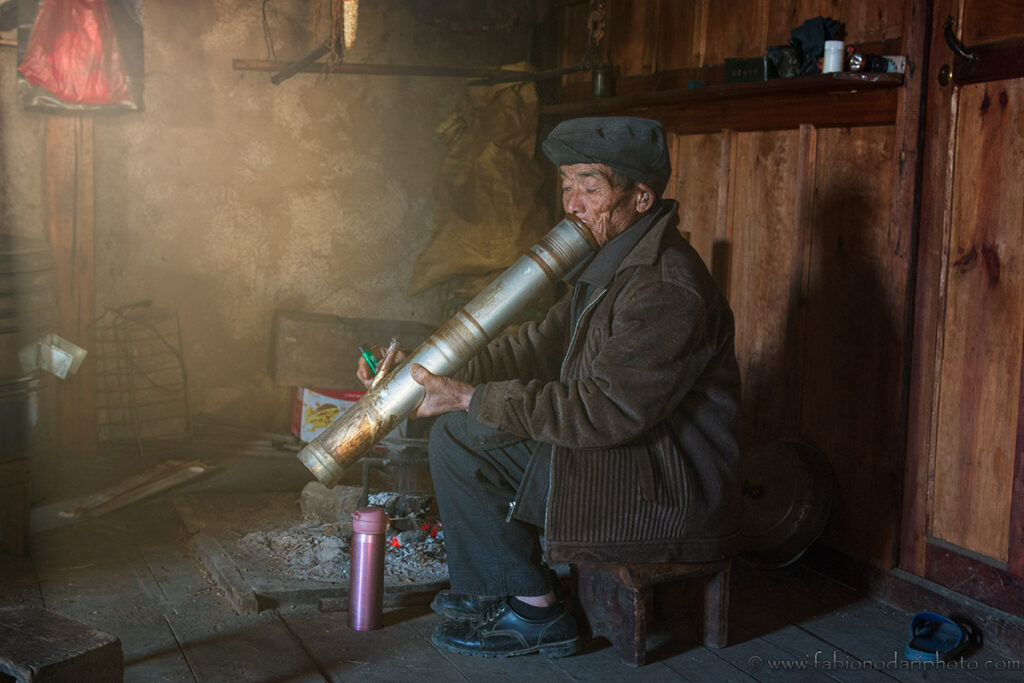
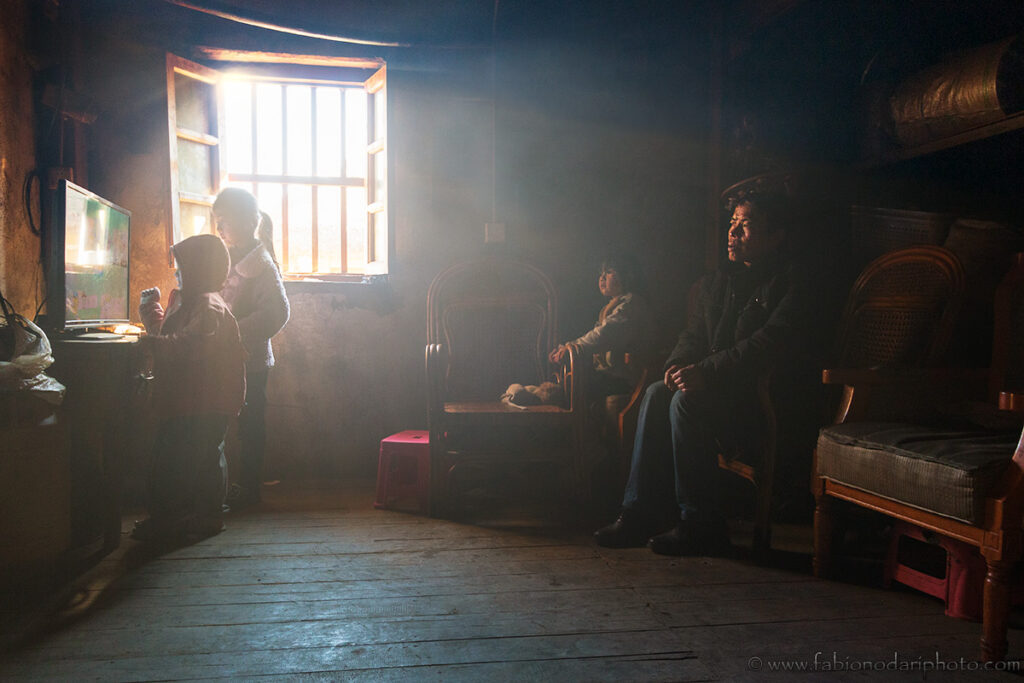
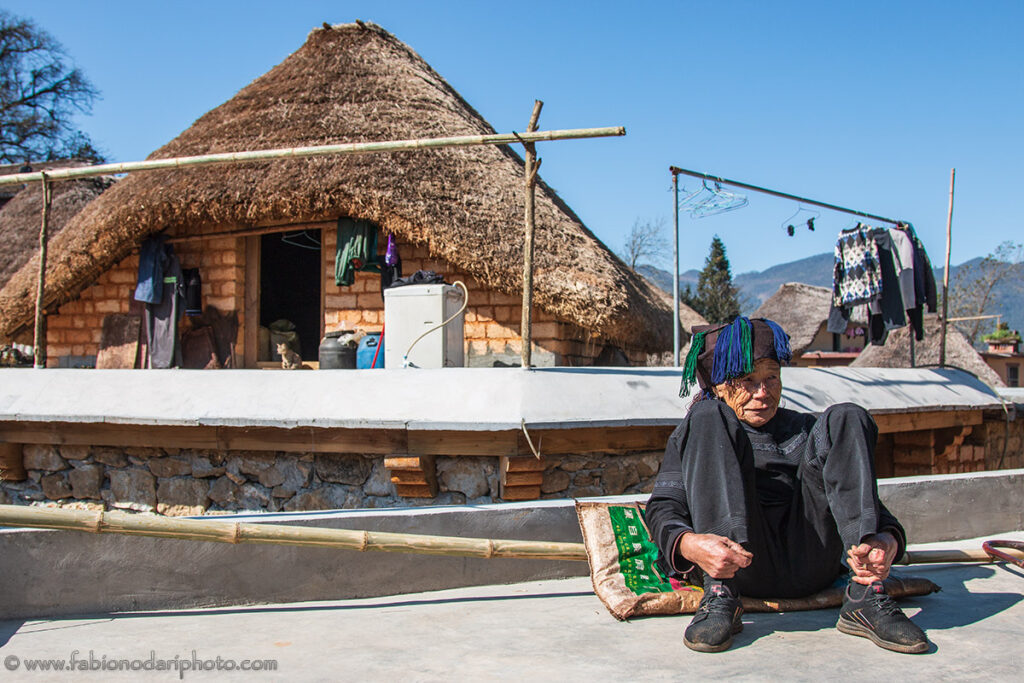
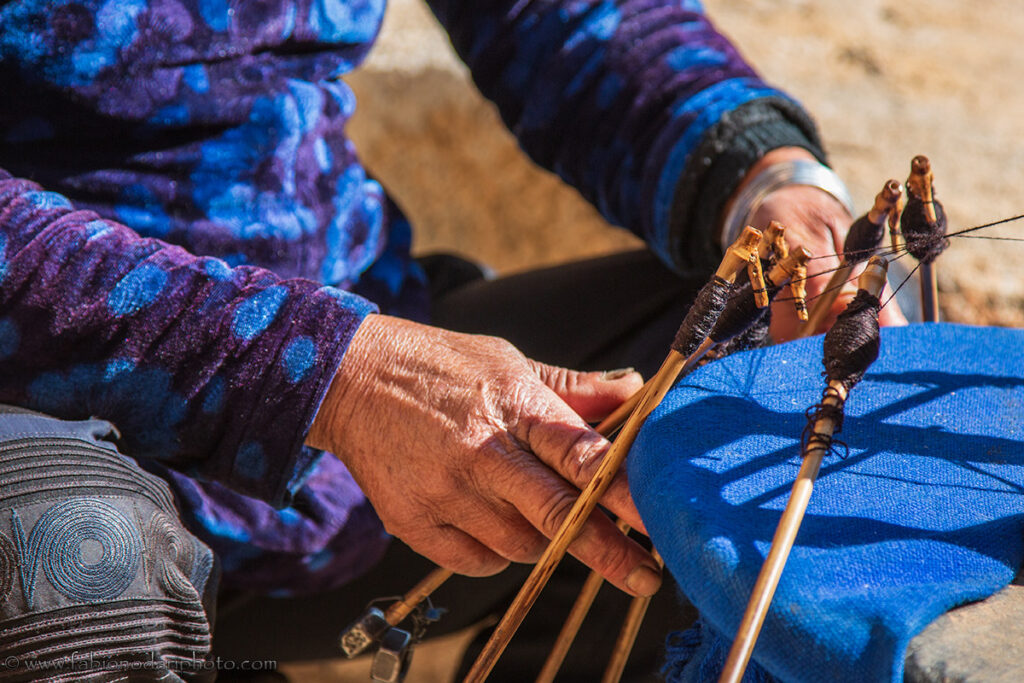
Azheke 阿者科, often called the Mushroom Village because of its distinctive round, thatched-roof houses, is one of the highlights of the Yuanyang area. The village has been partly rebuilt in recent years, which means some of the houses look newer, but it is still very much a lived-in place where local families carry on their daily routines. Walking around, you will see people drying corn in front of their doors, children playing in the narrow alleys, and elders sitting together chatting in the shade.
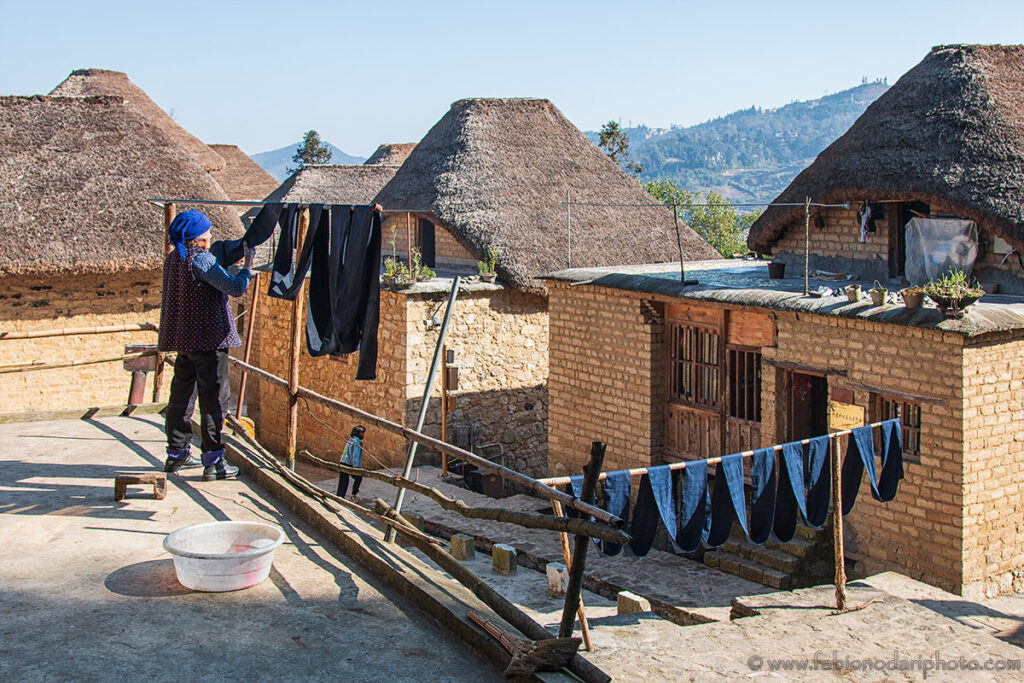
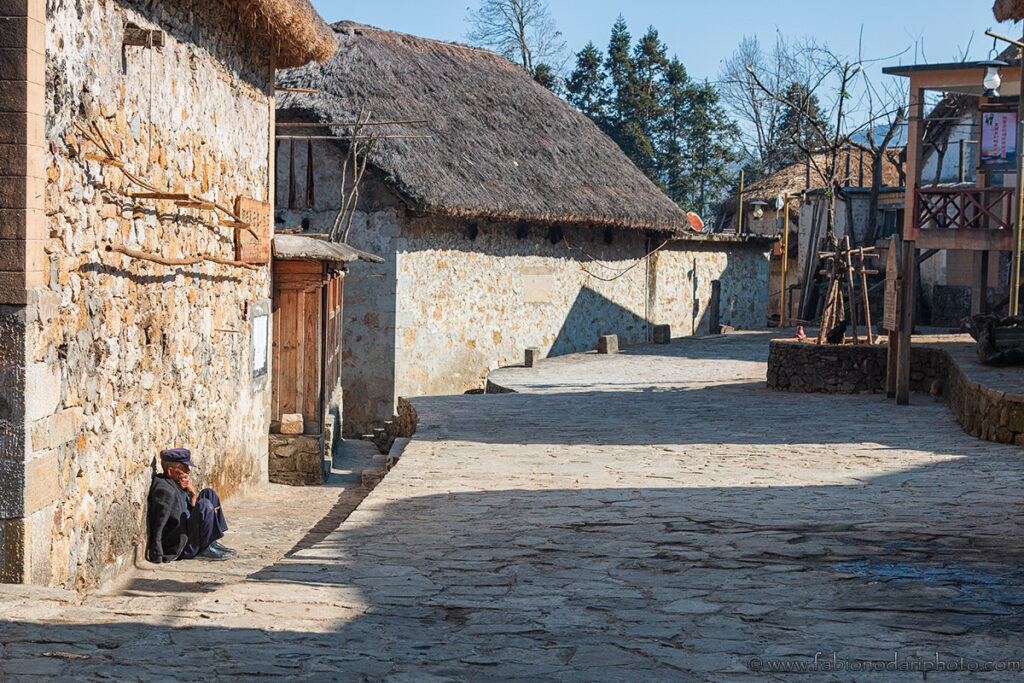
What makes Azheke even more special is its setting. It lies on a ridge right above a vast stretch of the famous Yuanyang rice terraces, so from many spots in the village you can enjoy sweeping views of the paddies cascading down the hillsides. If you go early in the morning or late in the afternoon, the light makes the terraces shine in different colors, and you’ll quickly understand why photographers love this area so much. It’s not only about the architecture of the houses but also about the atmosphere of a village that still feels connected to the surrounding landscape.
Azheke is considered one of the most beautiful villages in Yunnan, although I believe the Jingmai area has some more beautiful ones.
Shengcun Market (胜村市集)
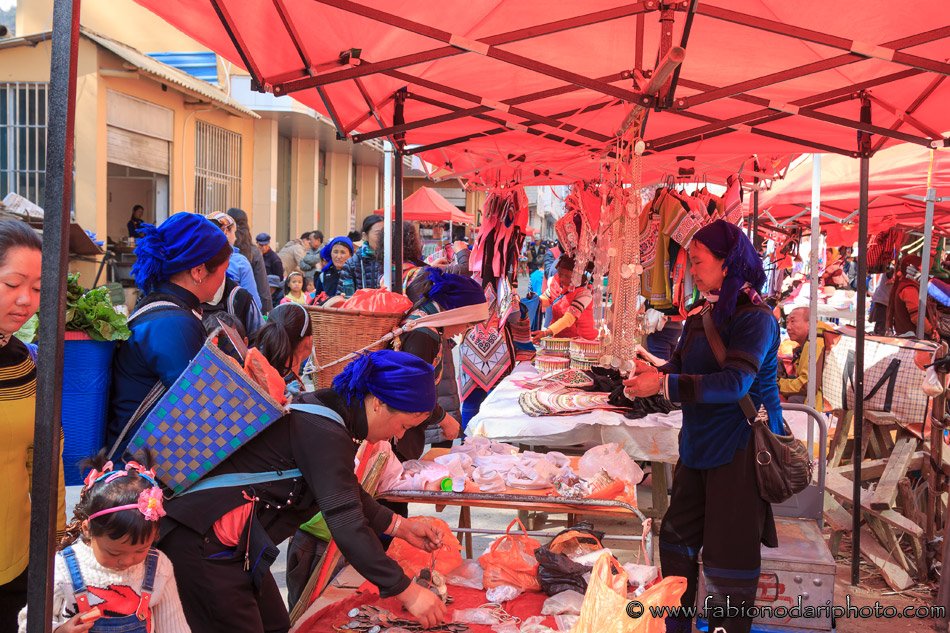
Just 4 or 5 km from Duoyishu, you can visit the Shengcun market, one of the liveliest spots in the area. Local people from different Hani and Yi villages walk down with their produce, traditional clothes, and even livestock to trade. It’s the kind of place where you really get a sense of daily life beyond the rice terraces. One word of advice: before heading to Shengcun, check with your hotel which day the market is open, as it only runs on specific days of the week and it always changes.
Where to stay in Yuanyang
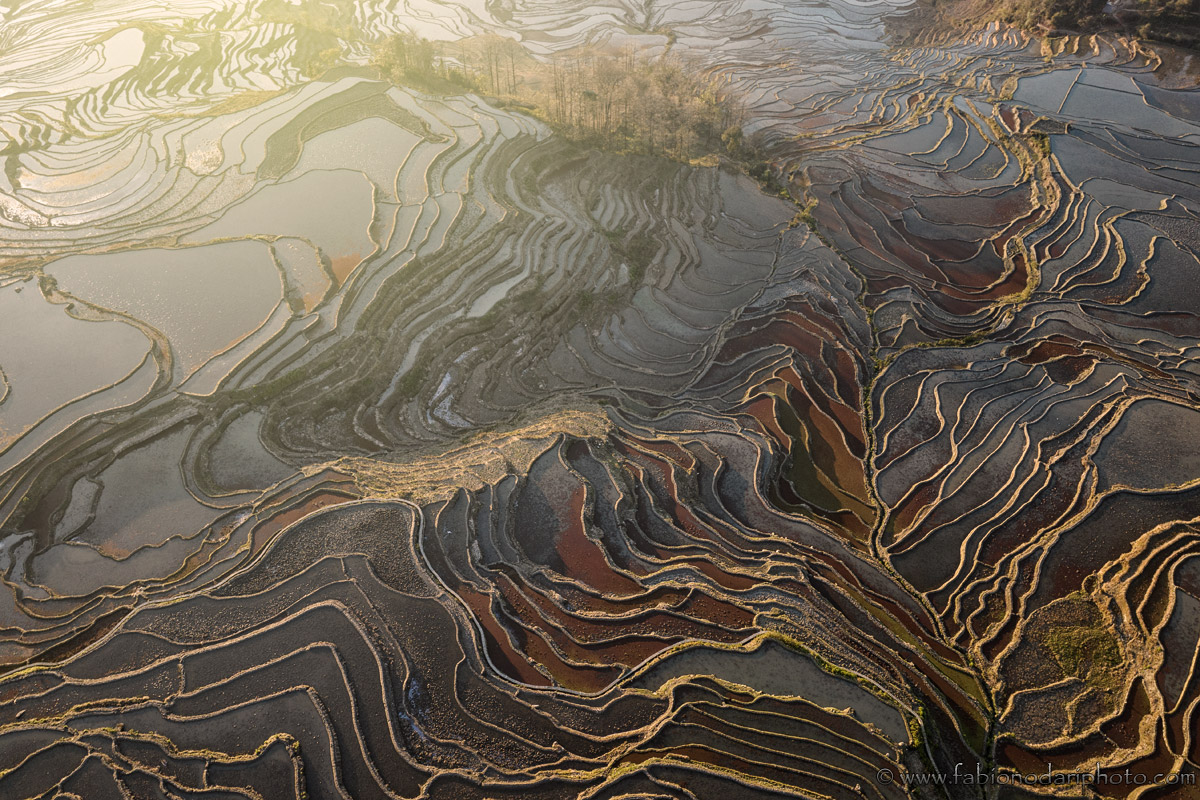
Given the lack of public transportation and the inability to rent a motorbike, it’s important to choose where to stay in Yuanyang carefully. I recommend staying around the Duoyishu area so you are within walking distance of the best spot for the sunrise.
The best place to stay is Jacky’s Guesthouse, located in the village called Pugaolao (普高老) overlooking the Duoyishu terraces. The guesthouse is very basic, and there is no heating (something to keep in mind if you come in the winter months, when the temperature in the morning can drop to around zero degrees). The owner speaks English and is a photographer who can tell you the best hiking spots in the area. He can also help you arrange your return trip or book a driver around Yuanyang. Strongly recommended!
If you’re looking for a high-end guesthouse, I recommend this one (ideally for two nights). It’s located about twenty minutes from the sunrise viewpoint, but trust me, it will be worth it.
What about Jianshui (建水)?
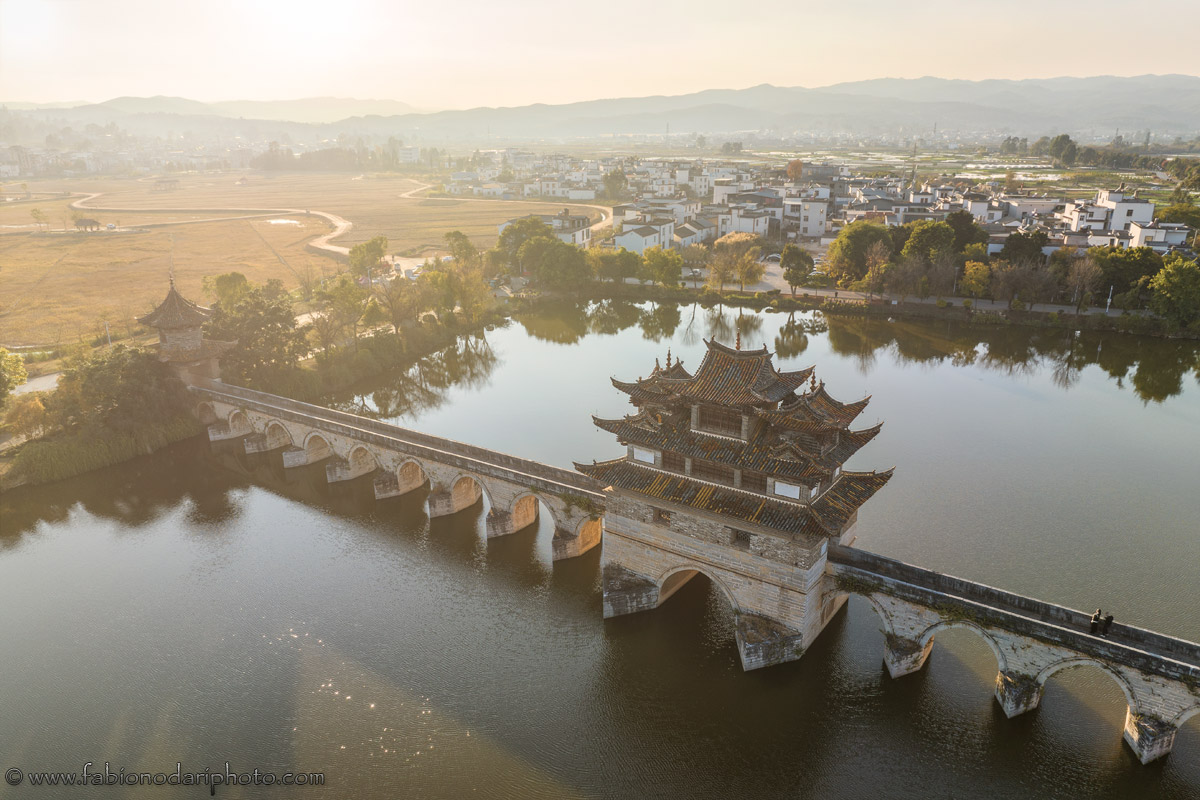
Jianshui is a small town located halfway between Kunming and the rice terraces. If you choose to travel by train, you’ll arrive right at Jianshui Station.
The town boasts over 1,200 years of history, dating back to the Tang Dynasty. It is famous for its Confucian traditions, as reflected in landmarks such as the Jianshui Confucian Temple, one of the largest and best-preserved in China. Its ancient town is charming, and you can easily spend a day exploring it. On the city’s outskirts, you’ll find the renowned Double Dragon Bridge (pictured above), a majestic 17-arch stone bridge. The town is especially known for its pottery production.
I’m often asked if Jianshui is worth visiting, and my answer is always the same: it depends. If you have time and haven’t explored many ancient towns, or if you’re particularly interested in this place’s history, then I’d recommend it. Otherwise, you can head straight to the rice terraces. As a bonus, if you spend a night in Jianshui, I also recommend a short visit to the village of Tuanshan (团山古村), which is beautiful and very few people know about.
Helpful tips for your trip
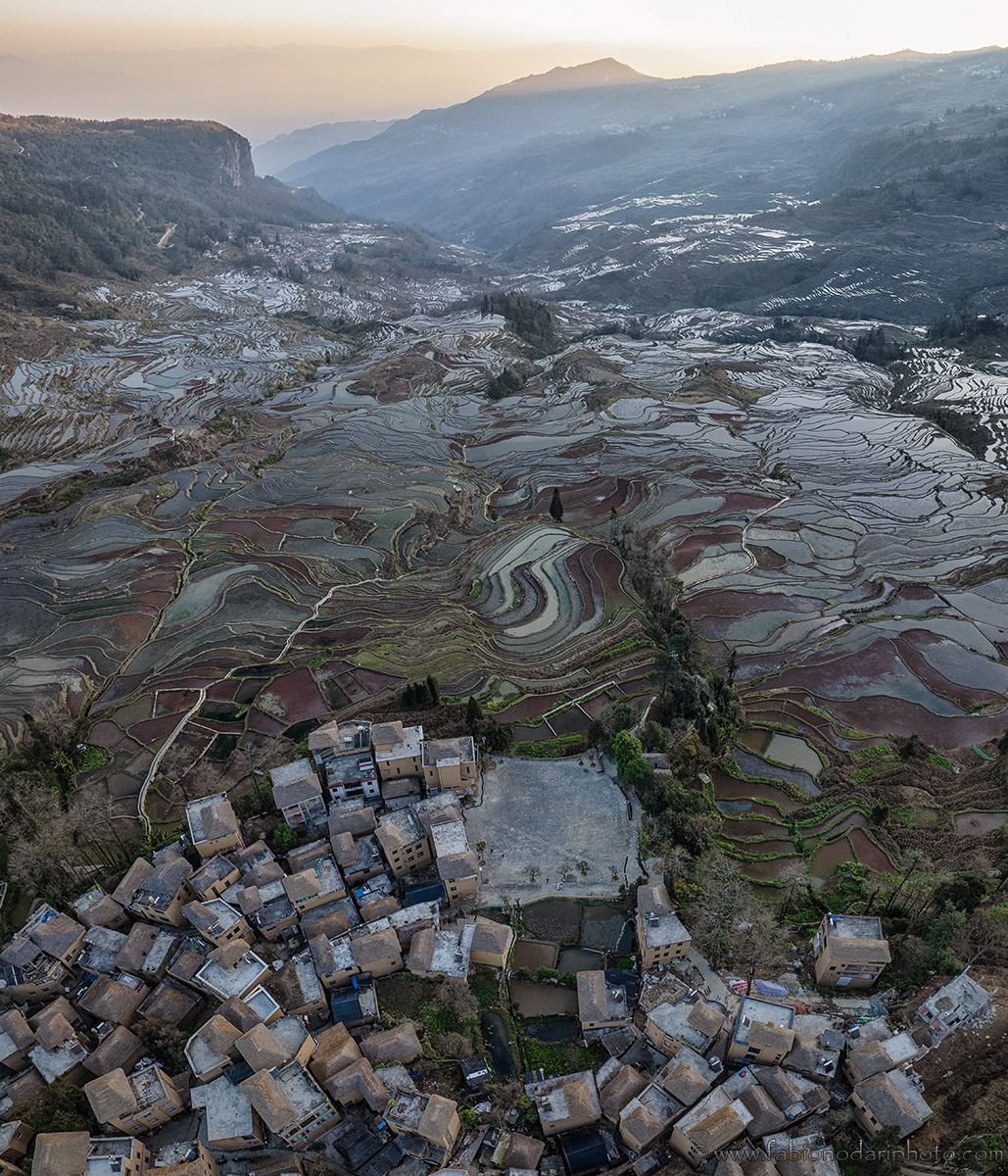
Yuanyan has become a tourist destination in recent years because of its extraordinary beauty. If you prefer to visit areas without tourists, check out my Samaba travel guide. It is another beautiful place located in the Honghe prefecture, about a two-hour drive from Yuanyang.
You should spend at least two nights there to explore Yuanyang. If you arrange your itinerary well with a driver, you can see the main sights in one day. If you are passionate about photography, you can consider staying an extra day.
A very important suggestion for photographers: if you have a tripod and want to find a spot on the observation platforms, you must get there about 1 hour BEFORE sunrise or sunset during the high season. In all my life, I have never seen so many photographers in one place! You can make the most of this trip if you have a long lens and a drone. Here more info on how to register your drone in China.
Remember that most websites are blocked in China. You’ll need a VPN to access them. I recommend this one. If you prefer an eSIM, I use this one. As for travel insurance, this one is good.
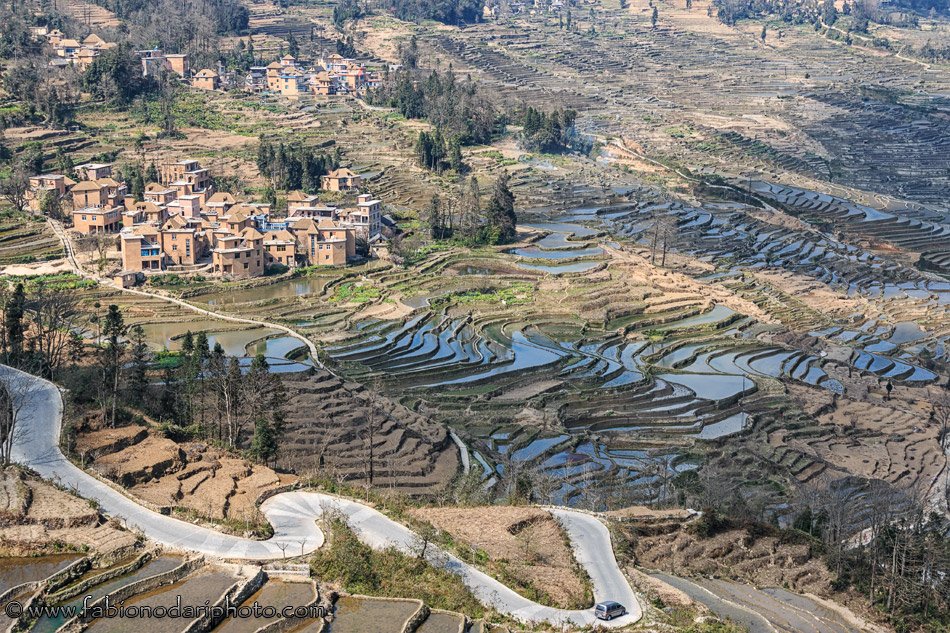
Here are some more pictures I took in Yunnan. Don’t miss this post if you want to discover wildlife in China.
If you want to visit Zhangjiajie, don’t miss my guide to the top things to see. You can also read my Yunnan travel guide and find information about what to see in Kunming here.


Great piece on the rice terraces at Yuanyang. Helped me plan our trip August 2022. Thanks!
Happy I could help you Sarah 🙂
very informative article, thank you!
Hey man, will end of April still be a good period?
Yes should be ok.
Kindly send us quotation for 4 pax or 8 pax from 6/3/2020 to 13/3/2020.
Target arrived in Kunming is approximate 6pm on 6/3/2020.
Hi I’m not a travel agent but you can contact this agency: Wondersofyunnan.com
Lovely article and the photos are beautiful!
Thanks man!
Hello Fabio,
Here a big fan of your work!
My sister and I are planning a trip to southern Yunnan: starting in Yuanyang County and then heading toward Xishuangbanna and Jingmai. Do you think it’s feasible to get around that area using public transport, taxis, or even hitchhiking? Or would you recommend renting a car?
We’re also interested in exploring Western Sichuan after and would love to follow in your footsteps there too. Ive got the same question regarding transportation.
Thanks so much in advance for any tips!
Hi Miren. Difficult question. You can do as you please really. Even hitchhiking. The best way would be renting a car to be honest. Saves a lot of time. Keep in mind that you can’t use the international drivers license. You have to use the Chinese one.
On the way back from 元阳 right now 🙂 the bus takes 5 hours to Xinjiezhen with a pit stop halfway. I stayed at Jacky’s Guesthouse as well and it was a dream — Jacky showed me an amazing trek through the rice terraces to Azheke. Lots of fun animals running around including his dog Dodo who was in heat with another female dog
I miss Dodo! Happy this article was useful 🙂
Nice! Early November, around 8th, the terraces are already filled with water?
Hard to say. They should just start filling the terraces.