
Discover the top things to do in Vang Vieng. This guide will help you plan an unforgettable trip in this beautiful part of Laos.

Due to a rapid increase in the number of tourists, Vang Vieng went from being a sleepy village around the end of the 90s to one of the wildest destinations in Southeast Asia, known for its “happy menus” and tubing on the Nam Song river.
After a series of accidents where several tourists died, the local government was pressured to put some limitations on wild parties. In the last few years, Vang Vieng has tried to rebrand itself as an adventure destination where you can spend some time partying, rock climbing, kayaking, and exploring the numerous caves in the area.
Best time to visit
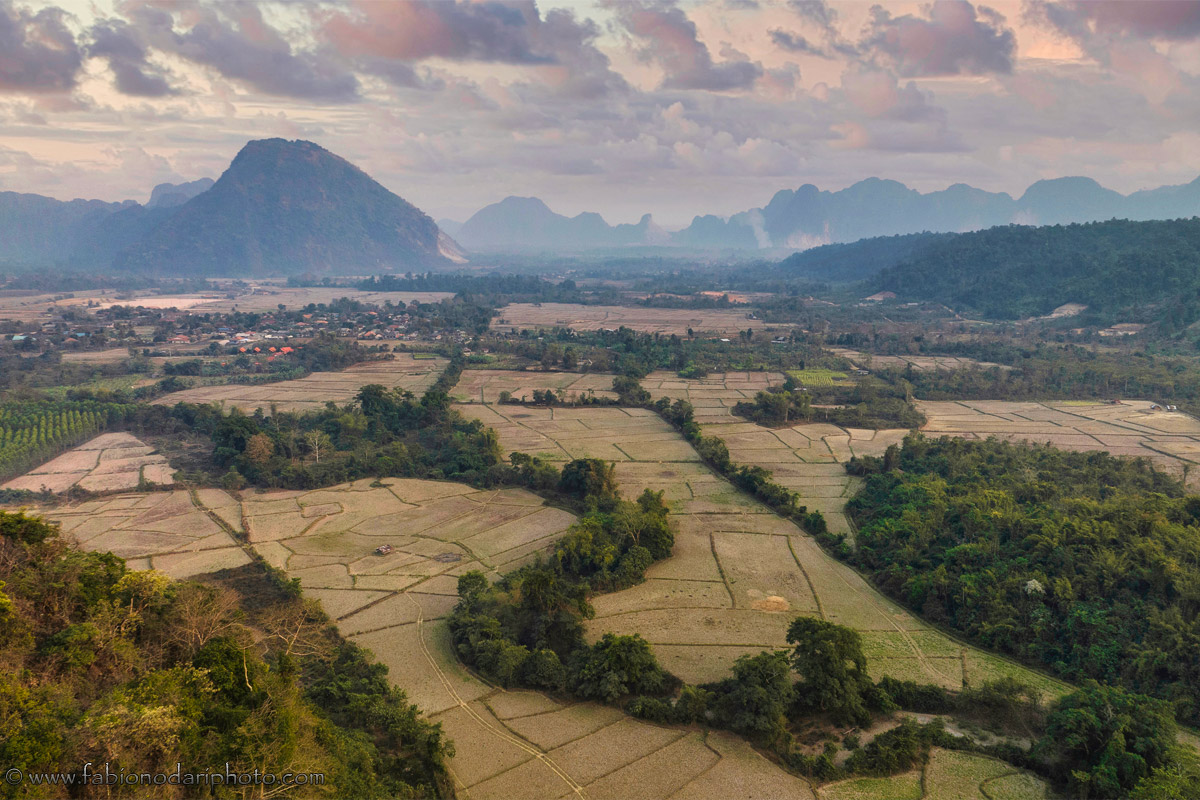
Laos has two distinct seasons: dry and wet. The dry season spans from October to April, and the wet season from May to September. The hottest months are from March to July, and the rainiest are from July to September.
Different activities in Vang Vieng are suitable for different seasons. For instance, you can only ride hot air balloons and enjoy the blue lagoons in the dry season. But if you want to see green landscapes and go tubing, you might prefer the early wet season.
Generally, the best time to visit Vang Vieng is from November to March.
How to get to Vang Vieng
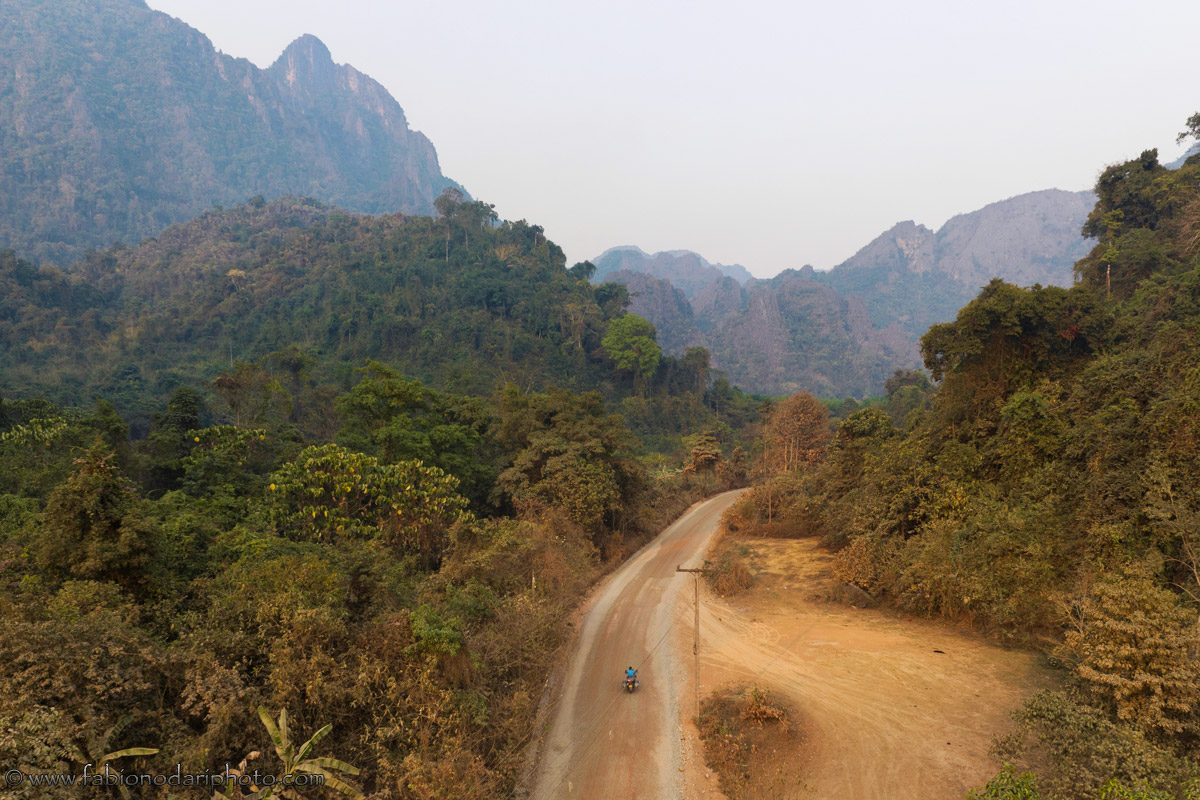
Getting to Vang Vieng is pretty straightforward since the new Boten-Vientiane railway’s opening (part of the Kunming-Mohan line connecting China to Laos),
You can get to Vang Vieng from Vientiane or Luang Prabang by train and minivan. I only recommend the minivan/bus option if all the train tickets are sold out. Traveling by train is the best option in Laos (when it’s available).
Getting to Vang Vieng from Luang Prabang by train takes about one hour compared to 5/6 hours by a minivan. If you leave from Vientiane, it also takes one hour by train and about 4 hours by minivan (if you are heading to Luang Prabang, check out my travel guide).
Where to stay in Vang Vieng
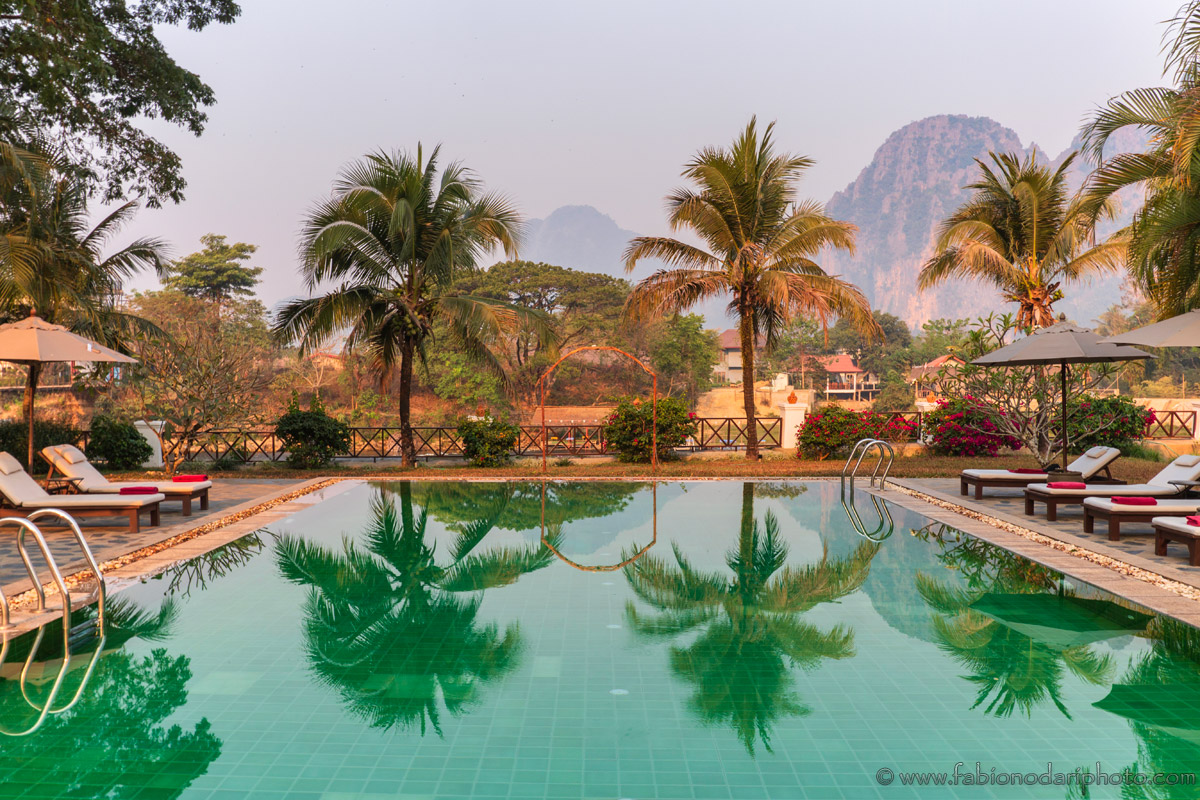
Being a backpacker’s paradise, there is no shortage of cheap accommodation in Vang Vieng. Most hostels cost a few dollars, and the mid-range options cost about 20$. The town is small, so almost all the guesthouses/hotels are close to the main road.
I recommend staying at the Riverside Boutique Resort if you have a slightly higher budget. It’s a beautiful structure located right in the centre of Vang Vieng, close to the main bridge on the river. After a long day riding your motorbike over dusty roads, you’ll appreciate the peace of the resort. The view of the swimming pool and the river in the background is also fantastic.
Here are a few more pictures if you are not convinced yet:
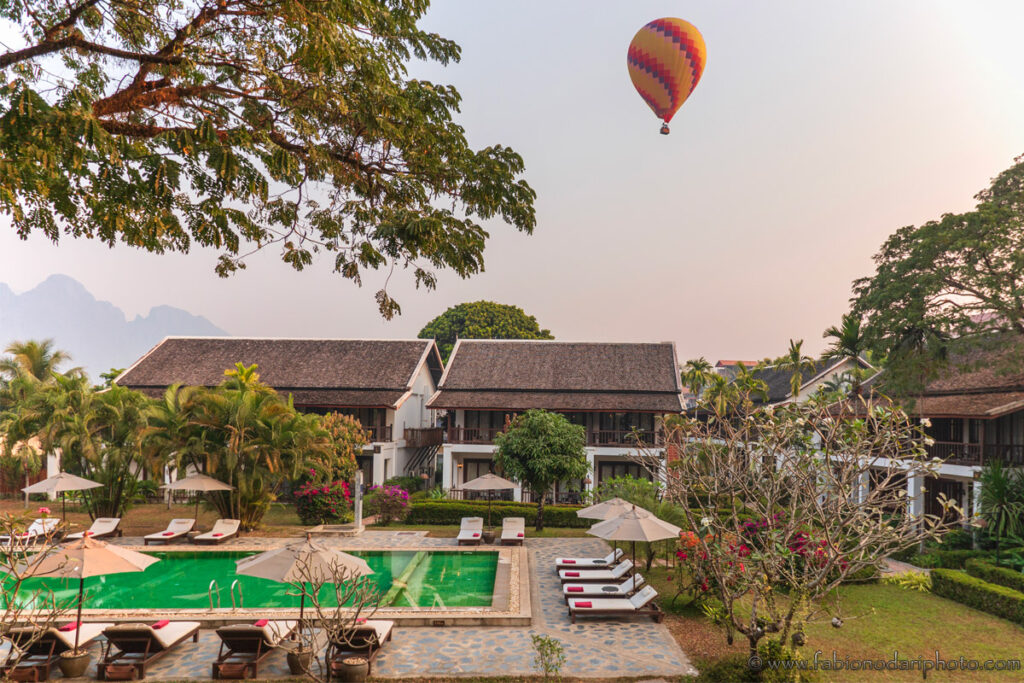
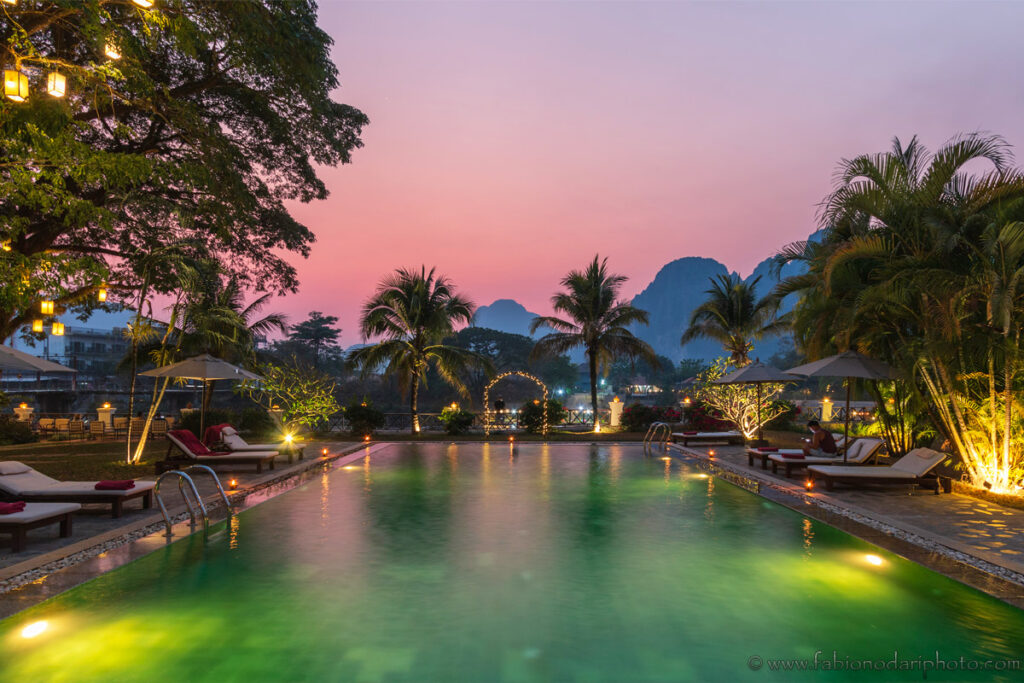
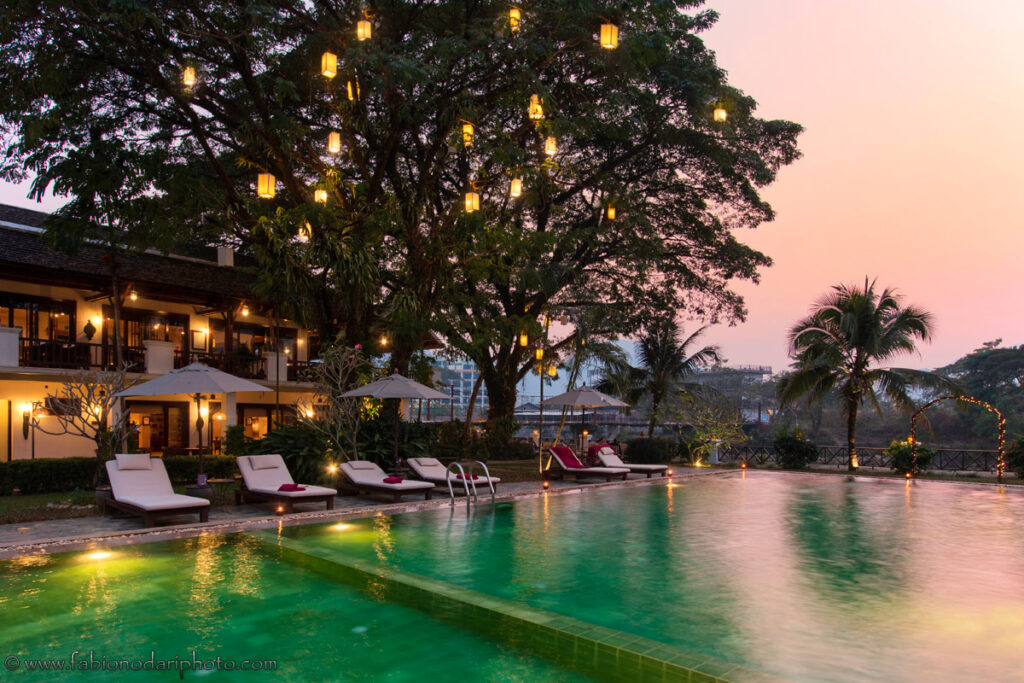
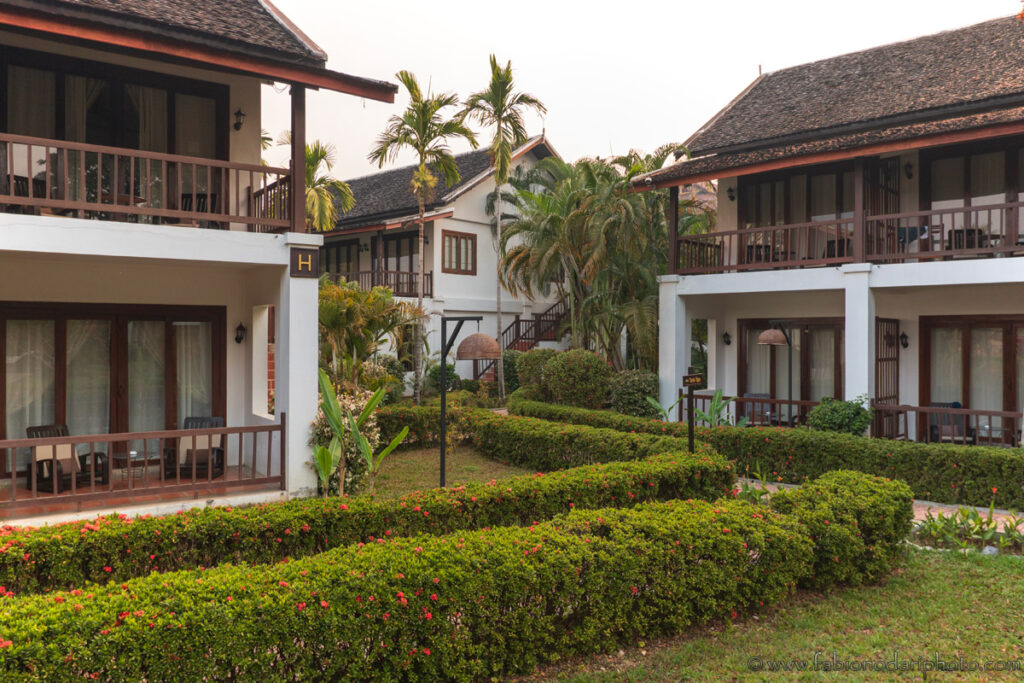
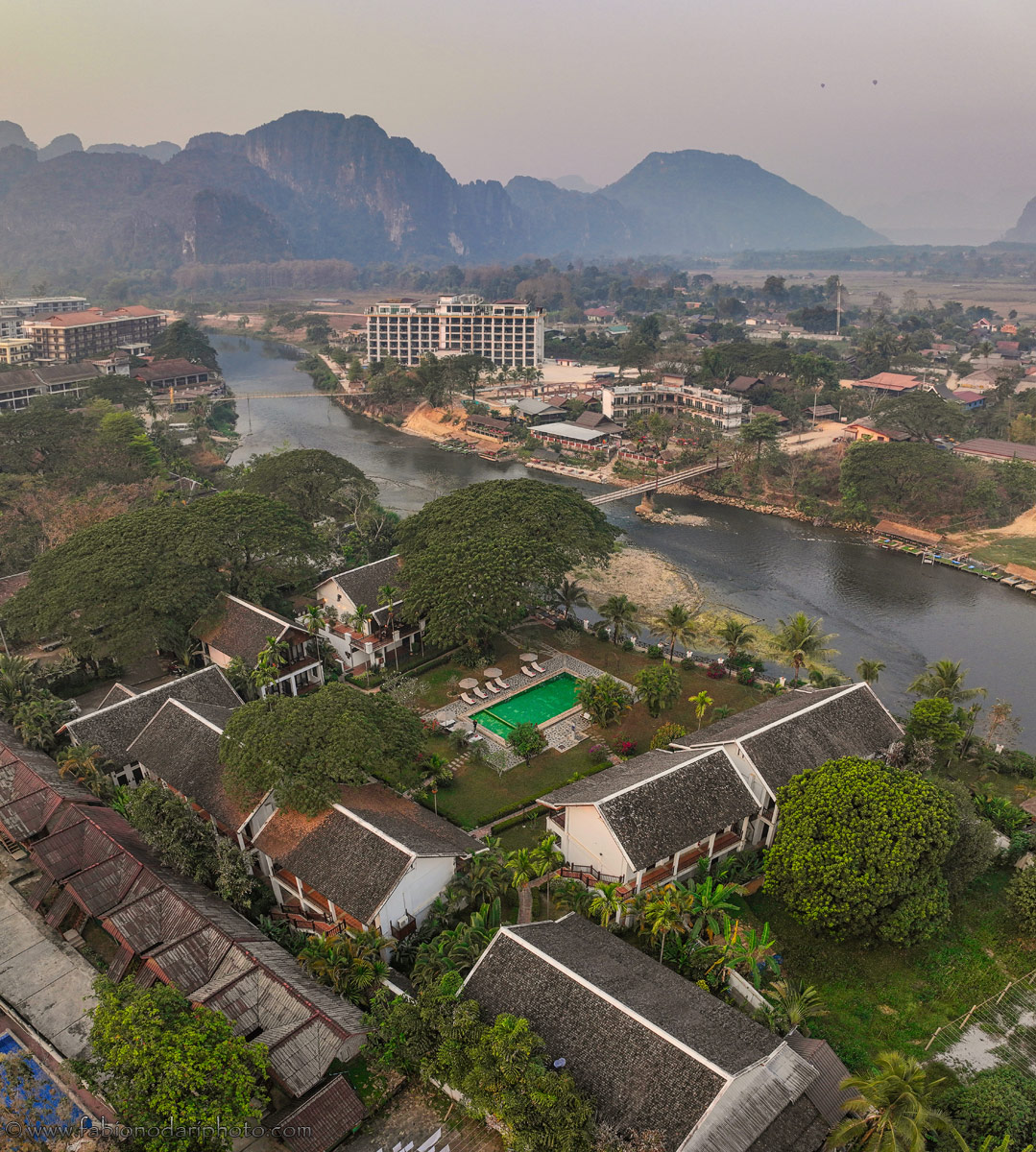
The staff is friendly and can recommend where you can rent a motorbike without getting scammed, and can book the train tickets.
Top Things to Do in 2 days
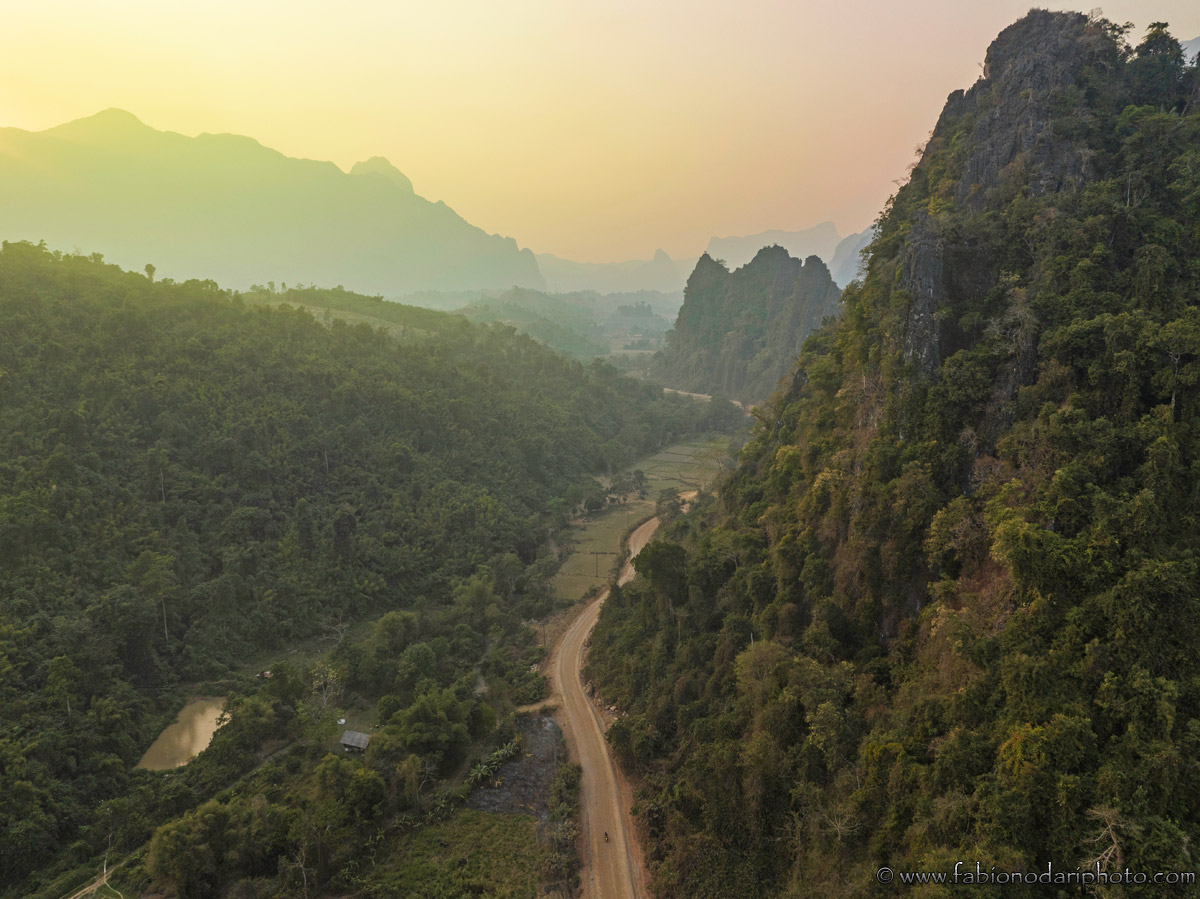
The primary way to visit all the most exciting places in Vang Vieng is by renting a scooter. You can rent an automatic scooter or a manual motorbike (a cheaper option) for 24 hours or the whole day. Besides the price, the difference is that if you rent it for 24 hours, you won’t have to wait until the stores open in the morning to get one; you can instead start driving around very early before everyone else does.
One important thing to remember is that you should NEVER give your passport as a deposit for renting the scooter. The most common scam is from shops renting out scooters and making people pay to fix imaginary scratches when they return them. If you deposit your passport, you won’t get it back until you pay. I only had to provide the business card of the resort where I stayed in Vang Vieng.
In Luang Prabang, on the other hand, I had to leave a cash deposit and was scammed when I returned the scooter, but at least the shop didn’t have my passport, so they couldn’t blackmail me.
I’ve also heard reports about some backpackers who got their scooters stolen, so, just to be safe, I brought with me a chain lock. I’m not telling you these things to scare you but to save you a lot of trouble and avoid any issues.
If you can’t drive a motorbike, you can hire a tuk-tuk, but it will be much more expensive since you want the driver to wait for you in every place you visit.
After clarifying these issues, here are the top things to do and to see in Vang Vieng, Laos:
Explore and relax in one of the Blue Lagoons
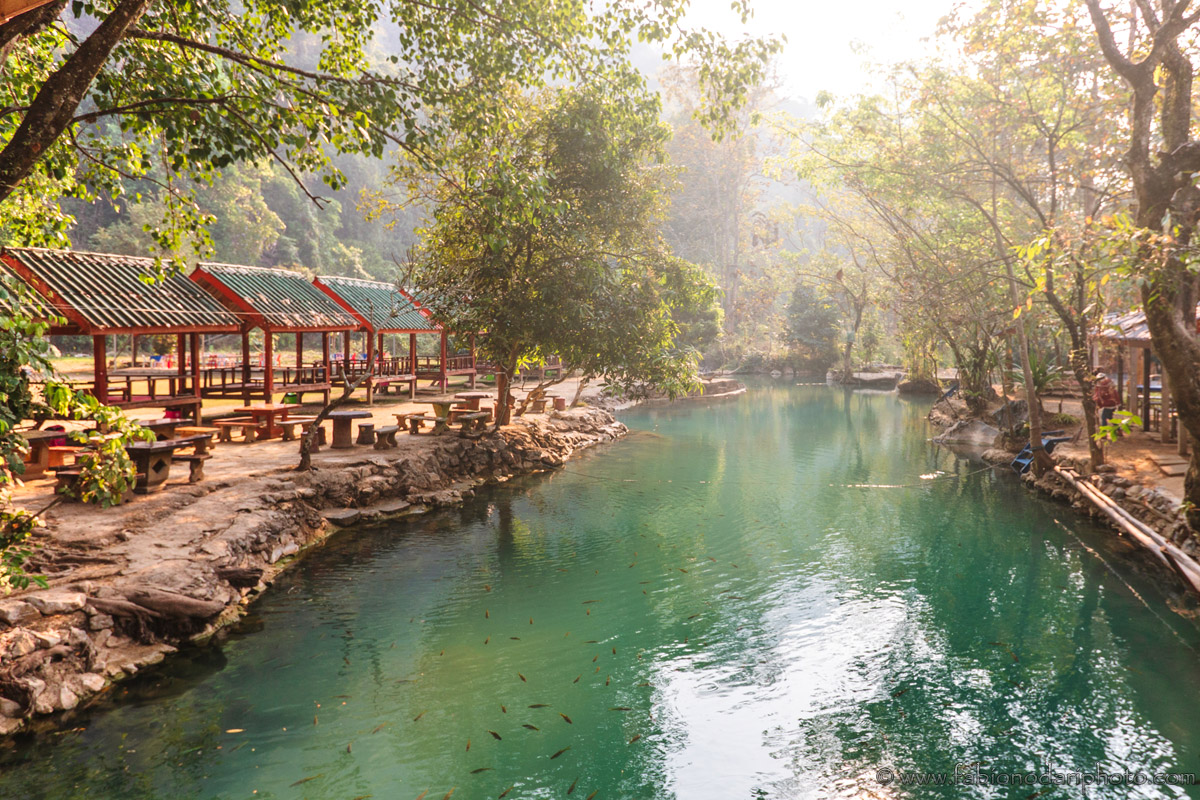
Blue lagoons are a series of semi-natural pools scattered around the countryside outside Vang Vieng, formed by streams flowing down from the surrounding karst mountains. Over the years, several of them have been turned into tourist spots, each with a slightly different setup. Most lagoons have a wooden hut or two, basic toilets, and a small restaurant or drink stall, so you can easily spend a few hours there. The ones located closer to town, especially Blue Lagoon 1, tend to get crowded with both local families and tour groups. As you move further away, the atmosphere changes, and you’ll often find quieter spots surrounded by rice fields and jungle.
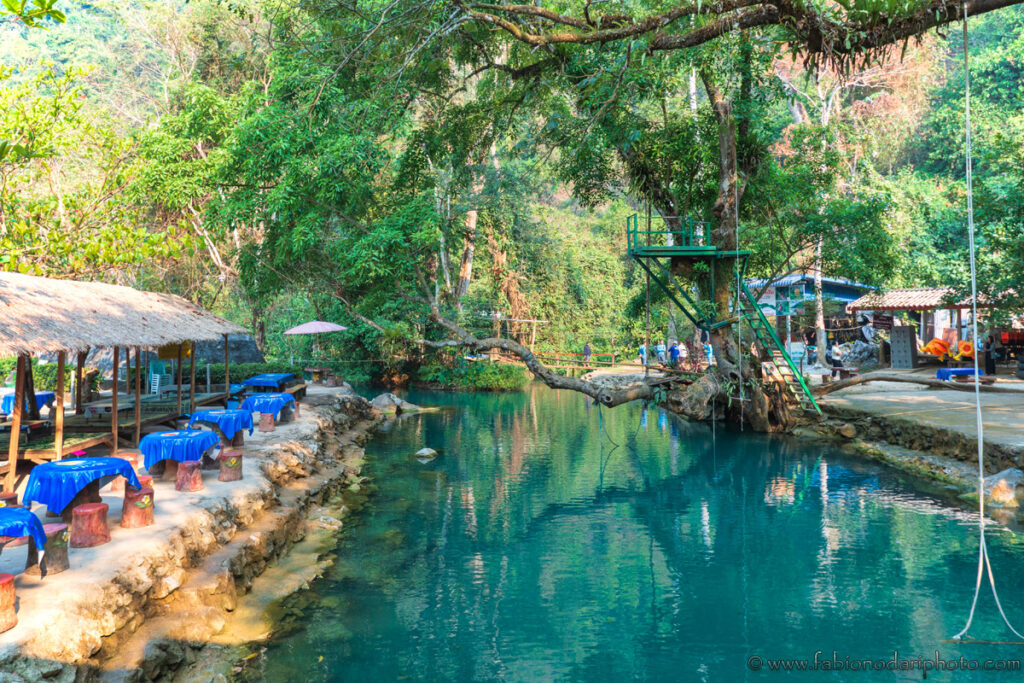
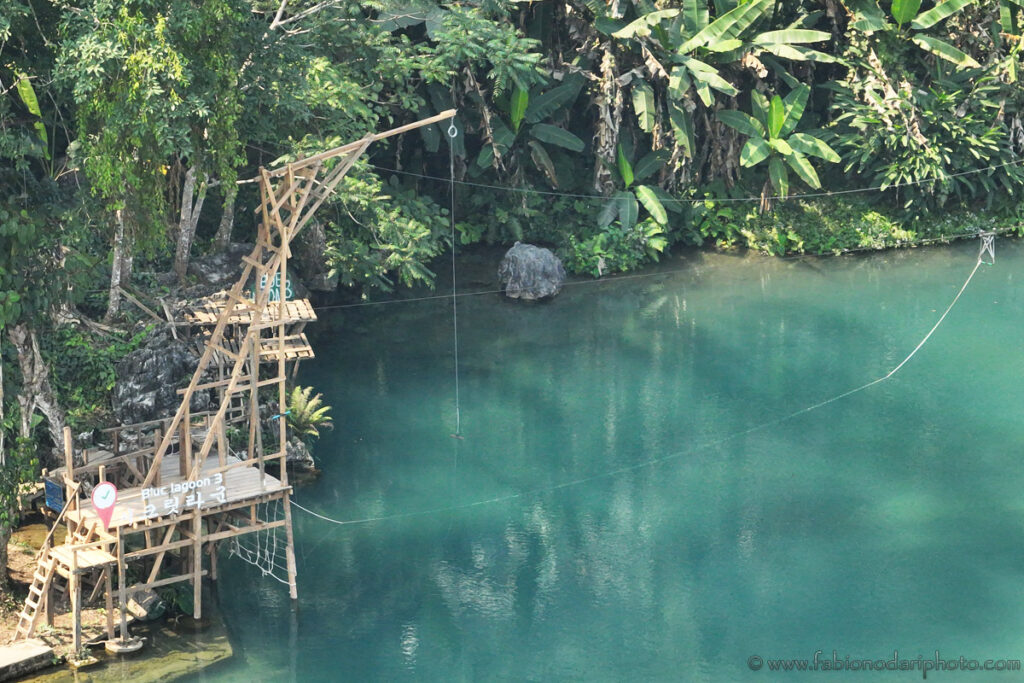
Blue Lagoon 3
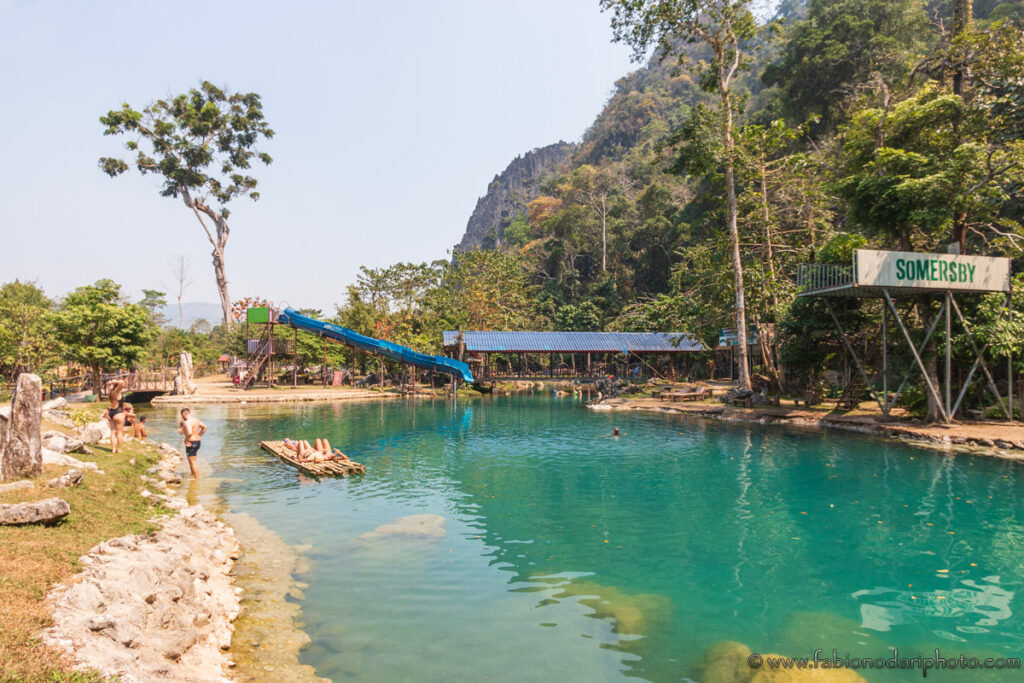
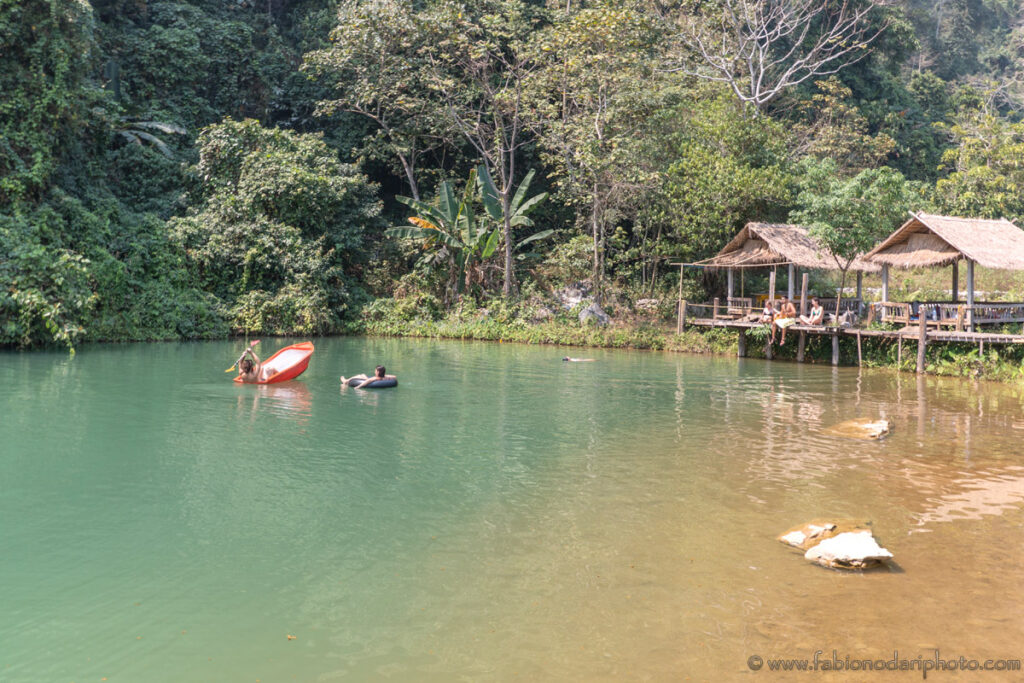
There are at least six of these lagoons, maybe even more, since new ones seem to pop up as landowners develop them. I visited Blue Lagoons 1, 2, 3, and 6, and each offered a different vibe. Blue Lagoon 1 is the most famous, with a big cave nearby and platforms where you can jump into the turquoise water, but it’s also the busiest. Blue Lagoon 2 and 3 are smaller, less polished, and worth visiting if you want a more local feel without the crowds. Blue Lagoon 6 is further away, surrounded by greenery, and I personally enjoyed it the most for its calm atmosphere. You’ll have to pay a small fee to access the Blue Lagoons.
Visit some of the many caves
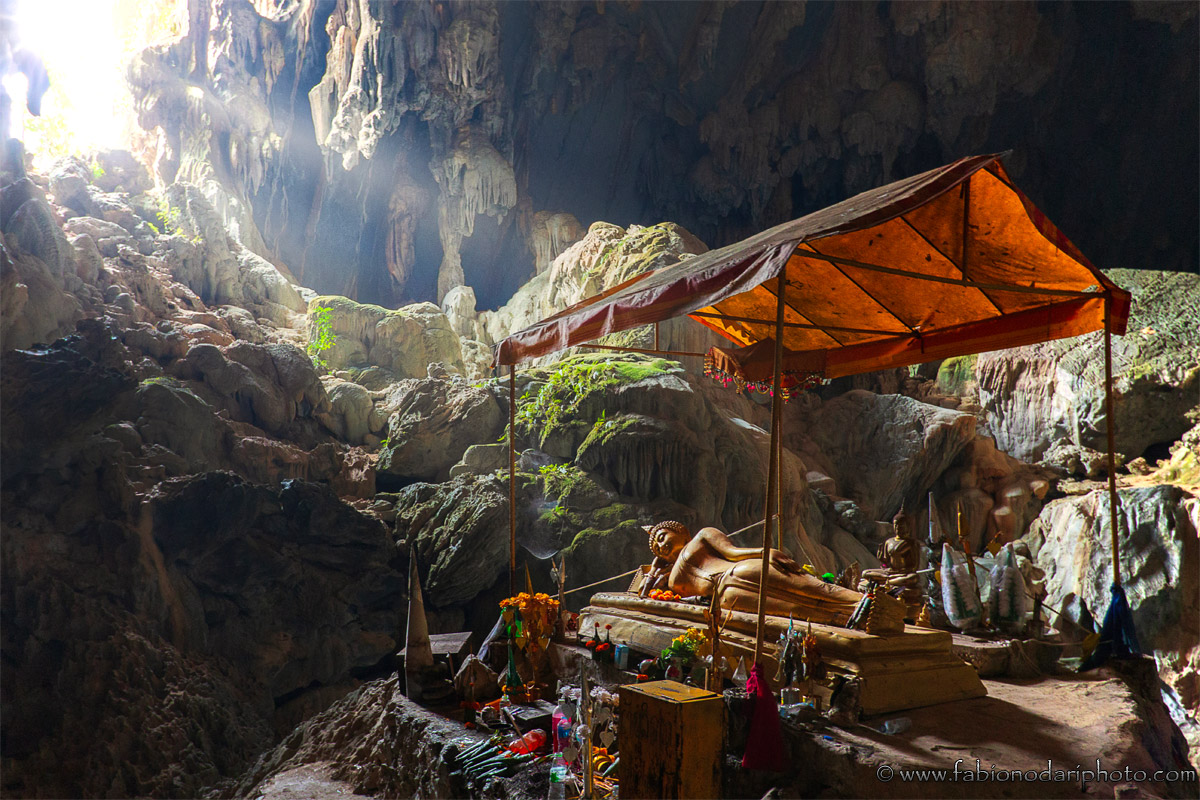
There are many caves in Vang Vieng, scattered both near the town and deeper into the countryside. Most of them are tied to the Blue Lagoons, so if you visit one of the lagoons, you’ll usually find a cave nearby. The best example is Phu Kham Cave, located right inside the Blue Lagoon 1 area. To enter, you have to climb a steep hill and then make your way into a dark cavern that feels untouched, with stalactites hanging above and Buddhist statues placed at the entrance.
What struck me most is how raw and natural these caves are. Coming from China, where caves are often turned into “disco caves” with colorful neon lights and paved walkways, the ones in Vang Vieng are the complete opposite. Here, there is no artificial light, no safe path, and no attempt to make them look touristy. You’ll need a flashlight or headlamp, and even then, exploring isn’t always easy. Some caves involve steep climbs to reach the entrance, and once inside, you might find yourself crawling through narrow tunnels. A few are even dangerous if you’re not prepared or if you’re wearing the wrong shoes.
That said, if you enjoy a bit of adventure and don’t mind getting dirty, these caves are fascinating to explore. They give you a sense of what caves must have felt like before being commercialized, and the mix of wild nature and local legends around them adds a lot to the experience.
Watch the sunset from the Nam Xay viewpoint

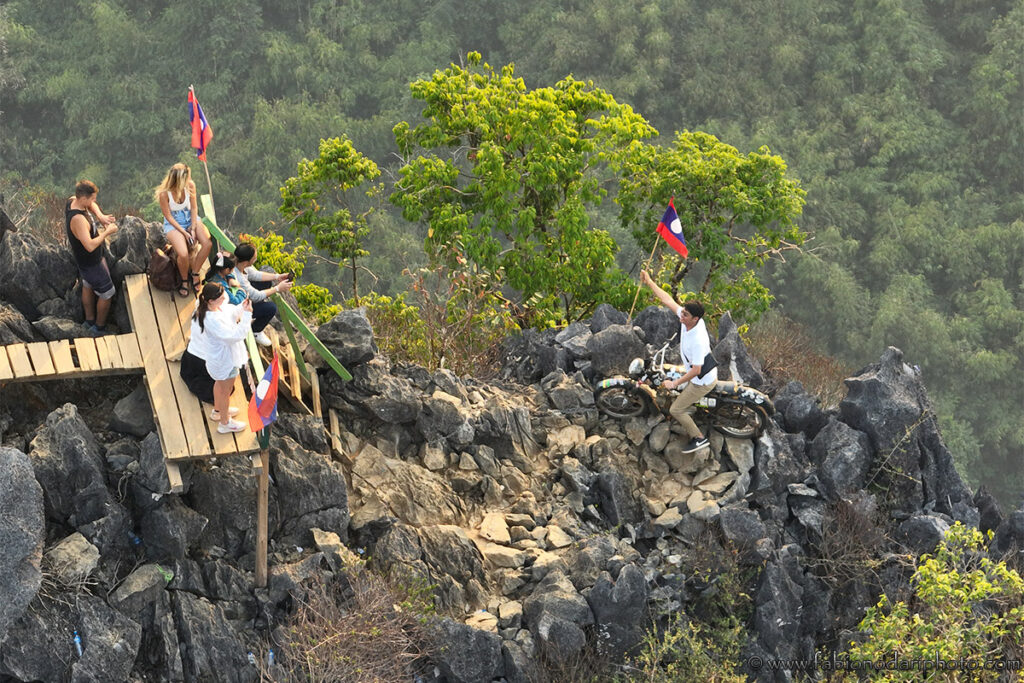
The most famous viewpoint in Vang Vieng is Nam Xay, which is located close to Blue Lagoon 1. The view from the peak is stunning, but hiking to the top is quite challenging. To access the trail, you’ll have to pay a small fee, and at the end of the 45-minute hike (sometimes it feels like rock climbing), you’ll be rewarded with an incredible view and a motorbike positioned there to take a few pictures.
This place is very popular, but it’s not the only viewpoint in the area. There is another one located close to the town and called Pha Ngern. I didn’t visit it, but it’s supposed to be even more challenging than Nam Xay. Let me know if you got there and if it’s worth it.
River Tubing in Vang Vieng
Despite the crackdown, river tubing is still a thing. If you are wondering what on Earth is “tubing,” here’s a short description: river tubing involves floating down the Nam Song River on a tube, stopping at various bars and attractions.
Today, most bars along the river have been closed, and tubing is much safer than in the past. Only a few agencies are authorized to run these tours, and you can find them walking along Vang Vieng’s main road.
Enjoy the view from a hot-air balloon

A few companies are running hot air balloon flights in Vang Vieng, but it’s still a small-scale activity compared to places like Cappadocia in Turkey. You won’t see dozens of balloons filling the entire sky at once, which, in my opinion, makes the experience feel more special and less staged. The rides usually take place at sunrise or sunset, when the light is softer and the landscape looks its best with mist rising from the karst mountains and the Nam Song River winding through the valley. From above, you’ll get a unique perspective of the limestone peaks, rice fields, and small villages, which is hard to appreciate fully from the ground.
If you’re interested in doing this, it’s best to book your ticket well in advance (you can do it here), especially for the sunset flights, since those are the most popular. Keep in mind that the weather plays a significant role in ballooning. Flights may be delayed or canceled if conditions aren’t safe, so I’d recommend scheduling your ride early in your stay in Vang Vieng, leaving some buffer days in case you need to reschedule.
Explore Vang Vieng from the river
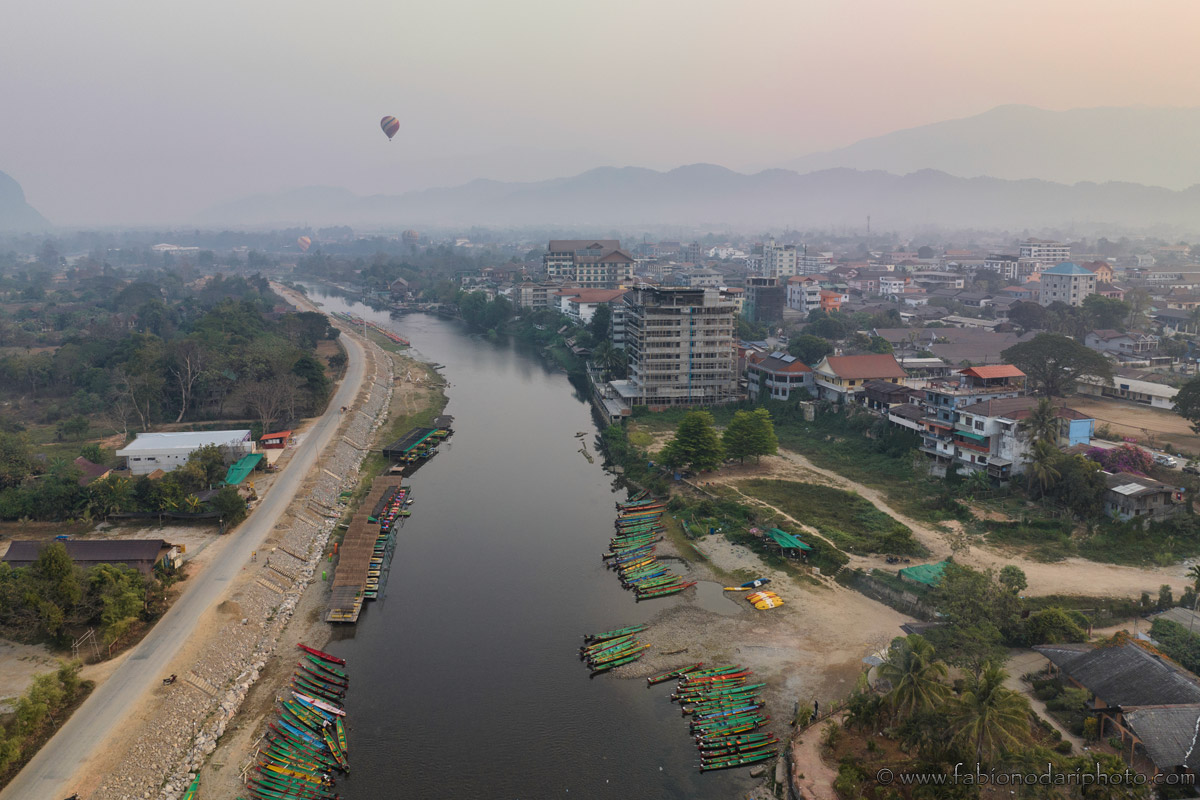
If tubing is not your thing, you can consider renting a kayak and slowly making your way out of town on the Nam Song River. Kayaking is a more peaceful and active way to enjoy the scenery, allowing you to move at your own pace and stop whenever you see a spot you’d like to photograph or take in. The river winds through a spectacular landscape of karst mountains, rice paddies, and small riverside villages, so you’ll have the chance to experience both nature and local life from the water. Depending on the tour or rental option you choose, you can go for just a couple of hours or spend the whole day paddling downstream, with pickup and transfer services usually included for the return.
There are plenty of tour operators in Vang Vieng that offer this service, ranging from budget rentals to guided tours with more comfortable equipment. Prices are generally affordable, and safety gear like life jackets is usually provided. You can also check on GetYourGuide.
Tham Chang Caves

The Tham Chang Caves, which means “inaccessible cave,” owe their name to their elevated location and history: in the past, they were used as a refuge during wars. The caves can be visited via a staircase carved into the rock, and inside, there are also some Buddhist statues. They are easily reachable on foot from the city and are a great place to spend a couple of hours.
Final considerations
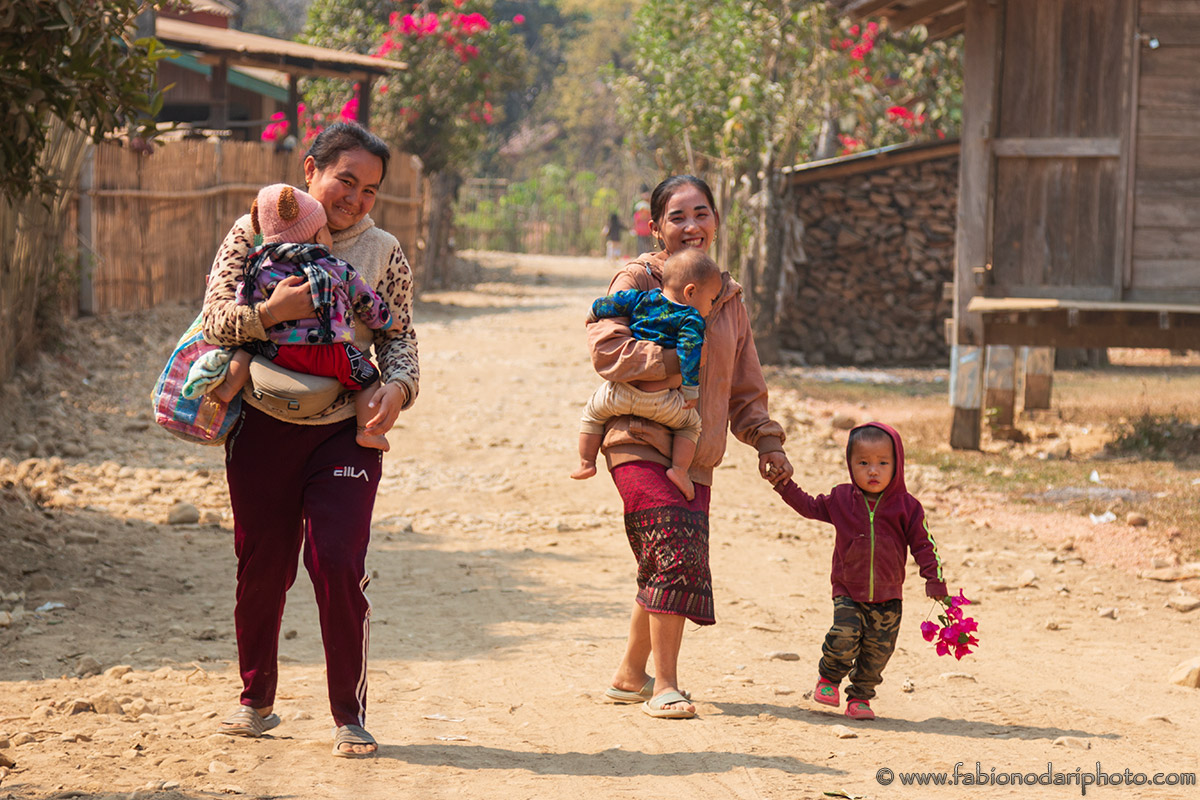
Vang Vieng is a small tourist town where you can easily spend a few days mixing adventure with relaxation. You might choose to cool off in one of the Blue Lagoons, go hiking through the karst countryside, or rent a scooter and explore the villages and rice fields around town. The charm of Vang Vieng lies in taking things slowly, so don’t rush your visit. Give yourself time to enjoy the atmosphere, whether that means sitting by the Nam Song River with a cold drink or heading out on a trek into the surrounding hills.
Like in many parts of Southeast Asia, you may encounter the occasional scam, usually involving inflated prices for tuk-tuks, activities, or tours. That said, compared to Vietnam, I found Laos to be much more relaxed. People are generally friendly and not too pushy, so a bit of awareness and common sense is usually enough to avoid problems.
One of the most important things to consider is the timing of your trip. The season you visit will shape your entire experience. During the dry months, rivers are calmer and lagoons are clear, making them perfect for swimming, kayaking, and tubing. On the other hand, if you come during the rainy season, many of these activities won’t be possible, trails can turn muddy, and river levels may rise, making some excursions unsafe. Planning your visit for the right time of year is the best way to make sure you can enjoy everything Vang Vieng has to offer.
As always, I recommend getting an eSIM and Travel Insurance before leaving for your trip.
Here you can find some more pictures I took in Laos. Here is my Nong Khiaw travel guide, another interesting place in Northern Laos.


