
Planning an Ayutthaya day trip? Discover top temples, hidden gems, transport tips & photography spots in this travel guide.

Just about an hour and a half from Bangkok, you’ll find the ruins of Ayutthaya, once one of the most important cities in the world.
If you’re planning a trip to Thailand and wondering what to see around Bangkok, don’t skip this ancient town. It’s definitely worth a visit.
A bit of history
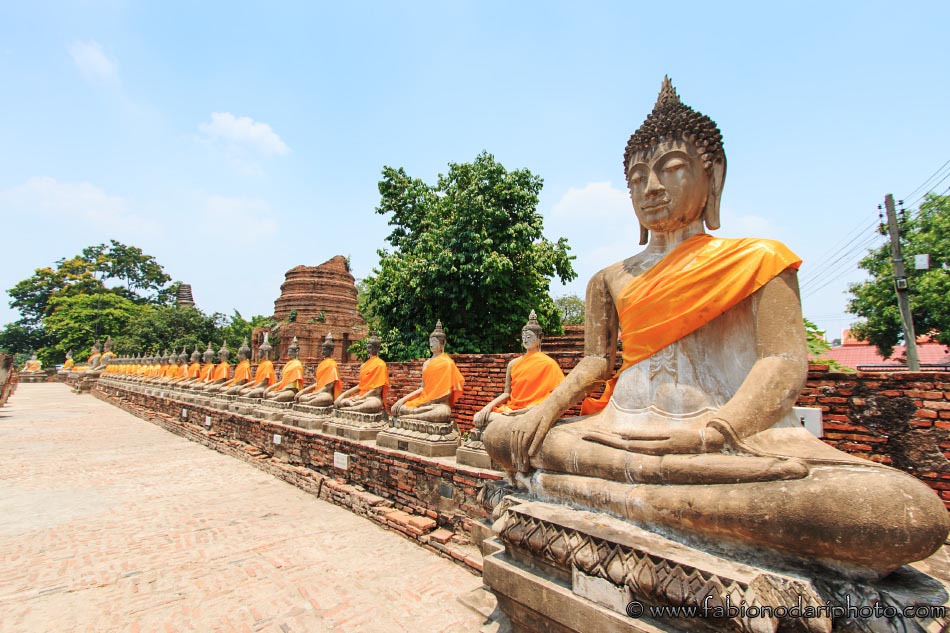
I don’t want to flood you with many historical facts; you can always check Wikipedia to learn more, but I think it’s important to have some basic info to appreciate this historical place.
Historically, Ayutthaya welcomed foreign traders, allowing them to establish settlements just outside the city walls. In 1767, the city was destroyed by the Burmese army, but today you can still visit the ruins that bear witness to the power and importance of this former kingdom.
One of the most striking things about Ayutthaya is the sheer number of temples. The people who lived here were deeply religious, blending elements of Buddhism, Hinduism, and Islam. Influenced by French missionaries who arrived via China in the 17th century, some small communities even converted to Roman Catholicism.
How to get to Ayutthaya from Bangkok
If you want to visit Ayutthaya without rushing, I recommend spending one night there. You can look for a hotel in the city on Booking or Trip.
If you’re staying in Bangkok and want to visit Ayutthaya on a day trip, there are several transportation options.
- Train: This is the cheapest way to reach Ayutthaya from Bangkok. It leaves from Hualamphong station, and the third-class tickets are really cheap. This is the slowest option.
- Bus: Buses leave the Mo Chit Bus Terminal in Bangkok and take about 1.5 hours. Several classes of service are available, including air-conditioned and non-air-conditioned buses.
- Car: A car is the fastest way to get to Ayutthaya. You can rent one or look for a private driver.
- Minivan: Minivans leave from Mochit New Van Terminal (near Chatuchak). The journey takes about 1.5 hours, sometimes less.
- Cruise: Some companies offer day cruises from Bangkok to Ayutthaya, usually by bus one way and boat the other. It’s not the fastest option, but it’s more relaxing.
- Private Tour: This is the simplest option and the one that will allow you to enjoy the experience better. I recommend booking the tour on GetYourGuide.
How to visit the temples and when is the best season
Once you arrive in Ayutthaya, you’ll need to decide how to get around. The temples are spread out across the modern city, a bit like Rome (here’s my travel guide), so visiting them all on foot isn’t a great option.
One solution is to rent a scooter and explore on your own. If you don’t feel comfortable riding, no problem, tuk-tuk drivers will be waiting at the train station, ready to offer you a ride around the main sites. Keep in mind that the first price they give you will be too high. Don’t be shy about negotiating. If you’re traveling alone, this might not be the most budget-friendly choice. The price difference between taking the train plus tuk-tuk and booking an all-inclusive tour isn’t that big.
The best time to visit Ayutthaya is between October and March, when the weather is cooler. This is especially important if it’s your first time in Southeast Asia, as the heat can be overwhelming. From April to October, expect frequent rain. It’s not constant, but when it rains, it rains a lot.
Things to do: a visit to the temples
There are a lot of them, spread all over the city, and each one has something unique to offer. Some are more famous and crowded, while others are less known but just as interesting. Below, I’ll go over the main ones, the ones I think you really shouldn’t miss.
Wat Yai Chai Mongkhon
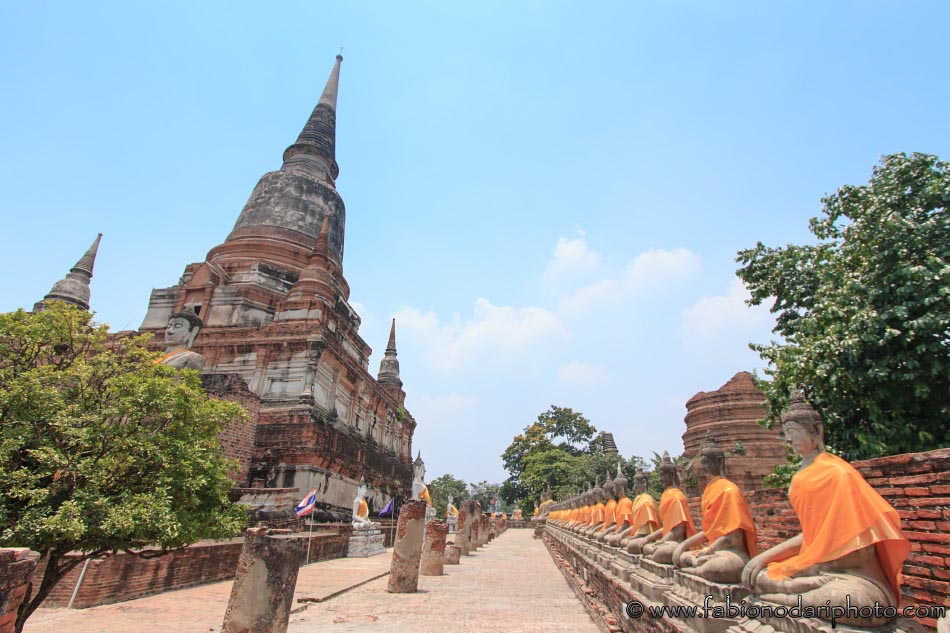
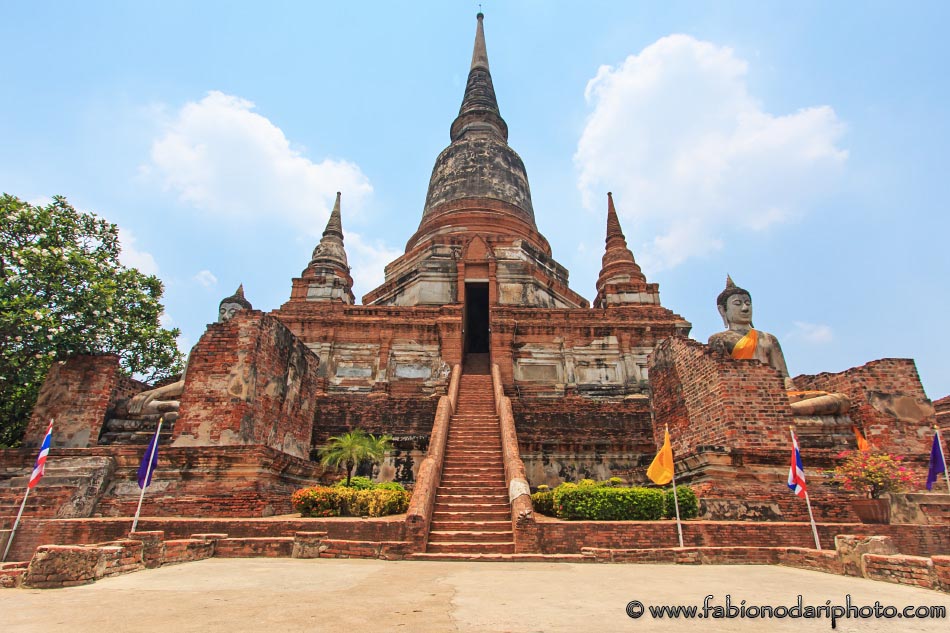
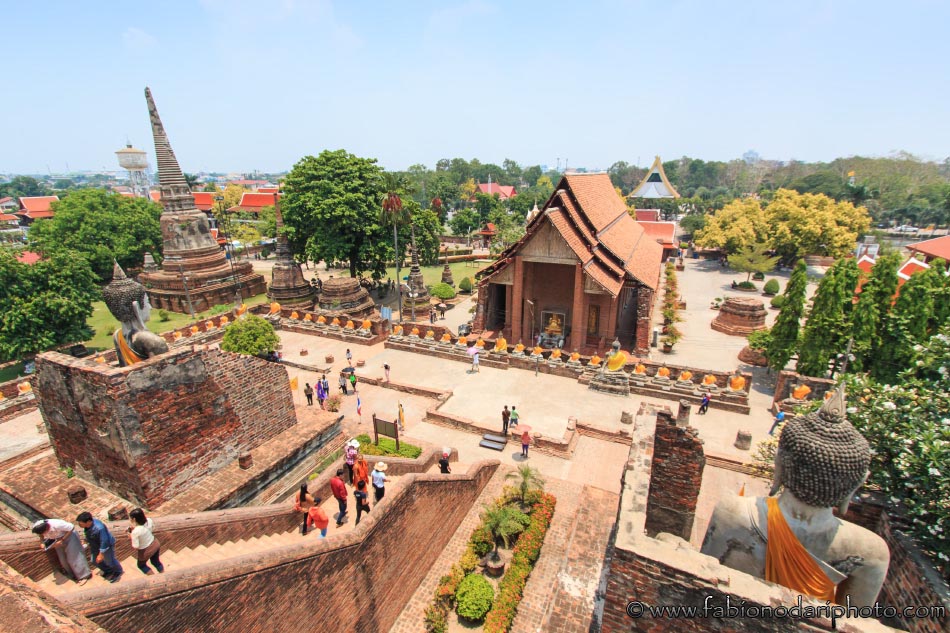
This Wat, on the Southeastern part of the city, was dedicated to the monks who traveled to Ceylon (Sri Lanka) to study and meditate.
The Chedi, a dome-shaped structure erected as a Buddhist shrine, is about 62 meters tall, but due to the weight of the bricks used to build it (more than 280000 tons), the floor is slowly collapsing. The view from the top of the Chedi is really great.
Wat Mahathat
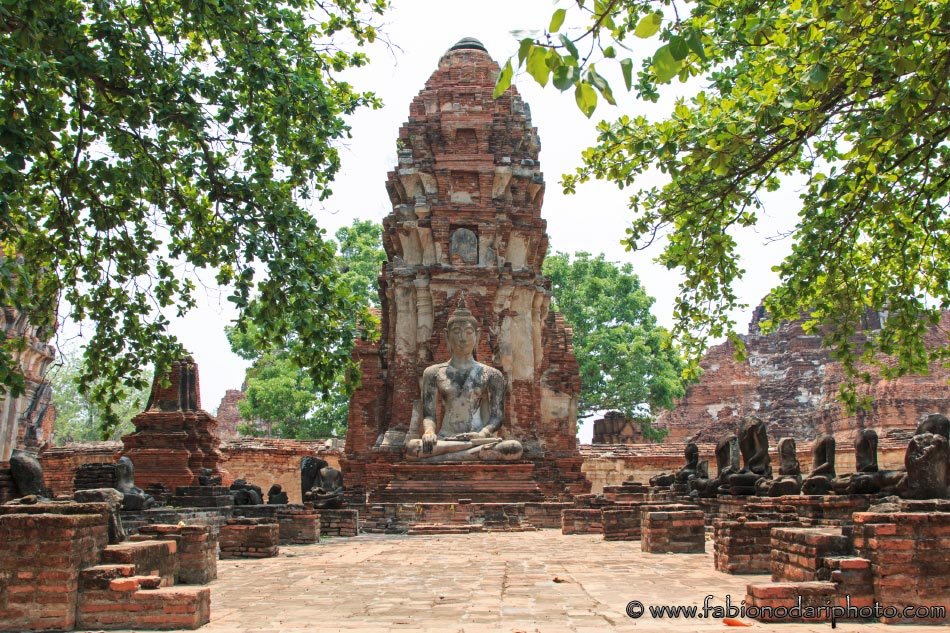
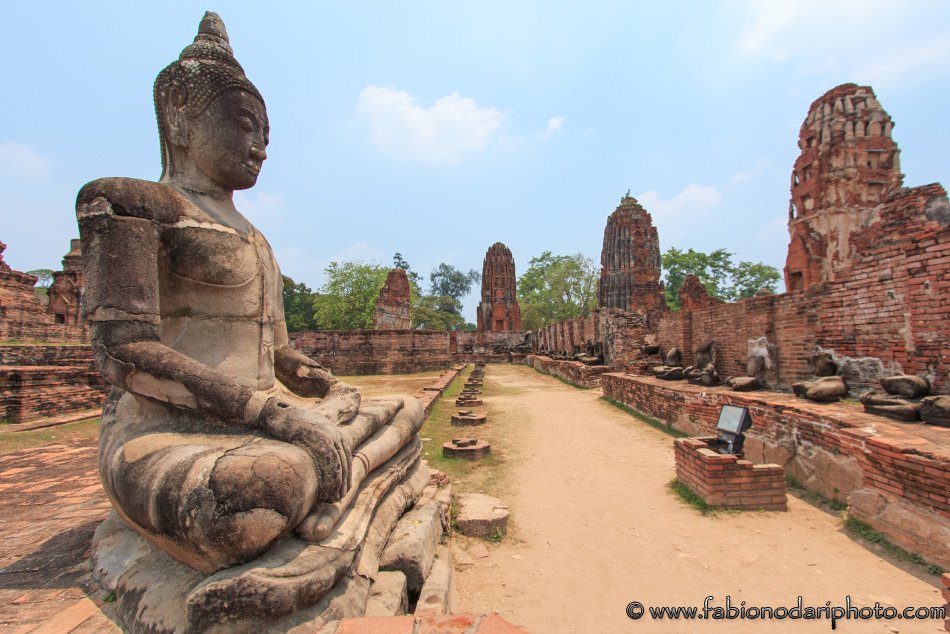
The Wat Maha lies in the center of the city and is one of the most important temples of the whole kingdom. The architecture was studied carefully to “align the building with the universe” for the right energies.
Generally, the West was viewed as a bad cardinal point because the sun sets in that direction. The South was neutral, and the North was considered a good cardinal point. The best spot was the east because the sun rises in that direction.
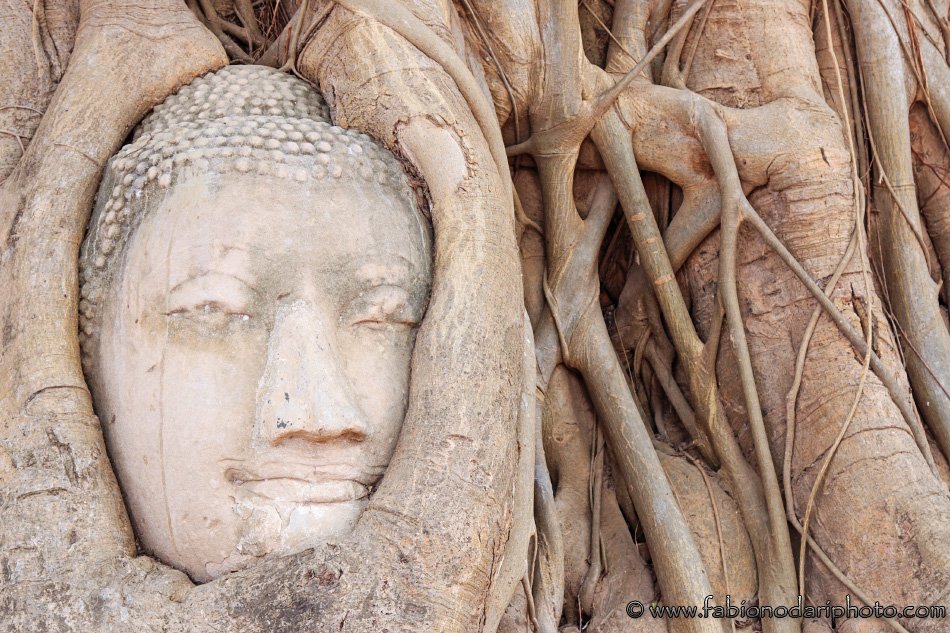
The most famous site is the Wat Maha, which is not a temple but the head of a Buddha trapped by the roots of a giant banyan tree.
Wat Phra Si Sanphet
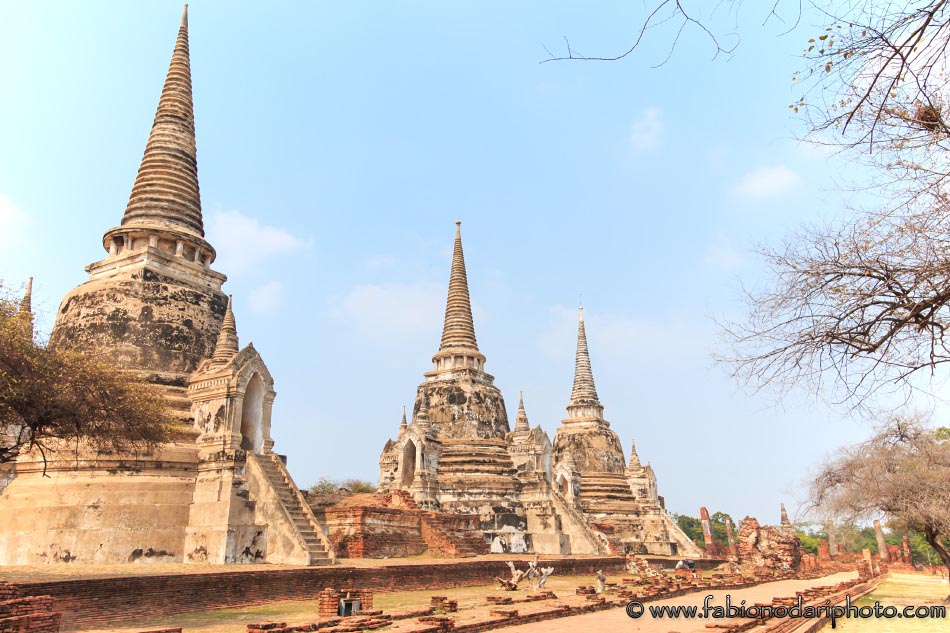
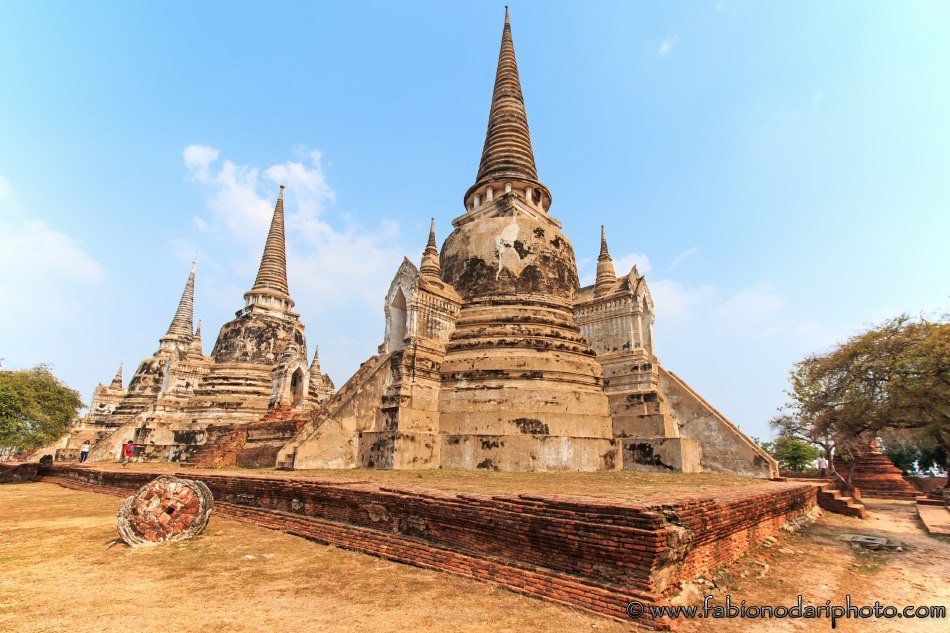
Wat Phra Si Sanphet is one of the most important temples due to the role it played in the history of the kingdom. It was part of the Royal Palace complex and was used exclusively by the royal family, so no monks lived there. The three large aligned chedis, which today are one of the most iconic images of the city, once held the ashes of three kings from the Ayutthaya dynasty.
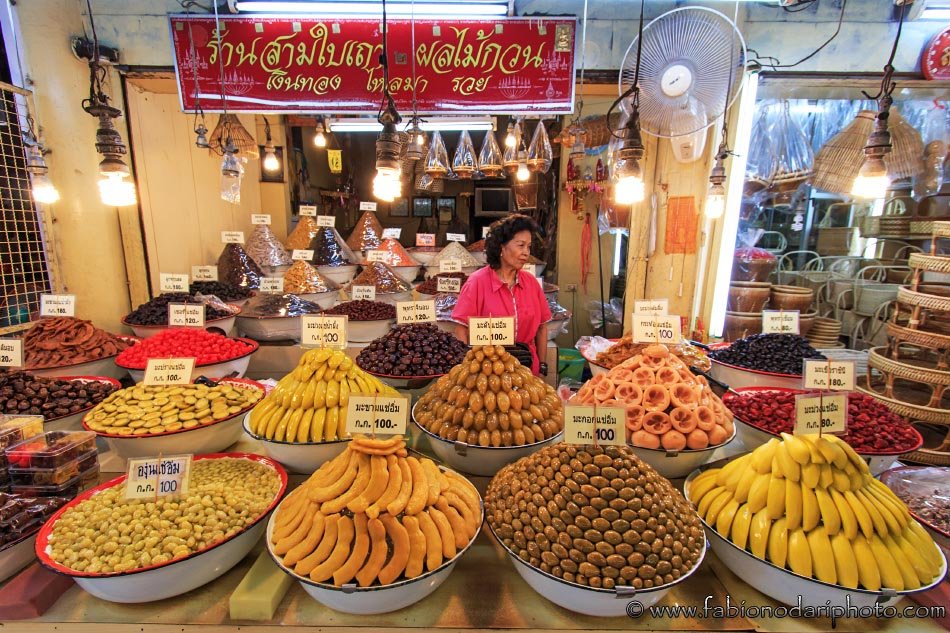
If you’re feeling tired after visiting the temple, you can take a short break at the nearby covered market and maybe try some Thai specialties.
Wat Chaiwattanaram
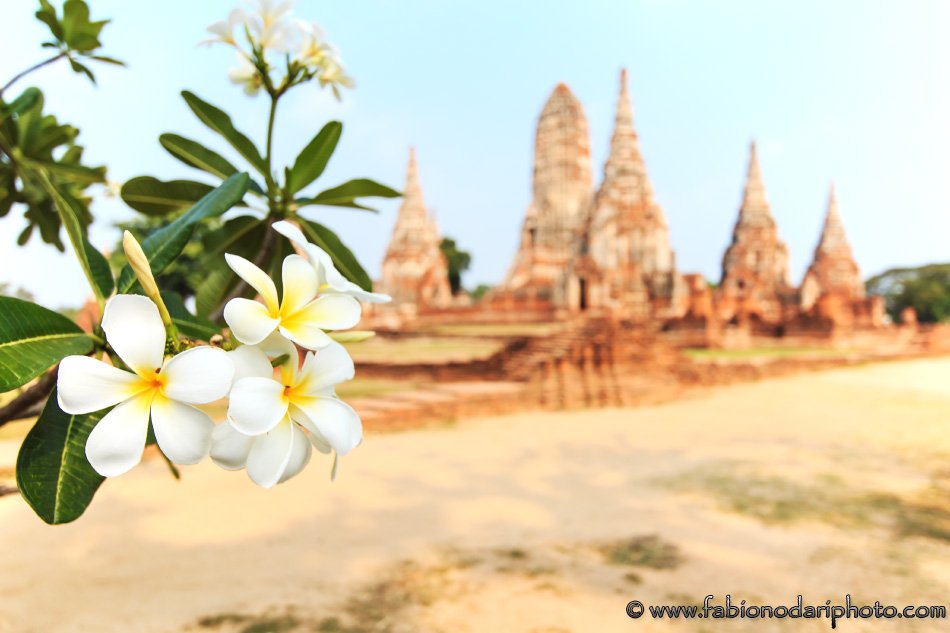
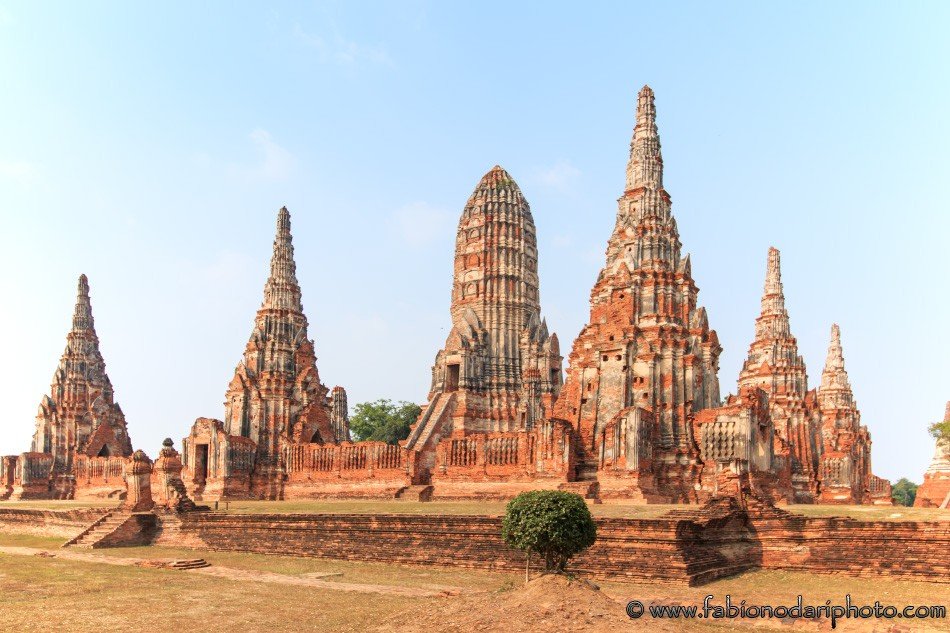
Wat Chaiwatthanaram is one of the most impressive temples in Ayutthaya and, in my opinion, also one of the most photogenic. It’s located on the western bank of the Chao Phraya River, just outside the historical center, but it’s worth the short detour. It was built in 1630 by King Prasat Thong to honor his mother, and its architecture is inspired by Khmer temples like Angkor Wat. The central prang is surrounded by eight smaller chedis and a long row of seated Buddha statues, many of which are now headless due to centuries of destruction.
I recommend visiting in the late afternoon, just before sunset. The warm light hitting the red bricks creates a very special atmosphere, great for photography too.
Final Thoughts
Ayutthaya is an easy trip to plan and offers a lot, even if you only have one day. If you’re into history, architecture, or photography, it’s a place worth visiting. Each temple has its characteristic and, despite the number of tourists, there are still moments when you can feel a sense of peace and solemnity.
If you can, spend a night there. You’ll be able to explore the main sites without rushing, avoid the hottest hours, and enjoy the atmosphere once the tour groups have left.
Here you can find more photos I took in Thailand. If you’re thinking about leaving everything behind and moving abroad, here are a few tips. And here’s my travel guide to Ao Nang, in Krabi.


I love it
i feel there
Dear Fabio: Such beautiful images as always … and Ayutthaya is such a treasure trove of temples and history.
I have a question, though… when I visited it was teeming with people and I had to click my images around people in Ayutthaya including the Buddha Head in tree roots , how did you manage to click images without people ? Did you went early morning or patiently waited for your shot to be clear ? Thanks
Hi Prasad, I went there on June. There were few people maybe because it was low season. So I didnt enter in the morning neither I had to wait for the people to move. Maybe I was just lucky… 🙂
Lucky you..it must have been hot,,
I was there in November peak season could barely walk without stumbling into somebody 🙂
Yes, November is definitely peak season. I was lucky that it didnt rain at all for the whole week, even if it was the raining season.