
In the last few years, Jordan has become a very popular destination. In this travel guide, you will find the top things to do and see in this beautiful country.

Of all the countries I’ve had the chance to visit in recent years, Jordan holds a special place in my heart. Maybe because it was a somewhat unexpected trip, and as often happens in these situations, it’s the unplanned experiences that leave you with the most lasting memories.
Jordan is a place with a rich history and incredible landscapes. Despite its proximity to countries with unstable political situations, the people are extremely kind, and I have never felt unsafe.
After visiting Jordan, I wrote two articles about this country, but in this post, I’ll talk specifically about how to organize a trip to Jordan and what to do and see.
When is the best time to visit?

The best time to visit Jordan is in Spring (March to May) or Autumn (September to November), when the weather is mild and pleasant almost everywhere: the days are sunny, and the temperatures are ideal for exploring the desert. The Dead Sea and the Aqaba region are also perfect during these months, with warm water and clear skies.
That said, I know very well that not everyone can choose when to travel. For many people, August is the only option. In that case, be prepared for high temperatures, especially in the south of the country, Petra and Wadi Rum can easily exceed 40°C. But don’t worry: with a few precautions (start your day early, drink plenty of water, and avoid going out during the hottest hours), you can still enjoy Jordan in the summer, maybe by taking a dip in the Dead Sea or relaxing by the Red Sea in Aqaba.
Is Jordan a safe country?

This is without a doubt one of the most frequently asked questions by anyone considering a trip to Jordan. And the answer, in short, is: yes, Jordan is a safe country. To explore this topic in more depth, I wrote an article explaining why you shouldn’t let the news headlines shape your perception too much.
In short, Jordan is a Muslim-majority country, but it’s extremely moderate and welcoming. It’s also much more secular compared to many of its neighboring countries, and tourists, especially Westerners, are treated with great respect. In the article, I share my personal experience, backed by concrete facts, to help you understand why traveling in Jordan is not only safe but also surprisingly easy.
Useful info to organize your trip to Jordan

Most people enter Jordan via Amman, but keep in mind there’s also an airport in Aqaba. You can visit nearly all the places I mention using public transportation, but renting a car is definitely the best option, it’s a bit more expensive, yes, but it will save you a lot of time and give you the freedom to see much more.
The entry visa costs 40 JOD (single entry) and is valid for 60 days. However, if you enter Jordan through Aqaba, it’s free, as long as you stay in the country for at least three days.
Many of the main attractions charge an entrance fee, and by the end of your trip, the total cost can really add up. That’s why I recommend getting the Jordan Pass (here’s the official website), which gives you access to around 40 sites and saves you a lot compared to buying individual tickets.
Additionally, if you purchase the Jordan Pass, the visa cost is halved. Once purchased, the pass is valid for 12 months, but it becomes active on your first use and remains valid for 14 days thereafter. There are three versions available. I recommend the 80 JOD option, which includes three days of entry to Petra, and trust me, you’ll want the extra time there.
As for accommodation, you’ll find a wide selection with great prices on Booking.com. If you are looking for a place to book a tour in Jordan (one or more days), GetYourGuide is a good choice.
Top things to do and see in Jordan
If you’re starting to plan your trip to Jordan, here are some practical tips and useful suggestions to help you get organized.
Amman: History, Markets, and Modern Life

Amman is the capital and the largest city in Jordan. Modern buildings blend with older houses and ancient ruins, creating a dynamic city that’s worth exploring for a couple of days.
Amman is one of the oldest continuously inhabited cities in the world. It’s even mentioned in the Bible as Rabbat-Ammon, the place where Uriah (Bathsheba’s husband) was killed. So yes, there’s a lot of history here.
A must-see is the Roman Theater, built between 138 and 161 A.D. With 6,000 seats, it’s still used today for performances and concerts.


Also worth visiting:
- The Citadel, an important archaeological site that includes Roman, Byzantine, and Umayyad ruins.
- The Jordan Museum, with exhibits on history, archaeology, and culture.
- Abdoun Al Shmali, a lively residential area if you’re interested in nightlife.
If you like local experiences, don’t miss the city’s souks. Here are a few I recommend:
- Souk Jara: Handicrafts and souvenirs on Rainbow Street. Open Fridays, 10 am–10 pm.
- Souk El-Khodra: The daily produce market for locals (Al Hussein Bin Talal Mosque – King Talal St 1).
- Farmers Market: Organic fruits and vegetables. Saturdays only, 10 am–4 pm near The Winemaker (Arar St).
- Souk El-Sagha: Gold and jewelry in King Faysal Square.
- Nour al Barakah: Another option for organic products, located on Al Ahwaz Street.
Before leaving Amman, I recommend stopping by the King Abdullah Mosque, with its striking blue dome and open-door policy for non-Muslim visitors.
Day Trips from Amman: Jerash, Ajloun, and Umm Qais
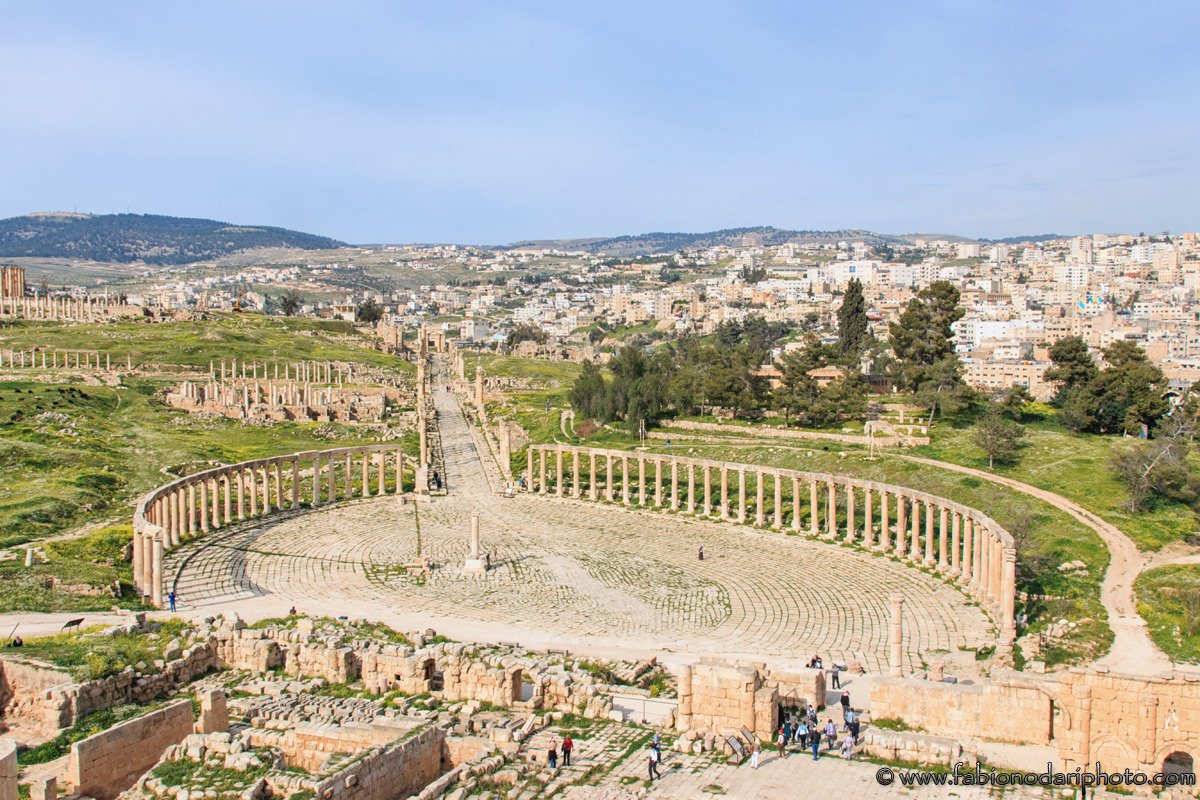
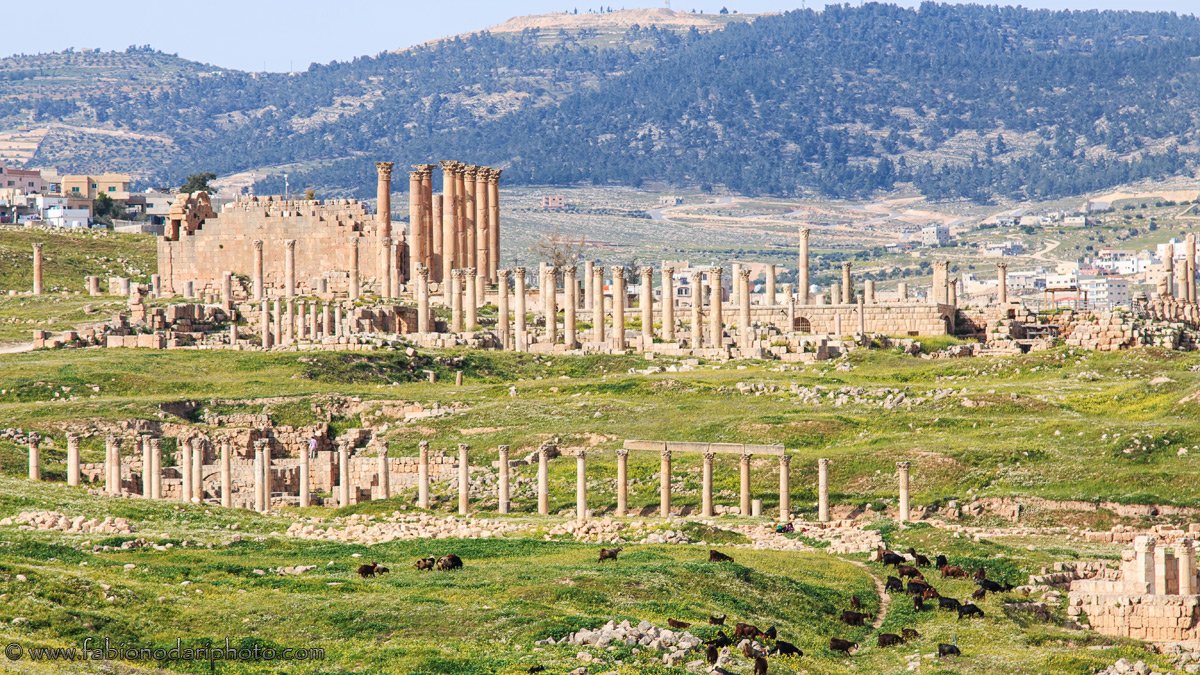
Jerash is one of the best-preserved Roman cities in the world and was once part of the Decapolis. The archaeological site is massive, and you’ll need at least half a day to explore it. The site also includes a large forum, colonnaded streets, temples, and a theater still in use today, with space for around 3,000 people.
It’s an easy day trip from Amman, just 55 km away. You can go by car or take a bus from Amman North Terminal.

Ajloun: Castles and Forests
Ajloun is a small town nestled in a green valley near Dibbin National Park. It’s not touristy at all, which makes it ideal if you’re looking for quieter places. The main attraction is Ajloun Castle, built by the Ayyubids in the 12th century to control the road between Damascus and Egypt. It’s perched on a hill and offers panoramic views of the surrounding forests and villages.
Ajloun is about 71 km from Amman and pairs well with a visit to Jerash.
Umm Qais (Gadara): Ruins With a View
Umm Qais, known in ancient times as Gadara, is one of the most scenic spots in northern Jordan. It was another member of the Decapolis, situated on a hill overlooking the Sea of Galilee and the Golan Heights. According to the Gospel of Matthew, it’s the place where Jesus cast out demons into a herd of pigs.
It takes about two hours to get there from Amman (125 km). From Amman’s North Terminal, take a bus to Irbid and then a shared minivan to Umm Qais.
Mount Nebo and Mukawir: Sacred History and Panoramic Views
Mount Nebo is a sacred place where Moses is said to have seen the Promised Land. On clear days, you can even see Jerusalem in the distance. It’s about 37 km from Amman and 10 km from Madaba.
Nearby is Mukawir (Machaerus), a hilltop fortress where, according to Josephus, John the Baptist was executed by Herod the Great. There’s not much left of the structure, but the views are spectacular.
The Dead Sea: Float at the Lowest Point on Earth


At -420 meters below sea level, the Dead Sea is the lowest place on Earth. Floating in its salty waters is a surreal experience. The mud is rich in minerals and has been used for its healing properties for centuries. Because of the extra oxygen and reduced UV rays, you can even sunbathe without sunscreen.
If you’re on a budget, Amman Beach is a good option, but reviews are mixed. If you’re looking for comfort, staying at one of the resorts in the area will be worth it.
Wadi Mujib: Canyoning in a Desert Gorge

The Wadi Mujib Nature Reserve is the lowest nature reserve on Earth, located near the eastern edge of the Dead Sea. It spans 212 square kilometers and is a nesting ground for many birds.
If you visit during the right season, you can go hiking, canyoneering, or even rafting through the water-filled gorge. Some trails are only open when water levels allow, so check conditions ahead of time.
Feynan Ecolodge: Sustainable Luxury


Feynan is home to one of the best eco-lodges in the world. There’s no electricity (you’ll use candles), no Wi-Fi or TV, but you’ll gain something better: peace and authentic experiences.
You can hike with local guides, share tea with Bedouins, or stargaze from the rooftop with a telescope. Local women craft products used at the lodge, and part of the profits go to nearby Bedouin families. If you’re looking for an experience rooted in sustainability and local culture, this is it.
Dana Biosphere Reserve: Jordan’s Wild Side

Dana is the largest nature reserve in Jordan (320 km²), and it’s a paradise for hikers. The landscape stretches from green mountain slopes to desert, with over 700 plant species, 190 types of birds, and 37 species of mammals.
There are several microclimates in the area, and if you enjoy long hikes, you can even trek from Feynan to Dana over 7–8 hours.
Petra: The City Carved into Stone

Let’s be honest: Petra is the reason many people visit Jordan. And yes, it’s absolutely worth it.
This ancient Nabataean city, carved into rose-colored cliffs, was “lost” to the Western world until 1812, when Swiss explorer Johann Ludwig Burckhardt rediscovered it while disguised as a Bedouin.
Access Petra via the Siq, a narrow gorge that opens up dramatically to the Treasury (Al-Khazneh), Petra’s most famous monument. Don’t stop there. The site is huge and deserves at least two days. The Monastery (Ad Deir) is even bigger than the Treasury and sits at the top of a long climb, but the views are worth it.


Also visit Little Petra (Siq al-Barid), about 14 km away. It’s much smaller, less crowded, and still part of the archaeological site.
If you can, plan your trip to include Petra by Night, a candle-lit experience through the Siq that ends at the Treasury. It runs on Mondays, Wednesdays, and Thursdays, from 8:30 to 10:30 pm.
This is the hotel where I stayed: perfect location and great price. Definitely recommended.
Wadi Rum: Desert of Mars

Wadi Rum means “Valley of the Moon”, but it feels more like Mars. Its red sands, towering rock formations, and dramatic landscapes have been the backdrop for countless films.
There aren’t many public buses here, so your best bet is to book a tour. Many include camel rides, tea with Bedouins, and 4×4 trips to hidden spots deep in the desert. Try to catch the sunset from one of the small mountains, it’s one of the most peaceful moments you’ll have in Jordan.


In recent years, beautiful accommodations like this one have been built, allowing you to enjoy these incredible landscapes without giving up comfort.
Aqaba: Red Sea Relaxation
Aqaba is Jordan’s only coastal city and a great place to relax at the end of your trip. It’s also a favourite holiday spot for locals, with plenty of resorts, restaurants, and a laid-back vibe.
If you’re into scuba diving, the Red Sea here is known for coral reefs and shipwrecks. Aqaba is also well connected to Amman via JETT and Trust buses.
These were the most interesting destinations in Jordan, an extraordinary country worth visiting.
Final Thoughts

What struck me most about Jordan, as a photographer, is the incredible variety of landscapes packed into a relatively small area. In just a few hours, you can go from the deep reds of Wadi Rum to the soft pinks of Petra, from the green hills of Ajloun to the dramatic canyons of Wadi Mujib. Each place has its light, a unique texture, and a natural composition that seems made for photography. If you love capturing wide-open spaces, strong contrasts, and landscapes steeped in history, this country is a dream.
But it’s not just about visual beauty. What truly sets Jordan apart is the chance to tell stories through your images: the faces of Bedouins, the chaotic markets of Amman, the Roman ruins resting in silence up north. Every corner allows you to create something personal and genuine.
I strongly recommend visiting Jordan as soon as you can; it’s absolutely worth it!
You can find some pictures I took during the trip in this link. If you’re looking for off-the-beaten-path destinations, don’t miss this article about Kyrgyzstan and this one where I talk about Almaty in Kazakhstan. Here’s my photography travel guide to Mount Bromo in Indonesia.


